


The "recipe" to 500 rwhp with heads and cam.


Originally Posted by Beaflag VonRathburg
What sort of flow numbers have you seen out of the ls2 intakes?
With nitrous applications at what point does the cylinder pressure become too great? You mentioned that the nitrous was very hard on your motor with due to the high SCR, DCR, and timing. Even with the high compression can you just continue to pull timing to adapt for larger pills? Or does the optimal timing aspects you mentioned have an affect on this also? I've always wondered this when reading all these high DCR threads.
With nitrous applications at what point does the cylinder pressure become too great? You mentioned that the nitrous was very hard on your motor with due to the high SCR, DCR, and timing. Even with the high compression can you just continue to pull timing to adapt for larger pills? Or does the optimal timing aspects you mentioned have an affect on this also? I've always wondered this when reading all these high DCR threads.
I was also wondering about welding chambers vs milling. I know milling helps with optimizing quench, but what about welded chambers? I've read here that milling is more optimal, but could a little bit of each be used in order to maintain deck thickness? Some of us want to use mild / high nitrous applications and don't have the benefit of a 3/4 deck head.
About thinner head gaskets. How do these withstand higher cylinder pressures strength wise vs something like a stock mls gasket?

Banned
Joined: Apr 2006
Posts: 1,875
Likes: 1
From: Naperville, IL
Awesome showing what can be done using the best parts with some applied knowledge. Doing a little more could get you to the 525rwhp range with a sheetmetal intake, different cam, and heads that flowed more at higher lifts. Might lose a little driveability but it's possible. For a lot of people, that cost is a lot for a 346. My entire heads, cam, intake kit cost less than just a set of AFR heads, and I should come up 50hp of a max effort setup. That's fine by me, I can always pill up later 
I'm kinda waiting to see what the small bore L92's flow, coupled with the L76 intake touched up a bit if I stay with a 346. This will be great knowledge to bring to the table when making a 454 LSx which I would prefer to make for a "final" N/A or Nitrous build.
Awesome job again man!

I'm kinda waiting to see what the small bore L92's flow, coupled with the L76 intake touched up a bit if I stay with a 346. This will be great knowledge to bring to the table when making a 454 LSx which I would prefer to make for a "final" N/A or Nitrous build.
Awesome job again man!




Thread Starter
Joined: Nov 2001
Posts: 8,246
Likes: 34
From: Victoria, TX
The challenge with a single plane intake is getting it to flow right and fit right. These manifolds were designed to have a carburetor or TB right on top. When you add an intake elbow that will clear the stock F-body cowl, the flow is subtantially cut down...enough to limit the gains over a FAST 90. If you can mount the air door on top of the manifold, you have a much better chance of outflowing the FAST and making more power upstairs. Like I said, if you're willing to cut up the cowl and use an elbow with proper cross-sectional area and gradual enough radius, then this would work too. Still, I prefer the TB on top.
__________________
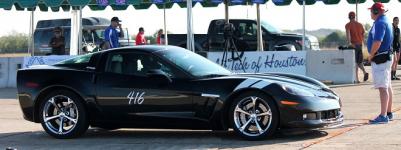
2013 Corvette Grand Sport A6 LME forged 416, Greg Good ported TFS 255 LS3 heads, 222/242 .629"/.604" 121LSA Pat G blower cam, ARH 1 7/8" headers, ESC Novi 1500 Supercharger w/8 rib direct drive conversion, 747rwhp/709rwtq on 93 octane, 801rwhp/735rwtq on race fuel, 10.1 @ 147.25mph 1/4 mile, 174.7mph Half Mile.
2016 Corvette Z51 M7 Magnuson Heartbeat 2300 supercharger, TSP LT headers, Pat G tuned, 667rwhp, 662rwtq, 191mph TX Mile.
2009.5 Pontiac G8 GT 6.0L, A6, AFR 230v2 heads. 506rwhp/442rwtq. 11.413 @ 121.29mph 1/4 mile, 168.7mph TX Mile
2000 Pewter Ram Air Trans Am M6 heads/cam 508 rwhp/445 rwtq SAE, 183.092 TX Mile
2022 Cadillac Escalade 6.2L A10 S&B CAI, Corsa catback.
2023 Corvette 3LT Z51 soon to be modified.
Custom LSX tuning in person or via email press here.
2013 Corvette Grand Sport A6 LME forged 416, Greg Good ported TFS 255 LS3 heads, 222/242 .629"/.604" 121LSA Pat G blower cam, ARH 1 7/8" headers, ESC Novi 1500 Supercharger w/8 rib direct drive conversion, 747rwhp/709rwtq on 93 octane, 801rwhp/735rwtq on race fuel, 10.1 @ 147.25mph 1/4 mile, 174.7mph Half Mile.
2016 Corvette Z51 M7 Magnuson Heartbeat 2300 supercharger, TSP LT headers, Pat G tuned, 667rwhp, 662rwtq, 191mph TX Mile.
2009.5 Pontiac G8 GT 6.0L, A6, AFR 230v2 heads. 506rwhp/442rwtq. 11.413 @ 121.29mph 1/4 mile, 168.7mph TX Mile
2000 Pewter Ram Air Trans Am M6 heads/cam 508 rwhp/445 rwtq SAE, 183.092 TX Mile
2022 Cadillac Escalade 6.2L A10 S&B CAI, Corsa catback.
2023 Corvette 3LT Z51 soon to be modified.
Custom LSX tuning in person or via email press here.

Originally Posted by Patrick G
The challenge with a single plane intake is getting it to flow right and fit right. These manifolds were designed to have a carburetor or TB right on top. When you add an intake elbow that will clear the stock F-body cowl, the flow is subtantially cut down...enough to limit the gains over a FAST 90. If you can mount the air door on top of the manifold, you have a much better chance of outflowing the FAST and making more power upstairs. Like I said, if you're willing to cut up the cowl and use an elbow with proper cross-sectional area and gradual enough radius, then this would work too. Still, I prefer the TB on top.
hmm.. this is what I was thinking of doing, thanks for your input. Peaple said the elbows kill flow but it good to hear it from somone who really knows what they are talking about


Congrats! Great results. I would still like to see someone break the 500 mark with a 12 bolt,steel driveshaft and steep gears like 4.10 or 4.30's the way a true track car would be setup. Every car that I have read about hitting the 500 mark has had a 10 bolt.There may be some that have done it with a 12 bolt but I haven't read about it. I have been thinking about going with the Donkey Dick cam to try to break the 500 mark with a 12 bolt. I have a little 224/228 581/588 110lsa baby cam and made 452rwhp and 408rwtq threw a 12 bolt with 4.30 gears, and Denny's nitrous ready driveshaft. I have fly cut my pistons and I'm ready to go big with the Donkey dick cam. I'm pretty sure I'll come up short on the 500 mark but I can dream
Originally Posted by Patrick G
The challenge with a single plane intake is getting it to flow right and fit right. These manifolds were designed to have a carburetor or TB right on top. When you add an intake elbow that will clear the stock F-body cowl, the flow is subtantially cut down...enough to limit the gains over a FAST 90. If you can mount the air door on top of the manifold, you have a much better chance of outflowing the FAST and making more power upstairs. Like I said, if you're willing to cut up the cowl and use an elbow with proper cross-sectional area and gradual enough radius, then this would work too. Still, I prefer the TB on top.
I'm a big fan of the Superhawk hood, which appears to be fairly tall in the rear of the hood. I'm curious if the Vic Jr would reasonably fit under one of these hoods.
Would lift at .600 matter with a ported Vic Jr, or would the heads still outflow the intake?

Very impressive, Pat. Although I know little to nothing compared to many, the idea of flow at lower lifts has always intrigued me, possibly because I'm scared of changing springs every 20k miles when I get a cam. Always wondered who made a head that flowed the best in the lower lifts (I figured it was AFR, as they rule in the higher lifts as well). Insane seeing as you're making what stock motors peak at shortly after 3k RPM. Must be one hell of a ride.
Originally Posted by Louie83
I've been thinking about this for a bit.
I'm a big fan of the Superhawk hood, which appears to be fairly tall in the rear of the hood. I'm curious if the Vic Jr would reasonably fit under one of these hoods.
Would lift at .600 matter with a ported Vic Jr, or would the heads still outflow the intake?
I'm a big fan of the Superhawk hood, which appears to be fairly tall in the rear of the hood. I'm curious if the Vic Jr would reasonably fit under one of these hoods.
Would lift at .600 matter with a ported Vic Jr, or would the heads still outflow the intake?

Originally Posted by Louie83
I've been thinking about this for a bit.
I'm a big fan of the Superhawk hood, which appears to be fairly tall in the rear of the hood. I'm curious if the Vic Jr would reasonably fit under one of these hoods.
Would lift at .600 matter with a ported Vic Jr, or would the heads still outflow the intake?
I'm a big fan of the Superhawk hood, which appears to be fairly tall in the rear of the hood. I'm curious if the Vic Jr would reasonably fit under one of these hoods.
Would lift at .600 matter with a ported Vic Jr, or would the heads still outflow the intake?
I dont think the hood is the only clearance problem, you gotta also remember that half our engine sits under the cowl
Originally Posted by Beaflag VonRathburg
What sort of flow numbers have you seen out of the ls2 intakes?
With nitrous applications at what point does the cylinder pressure become too great? You mentioned that the nitrous was very hard on your motor with due to the high SCR, DCR, and timing. Even with the high compression can you just continue to pull timing to adapt for larger pills? Or does the optimal timing aspects you mentioned have an affect on this also? I've always wondered this when reading all these high DCR threads.
With nitrous applications at what point does the cylinder pressure become too great? You mentioned that the nitrous was very hard on your motor with due to the high SCR, DCR, and timing. Even with the high compression can you just continue to pull timing to adapt for larger pills? Or does the optimal timing aspects you mentioned have an affect on this also? I've always wondered this when reading all these high DCR threads.
Originally Posted by Beaflag VonRathburg
Someone else also mentioned it, but what about flow of the Vic. Jr. and GMPP intakes?
I was also wondering about welding chambers vs milling. I know milling helps with optimizing quench, but what about welded chambers? I've read here that milling is more optimal, but could a little bit of each be used in order to maintain deck thickness? Some of us want to use mild / high nitrous applications and don't have the benefit of a 3/4 deck head.
About thinner head gaskets. How do these withstand higher cylinder pressures strength wise vs something like a stock mls gasket?
I was also wondering about welding chambers vs milling. I know milling helps with optimizing quench, but what about welded chambers? I've read here that milling is more optimal, but could a little bit of each be used in order to maintain deck thickness? Some of us want to use mild / high nitrous applications and don't have the benefit of a 3/4 deck head.
About thinner head gaskets. How do these withstand higher cylinder pressures strength wise vs something like a stock mls gasket?
Originally Posted by Patrick G
Valvetrain geometry/stability:
For rockers, I used the all-new Yella Terra Ultra-Light rockers (part number 6645). These are shaft-mounted rockers that have the same weight or less than the stock rockers (over the valve) and will enhance high rpm stability. HKE shimmed the rockers .050" to get the best wipe pattern on the valve stems.
For rockers, I used the all-new Yella Terra Ultra-Light rockers (part number 6645). These are shaft-mounted rockers that have the same weight or less than the stock rockers (over the valve) and will enhance high rpm stability. HKE shimmed the rockers .050" to get the best wipe pattern on the valve stems.
EDIT:
Originally Posted by Patrick G
Valvetrain geometry/stability:
I also used the AFR upgrade hollow stem intake valves. These lightweight 2.02" valves only weigh 98 grams. For comparison, my 1.60" exhaust valves weigh 97 grams each.
I also used the AFR upgrade hollow stem intake valves. These lightweight 2.02" valves only weigh 98 grams. For comparison, my 1.60" exhaust valves weigh 97 grams each.
Last edited by Beaflag VonRathburg; Jun 17, 2007 at 08:47 PM.
Originally Posted by Beaflag VonRathburg
What made you decide to use the non - adjustable versions vs. something like part number 6640 an adjustable rocker? What are the advantages of adjustable vs. non adjustable?
Good lord I just looked those up in my AFR catalog and they're $42 each (part number 7230). The upgrade to these isn't that bad (part number 7508) at $188. Maybe it's changed a little as I'm looking at the 05 catalog because I couldn't find my 06 one? What made you decide to not upgrade to the hollow exhaust valves also?
Good lord I just looked those up in my AFR catalog and they're $42 each (part number 7230). The upgrade to these isn't that bad (part number 7508) at $188. Maybe it's changed a little as I'm looking at the 05 catalog because I couldn't find my 06 one? What made you decide to not upgrade to the hollow exhaust valves also?
Concerning the valve upgrade there is no need to upgrade the exhaust as the hollow stem intake and the standard steel exhasut valve are within one gram of one another. If you have enough valve spring to control the hollow stem intake you can certainly control the same weight exhaust valve. Plus, I like a solid stem on the valve that sees the most heat....in the event of abnormally high combustion temps (bad tune, clogged injector, etc.) the solid stem exhaust would probably hang in there a bit longer before it failed.
Tony
Originally Posted by Tony Mamo @ AFR
No need (or benefit) for adjustable rockers with a hyraulic valve train. In fact its a step in the wrong direction because the rocker gets heavier with steel threaded adjuster hanging off the end of it. For a solid roller the adjustability is a must, not to mention doesnt pose a concern being slightly heavier (much higher seat and open pressures).
Concerning the valve upgrade there is no need to upgrade the exhaust as the hollow stem intake and the standard steel exhasut valve are within one gram of one another. If you have enough valve spring to control the hollow stem intake you can certainly control the same weight exhaust valve. Plus, I like a solid stem on the valve that sees the most heat....in the event of abnormally high combustion temps (bad tune, clogged injector, etc.) the solid stem exhaust would probably hang in there a bit longer before it failed.
Tony
Concerning the valve upgrade there is no need to upgrade the exhaust as the hollow stem intake and the standard steel exhasut valve are within one gram of one another. If you have enough valve spring to control the hollow stem intake you can certainly control the same weight exhaust valve. Plus, I like a solid stem on the valve that sees the most heat....in the event of abnormally high combustion temps (bad tune, clogged injector, etc.) the solid stem exhaust would probably hang in there a bit longer before it failed.
Tony
The exhaust valve also makes sense. It's odd that it's only a 1 gram difference. How much does the solid stem 2.02 intake valve weigh in at? I'm wondering how much the .42 translates to in weight?
Thread Starter
Joined: Nov 2001
Posts: 8,246
Likes: 34
From: Victoria, TX
Originally Posted by Beaflag VonRathburg
The exhaust valve also makes sense. It's odd that it's only a 1 gram difference. How much does the solid stem 2.02 intake valve weigh in at? I'm wondering how much the .42 translates to in weight?
__________________
2013 Corvette Grand Sport A6 LME forged 416, Greg Good ported TFS 255 LS3 heads, 222/242 .629"/.604" 121LSA Pat G blower cam, ARH 1 7/8" headers, ESC Novi 1500 Supercharger w/8 rib direct drive conversion, 747rwhp/709rwtq on 93 octane, 801rwhp/735rwtq on race fuel, 10.1 @ 147.25mph 1/4 mile, 174.7mph Half Mile.
2016 Corvette Z51 M7 Magnuson Heartbeat 2300 supercharger, TSP LT headers, Pat G tuned, 667rwhp, 662rwtq, 191mph TX Mile.
2009.5 Pontiac G8 GT 6.0L, A6, AFR 230v2 heads. 506rwhp/442rwtq. 11.413 @ 121.29mph 1/4 mile, 168.7mph TX Mile
2000 Pewter Ram Air Trans Am M6 heads/cam 508 rwhp/445 rwtq SAE, 183.092 TX Mile
2022 Cadillac Escalade 6.2L A10 S&B CAI, Corsa catback.
2023 Corvette 3LT Z51 soon to be modified.
Custom LSX tuning in person or via email press here.
2013 Corvette Grand Sport A6 LME forged 416, Greg Good ported TFS 255 LS3 heads, 222/242 .629"/.604" 121LSA Pat G blower cam, ARH 1 7/8" headers, ESC Novi 1500 Supercharger w/8 rib direct drive conversion, 747rwhp/709rwtq on 93 octane, 801rwhp/735rwtq on race fuel, 10.1 @ 147.25mph 1/4 mile, 174.7mph Half Mile.
2016 Corvette Z51 M7 Magnuson Heartbeat 2300 supercharger, TSP LT headers, Pat G tuned, 667rwhp, 662rwtq, 191mph TX Mile.
2009.5 Pontiac G8 GT 6.0L, A6, AFR 230v2 heads. 506rwhp/442rwtq. 11.413 @ 121.29mph 1/4 mile, 168.7mph TX Mile
2000 Pewter Ram Air Trans Am M6 heads/cam 508 rwhp/445 rwtq SAE, 183.092 TX Mile
2022 Cadillac Escalade 6.2L A10 S&B CAI, Corsa catback.
2023 Corvette 3LT Z51 soon to be modified.
Custom LSX tuning in person or via email press here.


Originally Posted by Patrick G
The challenge with a single plane intake is getting it to flow right and fit right. These manifolds were designed to have a carburetor or TB right on top. When you add an intake elbow that will clear the stock F-body cowl, the flow is subtantially cut down...enough to limit the gains over a FAST 90. If you can mount the air door on top of the manifold, you have a much better chance of outflowing the FAST and making more power upstairs. Like I said, if you're willing to cut up the cowl and use an elbow with proper cross-sectional area and gradual enough radius, then this would work too. Still, I prefer the TB on top.
do you think there is a single plane setup at this time that can outperform the ported FAST? seems like the single plane might lose some down low, which i dont feel like sacrificing. I have not seen a throttle body like the style you mention that can work with a stock harness. Right now i am trying to decide between a single plane and a Mamo ported FAST, i have a good amount of space under the hood of my '68 for a possible single plane setup.
Last edited by HotRod68Camaro; Jun 18, 2007 at 03:58 PM.



Patrick,nice rightup.i was having a conversation about heads that flowed like the ones you showed.mine flow very similar to you except your a little better on the exhaust.we were thinking how a car that had heads like these would be affected assuming the car is turbo'd.also the intake manifold wouldnt matter as much.in fact carb style intakes were showing a loss on dyno's on FI cars.

Originally Posted by Patrick G
Camshaft selection:
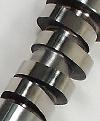
Fast ramps work great on the intake lobes. The Comp XE-R lobes are very fast off the seat and will put the lift in the .600" range. They're pretty aggressive in duration at .200, but there are others that are faster. The new Comp XFI lobes and LSK lobes put even more duration at .200" than the XE-R lobes and have more lift. If your head flow does not fall off above .600", then it makes sense to run the higher lift lobes. Not because of the airflow gains above .600" as much as the greater valve curtain area they provide below .600". Because my AFR 205s stalled above .600", we chose to run the Comp XE-R lobes in this 500 rwhp build.
Fast ramps work great on the intake lobes. The Comp XE-R lobes are very fast off the seat and will put the lift in the .600" range. They're pretty aggressive in duration at .200, but there are others that are faster. The new Comp XFI lobes and LSK lobes put even more duration at .200" than the XE-R lobes and have more lift. If your head flow does not fall off above .600", then it makes sense to run the higher lift lobes. Not because of the airflow gains above .600" as much as the greater valve curtain area they provide below .600". Because my AFR 205s stalled above .600", we chose to run the Comp XE-R lobes in this 500 rwhp build.
I only bring it up because the ramp rates of the higher lift lobes would naturally have to be faster for a given duration, I would just like to see where the majority of the increase is at. Obviously since your flow drops off after .600" lift you dont want to spend as much time there, so what is the trade off? How long is the lobe really at .600" lift and above?