When you click on links to various merchants on this site and make a purchase, this can result in this site earning a commission. Affiliate programs and affiliations include, but are not limited to, the eBay Partner Network.
hi guys,
i have a 2005 Tahoe 5.3 motor in my 1940 Mercury. I removed the stock valve covers and added vintage style valve covers and relocated my coils. I’m getting lean codes from both banks and checked the intake and brake booster vacuum for leaks, none. I also checked my header and flanges
for leaks and I’m sealed there as well.
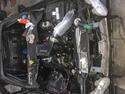
The one thing im sure of is the seal from my valve cover breathers isn’t tight. Can I plug the intake vacuum lines and just vent the breathers to air, or are they needed for the system? CAI is installed, but used this photo for ease of view.
Are running MAF or SD? If MAF, then the makeup air for the PCV system has to be measured by the MAF. If there are ANY leaks in between the MAF and the intake, the engine will run lean.
Are running MAF or SD? If MAF, then the makeup air for the PCV system has to be measured by the MAF. If there are ANY leaks in between the MAF and the intake, the engine will run lean.
im running a MAF and am pretty sure my seals are good, but will triple check. So I definitely need my valve cover breathers going into the intake for the system to work properly?
im running a MAF and am pretty sure my seals are good, but will triple check. So I definitely need my valve cover breathers going into the intake for the system to work properly?
No, your valve cover breathers should be independent and not connected to the intake. You will need to effectively delete the PCV system if you are running valve cover breathers. Plug all former ports associated with the PCV.
If you run breathers on the valve covers AND have the PCV connected to the intake's PCV port, you are sucking unmetered air through those valve cover breathers.
Breathers themselves are not as effective at removing contaminants and water from the oil as a modern PCV system, but they will relieve pressure from the crankcase which is the bare minimum function needed. Seeing as this is a show/novelty car, that shouldn't be a significant issue.
No, your valve cover breathers should be independent and not connected to the intake. You will need to effectively delete the PCV system if you are running valve cover breathers. Plug all former ports associated with the PCV.
If you run breathers on the valve covers AND have the PCV connected to the intake's PCV port, you are sucking unmetered air through those valve cover breathers.
Breathers themselves are not as effective at removing contaminants and water from the oil as a modern PCV system, but they will relieve pressure from the crankcase which is the bare minimum function needed. Seeing as this is a show/novelty car, that shouldn't be a significant issue.
totally makes sense. I’ll block the intake ports from my valve cover breathers and see if the code persists. Thank you
Where did you get those valve covers to fit an LS ?
theyre just finned SBC valve covers with an LS to SBC adapter. Readily available. There are 2 different styles, so be sure of your application. You will have to relocate your coils, these do not fit over the existing coil mounts.
No, your valve cover breathers should be independent and not connected to the intake. You will need to effectively delete the PCV system if you are running valve cover breathers. Plug all former ports associated with the PCV.
If you run breathers on the valve covers AND have the PCV connected to the intake's PCV port, you are sucking unmetered air through those valve cover breathers.
Breathers themselves are not as effective at removing contaminants and water from the oil as a modern PCV system, but they will relieve pressure from the crankcase which is the bare minimum function needed. Seeing as this is a show/novelty car, that shouldn't be a significant issue.
Blocked off both PCV ports and drove around for a bit. Still getting lean codes, will check the rest of the system
Just remember any air that goes in the engine needs to be seen by the MAF. If air is getting sucked into the crankcase and then drawn into the intake manifold via the PCV routing, it has to be seen by the MAF sensor. If it's a vacuum leak, then it's unmetered.
The PCV needs a fresh air source to work, preferably from the intake tract AFTER the MAF.
You could use a scanner to check your feul trims. If they are very high at low rpm but are closer to zero at higher rpm/higher engine load, it is a vacuum leak or perhaps unmetered air from the PCV.
theyre just finned SBC valve covers with an LS to SBC adapter. Readily available. There are 2 different styles, so be sure of your application. You will have to relocate your coils, these do not fit over the existing coil mounts.
Thanks, found them. I have been looking for these for months. I was searching for covers to fit ls and not adapters.
Just remember any air that goes in the engine needs to be seen by the MAF. If air is getting sucked into the crankcase and then drawn into the intake manifold via the PCV routing, it has to be seen by the MAF sensor. If it's a vacuum leak, then it's unmetered.
The PCV needs a fresh air source to work, preferably from the intake tract AFTER the MAF.
You could use a scanner to check your feul trims. If they are very high at low rpm but are closer to zero at higher rpm/higher engine load, it is a vacuum leak or perhaps unmetered air from the PCV.
here are my fuel trim numbers. They do not seem very high at idle and don’t get lower at 2500 rpms or so, but I’m still getting lean codes. Do these numbers say anything out of the ordinary?
Was it running ok before the valve cover swap? If this is the first startup and drive around, it may be that moving the location of the MAF and size of the tube requires a retune. It looks like that is a hand held programmer or scanner? The STFT's are not that bad, but you need to reset fuel trims to reset the LTFT's. Long term fuel trims are an accumulated number that the computer averages over time. Short term trims are what's happening right now. I have my LTFT's turned off in my tune. A wideband would help tell you what is going on with the fuel/air. What computer are you running? Are the rear O2's turned off and is Cat over temp disabled if you have no rear cats? That can throw off trims also.
Was it running ok before the valve cover swap? If this is the first startup and drive around, it may be that moving the location of the MAF and size of the tube requires a retune. It looks like that is a hand held programmer or scanner? The STFT's are not that bad, but you need to reset fuel trims to reset the LTFT's. Long term fuel trims are an accumulated number that the computer averages over time. Short term trims are what's happening right now. I have my LTFT's turned off in my tune. A wideband would help tell you what is going on with the fuel/air. What computer are you running? Are the rear O2's turned off and is Cat over temp disabled if you have no rear cats? That can throw off trims also.
Thank you. I’m running the stock 05 Tahoe computer, rear 02’s are turned off. Not sure of cat over temp is disabled. This IS the first drive since motor install and I haven’t yet done a decent freeway run to let her learn at 65 for any real amount of time.
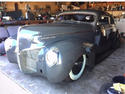
Nothing to add except beautiful car! Nice valve covers, do you plan to do a custom intake cover to match? The vortec cover just doesn't do it justice
Yeah, I agree. Ended up pulling the cover but its hard to make these truck motors look as nice as the cars. Im in it for reliability and drivability for now.
Gas Monkey Built a 6-Wheel Ferrari Testarossa With a Corvette LT4 Engine
Slideshow: The controversial Ferrari F6 swaps its original flat-12 for a Corvette Z06-derived LT4 V8 and sends power to four rear wheels through a custom-built drivetrain.
7 Most Reliable High-Performance Engines GM Has Ever Built
Slideshow:These GM engines didn't just make huge power, they survived abuse, boost, track days, and six-digit mileage with a reputation for refusing to quit.
6 Common C5 Corvette Failures and What's Involved In Repairing Them
Slideshow: From wobbling harmonic balancers to failed EBCMs, these are the issues that define long-term C5 ownership and what repairs typically involve.
Retro Modern Bandit Pontiac Trans AM Comes With Burt Reynolds' Autograph
Slideshow: A modern Camaro transformed into a retro icon, this limited-run "Bandit" build blends nostalgia with brute force in a way few revivals manage.
Top 10 Greatest Cadillac V Series Performance Models Ever, Ranked
Slideshow: Cadillac didn't just crash the high-performance luxury vehicle party, it showed up loud, supercharged, and occasionally a little unhinged...
Coachbuilt N2A Anteros Is an LS2-Powered C6 Corvette In Italian Clothes
Slideshow: A one-off sports car that looks like a vintage Italian exotic-but hides a C6 Corvette underneath-just sold for the price of a new mid-engine Corvette.






 Valve cover pcv needed?