







VVT Cams

Never said there wasnt just saying its still going to help having VVT with stock tables over no VVT is all. PatG was bragging about pretty big gains under the curve just by tuning the VVT tables on a stock cam so I would agree that its kind of senseless not to tune the phase tables because you'd be leaving power on the table

Never said there wasnt just saying its still going to help having VVT with stock tables over no VVT is all. PatG was bragging about pretty big gains under the curve just by tuning the VVT tables on a stock cam so I would agree that its kind of senseless not to tune the phase tables because you'd be leaving power on the table

__________________

Largest Stocking Distributor of LS-x Engines / CHECK OUT OUR NEW WEBSITE!
COMP - FAST - PACESETTER - DIAMOND RACING - EAGLE SPECIALTY PRODUCTS - CALLIES - COMETIC GASKETS
RAM CLUTCHES - MOSER ENGINEERING - KOOK'S HEADERS - ARP - GM BOLTS AND GASKETS - MSD - NGK
POWERBOND - ASP - AND MORE!
Largest Stocking Distributor of LS-x Engines / CHECK OUT OUR NEW WEBSITE!
COMP - FAST - PACESETTER - DIAMOND RACING - EAGLE SPECIALTY PRODUCTS - CALLIES - COMETIC GASKETS
RAM CLUTCHES - MOSER ENGINEERING - KOOK'S HEADERS - ARP - GM BOLTS AND GASKETS - MSD - NGK
POWERBOND - ASP - AND MORE!
Ive purposefully stayed away from recommending the VVT cams just because I didnt want to deal with tuning them and there isnt anyone local that knows how to do it. With a phaser curve and a TSP cam I suppose I may try to talk someone into trying one out
In all of our testing, the best gains were had by deleting AFM/DOD and just retaining the VVT so that we could use more aggressive lobes and more lift! Back to back, the same duration camshafts, one with at or under .500" valve lift and the other up near .600" (1.7 rockers), the higher lift made significant power gains all the way from idle to redline!
Our testing, as was backed up by Comp Cams' testing, revealed/confirmed that those stock AFM lifters will have a significantly shorter life (some ending catastrophically) when run over that magic .295" lobe lift (.500" valve lift on a 1.7 rocker)!
Our testing, as was backed up by Comp Cams' testing, revealed/confirmed that those stock AFM lifters will have a significantly shorter life (some ending catastrophically) when run over that magic .295" lobe lift (.500" valve lift on a 1.7 rocker)!
I have been running a "high-lift" afm/DOD Cam in my G8 for 10,000 miles so far and it gets run as hard as any. The 09 and later AFM/DOD use Delphi lifters which are far better than the Eaton crap Comp was testing with. Not making any claims on there reliability but they are built better and will absorb more lift during AFM mode. I run a .328 lobe lift cam and use a 1.85 SLP rocker(with stands modified to fix their geometry) to get my lift to +.600". AFM/DOD works fine and I still get the same MPG gains. My valvetrain is just as quiet as a non-DOD setup. I just pulled everything down and inspected all the lifters, rollers, and cam. It all looked great so it went back in till the next tear-down.
I will agree to not using a high-lift lobe with the heavier DOD lifter. The only way to get good use and power out of the AFM style lifter is with a higher ratio rocker.
I have been running a "high-lift" afm/DOD Cam in my G8 for 10,000 miles so far and it gets run as hard as any. The 09 and later AFM/DOD use Delphi lifters which are far better than the Eaton crap Comp was testing with. Not making any claims on there reliability but they are built better and will absorb more lift during AFM mode. I run a .328 lobe lift cam and use a 1.85 SLP rocker(with stands modified to fix their geometry) to get my lift to +.600". AFM/DOD works fine and I still get the same MPG gains. My valvetrain is just as quiet as a non-DOD setup. I just pulled everything down and inspected all the lifters, rollers, and cam. It all looked great so it went back in till the next tear-down.
I will agree to not using a high-lift lobe with the heavier DOD lifter. The only way to get good use and power out of the AFM style lifter is with a higher ratio rocker.
I will agree to not using a high-lift lobe with the heavier DOD lifter. The only way to get good use and power out of the AFM style lifter is with a higher ratio rocker.
__________________
Largest Stocking Distributor of LS-x Engines / CHECK OUT OUR NEW WEBSITE!
COMP - FAST - PACESETTER - DIAMOND RACING - EAGLE SPECIALTY PRODUCTS - CALLIES - COMETIC GASKETS
RAM CLUTCHES - MOSER ENGINEERING - KOOK'S HEADERS - ARP - GM BOLTS AND GASKETS - MSD - NGK
POWERBOND - ASP - AND MORE!
Largest Stocking Distributor of LS-x Engines / CHECK OUT OUR NEW WEBSITE!
COMP - FAST - PACESETTER - DIAMOND RACING - EAGLE SPECIALTY PRODUCTS - CALLIES - COMETIC GASKETS
RAM CLUTCHES - MOSER ENGINEERING - KOOK'S HEADERS - ARP - GM BOLTS AND GASKETS - MSD - NGK
POWERBOND - ASP - AND MORE!
TECH Fanatic


Joined: Aug 2005
Posts: 1,691
Likes: 1
From: Sunny London, UK
Comp spoke about their VVT stuff about 2 years ago at ATEC at PRI
Basically they used efilive to do all their tuning, so efilive has had vvt support for years and years.
Anyway as for tuning IIRC same as normal cam, but you lock the cam advance each time you tune so you get the full range of advance dialed in. (ie) Dont vary it while tuning. Lock the advance and optimise for each setting. Then unlock once done and away you go.
Nobody "needs" a phase locker, but if you mess up the advance in your tune you may end up opening the valve into a piston! So if you use a phase locker you reduce the range of adjustment but prevent tune mistakes from trashing stuff.
Apparently there isnt really much benefit from exceeding the 20* or so the phase locker sets. IIRC factory adjustment allows 60* of advance.
Maybe someone else who was there when Billy Godbold from Comp gave his presentation can clarify any points above.
Basically they used efilive to do all their tuning, so efilive has had vvt support for years and years.
Anyway as for tuning IIRC same as normal cam, but you lock the cam advance each time you tune so you get the full range of advance dialed in. (ie) Dont vary it while tuning. Lock the advance and optimise for each setting. Then unlock once done and away you go.
Nobody "needs" a phase locker, but if you mess up the advance in your tune you may end up opening the valve into a piston! So if you use a phase locker you reduce the range of adjustment but prevent tune mistakes from trashing stuff.
Apparently there isnt really much benefit from exceeding the 20* or so the phase locker sets. IIRC factory adjustment allows 60* of advance.
Maybe someone else who was there when Billy Godbold from Comp gave his presentation can clarify any points above.
Comp spoke about their VVT stuff about 2 years ago at ATEC at PRI
Basically they used efilive to do all their tuning, so efilive has had vvt support for years and years.
Anyway as for tuning IIRC same as normal cam, but you lock the cam advance each time you tune so you get the full range of advance dialed in. (ie) Dont vary it while tuning. Lock the advance and optimise for each setting. Then unlock once done and away you go.
Nobody "needs" a phase locker, but if you mess up the advance in your tune you may end up opening the valve into a piston! So if you use a phase locker you reduce the range of adjustment but prevent tune mistakes from trashing stuff.
Apparently there isnt really much benefit from exceeding the 20* or so the phase locker sets. IIRC factory adjustment allows 60* of advance.
Maybe someone else who was there when Billy Godbold from Comp gave his presentation can clarify any points above.
Basically they used efilive to do all their tuning, so efilive has had vvt support for years and years.
Anyway as for tuning IIRC same as normal cam, but you lock the cam advance each time you tune so you get the full range of advance dialed in. (ie) Dont vary it while tuning. Lock the advance and optimise for each setting. Then unlock once done and away you go.
Nobody "needs" a phase locker, but if you mess up the advance in your tune you may end up opening the valve into a piston! So if you use a phase locker you reduce the range of adjustment but prevent tune mistakes from trashing stuff.
Apparently there isnt really much benefit from exceeding the 20* or so the phase locker sets. IIRC factory adjustment allows 60* of advance.
Maybe someone else who was there when Billy Godbold from Comp gave his presentation can clarify any points above.
LS1 Tech Stories
The Best V8 Stories One Small Block at Time

Topdon ONE vs. Artidiag 800 BT2: Which is the Diagnostic Tablet For You?
Pouria Savadkouei
Gas Monkey Built a 6-Wheel Ferrari Testarossa With a Corvette LT4 Engine
Verdad Gallardo
7 Most Reliable High-Performance Engines GM Has Ever Built
Verdad Gallardo
Amazing '71 Camaro Restomod Is Modern Muscle Car Under the Skin
Verdad Gallardo
6 Common C5 Corvette Failures and What's Involved In Repairing Them
Pouria Savadkouei
Retro Modern Bandit Pontiac Trans AM Comes With Burt Reynolds' Autograph
Verdad Gallardo
Top 10 Greatest Cadillac V Series Performance Models Ever, Ranked
Pouria Savadkouei
Top 10 Most Powerful Chevy Trucks Ever Made!

Hennessey's New Supercharged Silverado ZR2 Has 700 HP
Verdad Gallardo
run it at 4*, then 6* and so forth...
look at at the dynos and see what timing each RPM cell likes, then fill in the blanks

Im not sure if thats the way to do it. The cam phase is not something completely linear so you have to first decide what kind of cam timing curve to utilize and then lock in your 2 degree bumps and set a/f/t tables. I wonder how to best log or figure out the optimum cam timing ( phase ) settings? Is it just trial and error or is there anyway to table the info and set as if your were doing VE?

6600 rpm clutch dump of death Administrator


Joined: Dec 2001
Posts: 4,983
Likes: 13
From: Texas
As with anything running a predictive model will only tell you so much. You end up having to run it on the dyno at some point and see what it likes. Pat and I have discussed AFM and DoD for quite some time. I'm a fan of it and have spent a lot of time trying to optimize my combo. I have turned it off in a several vehicles because the owners didn't care about fuel milage, and it made the exhaust sound funny when the cylinders cut out.
I think many folks will now become more interested in it with the Camaro having it. I've been playing with it for 3 years in my truck. I like AFM and DoD. My goal has been to pick up both low speed and high speed power. Low speed so I can leave it in AFM mode longer (like crusing down the freeway).
From a cam perspective it allows you to make a small cam act like a much bigger cam. You obviously can't move the LSA, but you can move the valve events around a bit to bias power towards lower or higher speed on the fly.
I think you have to be realistic on lobe selection and realize the limits you are working with. For AFM, you also don't need crazy jerk on a lobe. Limit lift, select a "slower" lobe like an endurance/marine lobe and if you are super concerned with that lobe vs one of the "fast" lobes out there, add a couple of degrees of duration.
For VVT, I'd say the easiest way for someone to make an educated guess without a dyno is to use one of the engine sim packages out there, build your cam, and then play with what happens when you advance or retard it... It should help you take a stab at the phaser tables.
I think many folks will now become more interested in it with the Camaro having it. I've been playing with it for 3 years in my truck. I like AFM and DoD. My goal has been to pick up both low speed and high speed power. Low speed so I can leave it in AFM mode longer (like crusing down the freeway).
From a cam perspective it allows you to make a small cam act like a much bigger cam. You obviously can't move the LSA, but you can move the valve events around a bit to bias power towards lower or higher speed on the fly.
I think you have to be realistic on lobe selection and realize the limits you are working with. For AFM, you also don't need crazy jerk on a lobe. Limit lift, select a "slower" lobe like an endurance/marine lobe and if you are super concerned with that lobe vs one of the "fast" lobes out there, add a couple of degrees of duration.
For VVT, I'd say the easiest way for someone to make an educated guess without a dyno is to use one of the engine sim packages out there, build your cam, and then play with what happens when you advance or retard it... It should help you take a stab at the phaser tables.
For VVT, I'd say the easiest way for someone to make an educated guess without a dyno is to use one of the engine sim packages out there, build your cam, and then play with what happens when you advance or retard it... It should help you take a stab at the phaser tables.
TECH Fanatic
Joined: Aug 2005
Posts: 1,691
Likes: 1
From: Sunny London, UK
Yeah based on what I was told you would basically set the cam advance based on airflow and rpm.
So you can make a table up and note down torque at various settings based on the various cam advances. Then figure out the general pattern and create your own cam advance map based on the output you get.
Ideally you want to log torque from serial input into efilive against airflow and rpm. I think a couple of dynos can do this. Maybe advance the cam a flat 5* across the board each time or whatever.
I know GM retard the cam heaps near idle to reduce pumping loses IIRC. Which means off idle response is crap, you can probably advance the cam timing near idle quite a bit from stock for better off idle response.
Basically it adds another dimension so tuning will take longer! But looks like lots of fun
So you can make a table up and note down torque at various settings based on the various cam advances. Then figure out the general pattern and create your own cam advance map based on the output you get.
Ideally you want to log torque from serial input into efilive against airflow and rpm. I think a couple of dynos can do this. Maybe advance the cam a flat 5* across the board each time or whatever.
I know GM retard the cam heaps near idle to reduce pumping loses IIRC. Which means off idle response is crap, you can probably advance the cam timing near idle quite a bit from stock for better off idle response.
Basically it adds another dimension so tuning will take longer! But looks like lots of fun
Any particular engine sim software recommended?
If you buy a TSP cam will they divulge the specs? Ill never buy a cam without knowing the specs, I just dont want to be taken out of the loop on my engine that Im building. I do like the idea of getting a phaser table with my purchase to take out some guess work.
Is Pat G spec'ing out VVT cams and if so is he providing in buyer support tuning wise?
I know these questions could be answered in a PM but figured some people would wonder the same thing since this seems to be the "best" VVT thread Ive seen on the forums lately.
If you buy a TSP cam will they divulge the specs? Ill never buy a cam without knowing the specs, I just dont want to be taken out of the loop on my engine that Im building. I do like the idea of getting a phaser table with my purchase to take out some guess work.
Is Pat G spec'ing out VVT cams and if so is he providing in buyer support tuning wise?
I know these questions could be answered in a PM but figured some people would wonder the same thing since this seems to be the "best" VVT thread Ive seen on the forums lately.
I have been tuning VVT vehicles for 3 years with EFI Live and I can tell you that there is tons to be gained from playing with cam phasing whether you choose to keep the stock VVT cam or go with an aftermarket cam.
In stock form, GM will retard the cam timing 20-30 degrees in the cruising rpm/load range in order to pick up some fuel economy. Basically, they are trying to make the motor act smaller and the EGR that is created dilutes the incoming air charge. In my testing, this practice AT BEST, increases fuel economy up to 1 mpg, but the loss in torque means that the vehicles are gutless when cruising and will often have to downshift from 6th to 5th or even 4th gear just to climb a slight grade.
In my tuning, I will advance the cam when it benefits the engine and retard it where it makes sense. With the stock cam, I've actually gained torque by retarding the stock cam some at 1200-1600 rpm in order to run more ignition timing. You see, the engine makes best power when peak cylinder pressure occurs at 13 degrees after TDC. If the cam is advanced too much at lower rpm, you have to retard ignition timing too much to stay out of knock. As a result, you make peak cylinder pressure well past 13 degrees ATDC. This reduces torque.
Basically, you need to balance ignition timing with cam phasing. They both go hand in hand. EFI Live has dozens of VVT tables that address cam phasing and ignition events that happen only with cam phasing.
With aftermarket cams, they benefit from more advance at lower rpm because of the EGR and lower dynamic compression they produce. For what it's worth, the GM software only retards the cam so you need to spec your aftermarket cam with the maximum amount of advance that you expect your engine to see (while keeping a careful eye on P to V clearance). I like the TSP VVT cams more than the MAST VVT cams because they don't run an excessively large exhaust event. Running too big an exhaust event hurts torque down low (when you advance the cam) and gets P to V clearance really tight (when you retard the cam). Most of my VVT cams have smaller splits between intake and exhaust.
In stock form, GM will retard the cam timing 20-30 degrees in the cruising rpm/load range in order to pick up some fuel economy. Basically, they are trying to make the motor act smaller and the EGR that is created dilutes the incoming air charge. In my testing, this practice AT BEST, increases fuel economy up to 1 mpg, but the loss in torque means that the vehicles are gutless when cruising and will often have to downshift from 6th to 5th or even 4th gear just to climb a slight grade.
In my tuning, I will advance the cam when it benefits the engine and retard it where it makes sense. With the stock cam, I've actually gained torque by retarding the stock cam some at 1200-1600 rpm in order to run more ignition timing. You see, the engine makes best power when peak cylinder pressure occurs at 13 degrees after TDC. If the cam is advanced too much at lower rpm, you have to retard ignition timing too much to stay out of knock. As a result, you make peak cylinder pressure well past 13 degrees ATDC. This reduces torque.
Basically, you need to balance ignition timing with cam phasing. They both go hand in hand. EFI Live has dozens of VVT tables that address cam phasing and ignition events that happen only with cam phasing.
With aftermarket cams, they benefit from more advance at lower rpm because of the EGR and lower dynamic compression they produce. For what it's worth, the GM software only retards the cam so you need to spec your aftermarket cam with the maximum amount of advance that you expect your engine to see (while keeping a careful eye on P to V clearance). I like the TSP VVT cams more than the MAST VVT cams because they don't run an excessively large exhaust event. Running too big an exhaust event hurts torque down low (when you advance the cam) and gets P to V clearance really tight (when you retard the cam). Most of my VVT cams have smaller splits between intake and exhaust.
__________________

2013 Corvette Grand Sport A6 LME forged 416, Greg Good ported TFS 255 LS3 heads, 222/242 .629"/.604" 121LSA Pat G blower cam, ARH 1 7/8" headers, ESC Novi 1500 Supercharger w/8 rib direct drive conversion, 747rwhp/709rwtq on 93 octane, 801rwhp/735rwtq on race fuel, 10.1 @ 147.25mph 1/4 mile, 174.7mph Half Mile.
2016 Corvette Z51 M7 Magnuson Heartbeat 2300 supercharger, TSP LT headers, Pat G tuned, 667rwhp, 662rwtq, 191mph TX Mile.
2009.5 Pontiac G8 GT 6.0L, A6, AFR 230v2 heads. 506rwhp/442rwtq. 11.413 @ 121.29mph 1/4 mile, 168.7mph TX Mile
2000 Pewter Ram Air Trans Am M6 heads/cam 508 rwhp/445 rwtq SAE, 183.092 TX Mile
2022 Cadillac Escalade 6.2L A10 S&B CAI, Corsa catback.
2023 Corvette 3LT Z51 soon to be modified.
Custom LSX tuning in person or via email press here.
2013 Corvette Grand Sport A6 LME forged 416, Greg Good ported TFS 255 LS3 heads, 222/242 .629"/.604" 121LSA Pat G blower cam, ARH 1 7/8" headers, ESC Novi 1500 Supercharger w/8 rib direct drive conversion, 747rwhp/709rwtq on 93 octane, 801rwhp/735rwtq on race fuel, 10.1 @ 147.25mph 1/4 mile, 174.7mph Half Mile.
2016 Corvette Z51 M7 Magnuson Heartbeat 2300 supercharger, TSP LT headers, Pat G tuned, 667rwhp, 662rwtq, 191mph TX Mile.
2009.5 Pontiac G8 GT 6.0L, A6, AFR 230v2 heads. 506rwhp/442rwtq. 11.413 @ 121.29mph 1/4 mile, 168.7mph TX Mile
2000 Pewter Ram Air Trans Am M6 heads/cam 508 rwhp/445 rwtq SAE, 183.092 TX Mile
2022 Cadillac Escalade 6.2L A10 S&B CAI, Corsa catback.
2023 Corvette 3LT Z51 soon to be modified.
Custom LSX tuning in person or via email press here.
Thread Starter
Joined: Apr 2010
Posts: 2,816
Likes: 86
From: Instagram @chevyhotrodder
Patrick, do you offer mail order tuning services with your custom cams? I know there are a lot of variables and a mail order tune will not get you 100% there, but I'd really like a good starting place from someone with experience tuning these things. If you do, let me know and I'll fill out one of your cam sheets and give you a call.
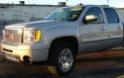
I cant wait to get me a truck that has VVT. Damn, good condition black on black Denalis with sunroof, nav, rear dvd, awd and not on the other side of the country is hard to find 
Is your denali a 2wd Patrick? How comfortable do you feel using the hp and tq PIDs in EFI to gauge whether your changes are working or not. Some people make fun of people like me who use those PIDs. I realize they dont actually represent the real number a given engine is making but they should indicate whether the change made is positive or negative in regards to power made... I plan on getting an AWD so spending time on a dyno isnt going to be possible with the wheelbase of a full size truck.
Is your denali a 2wd Patrick? How comfortable do you feel using the hp and tq PIDs in EFI to gauge whether your changes are working or not. Some people make fun of people like me who use those PIDs. I realize they dont actually represent the real number a given engine is making but they should indicate whether the change made is positive or negative in regards to power made... I plan on getting an AWD so spending time on a dyno isnt going to be possible with the wheelbase of a full size truck.

I cant wait to get me a truck that has VVT. Damn, good condition black on black Denalis with sunroof, nav, rear dvd, awd and not on the other side of the country is hard to find
Is your denali a 2wd Patrick? How comfortable do you feel using the hp and tq PIDs in EFI to gauge whether your changes are working or not. Some people make fun of people like me who use those PIDs. I realize they dont actually represent the real number a given engine is making but they should indicate whether the change made is positive or negative in regards to power made... I plan on getting an AWD so spending time on a dyno isnt going to be possible with the wheelbase of a full size truck.
Is your denali a 2wd Patrick? How comfortable do you feel using the hp and tq PIDs in EFI to gauge whether your changes are working or not. Some people make fun of people like me who use those PIDs. I realize they dont actually represent the real number a given engine is making but they should indicate whether the change made is positive or negative in regards to power made... I plan on getting an AWD so spending time on a dyno isnt going to be possible with the wheelbase of a full size truck.
FWIW, Patrick is gonna be dyno tuning my 2WD SD in the next few weeks, and he asked if mine was 2WD or AWD. He was relieved to hear that mine is 2WD - that will save time when it comes to dyno tune in that we won't need to remove the front driveshaft to dyno it.
Last edited by Lloyd-TX; Dec 9, 2010 at 11:22 AM.
Used 6.2 Denalis are out there, just gotta keep looking! Are you hunting for a Yukon Denali or Sierra Denali? And why AWD in Texas? AWD adds 350+ lbs . . .
FWIW, Patrick is gonna be dyno tuning my 2WD SD in the next few weeks, and he asked if mine was 2WD or AWD. He was relieved to hear that mine is 2WD - that will save time when it comes to dyno tune in that we won't need to remove the front driveshaft to dyno it.
FWIW, Patrick is gonna be dyno tuning my 2WD SD in the next few weeks, and he asked if mine was 2WD or AWD. He was relieved to hear that mine is 2WD - that will save time when it comes to dyno tune in that we won't need to remove the front driveshaft to dyno it.
Even though I havent been able to find any info on people who have pulled the front shaft on the new tcases that are in the GMT900 denalis, the old NVG149 didnt care too much for not having the front shaft in it and puked shortly there-after if any decent amount of power was put through it. Im in the middle of trying research if the NVG149 can be retrofitted into the GMT900 as the borg warner tcase that comes standard apparently depends on the braking system to bias power and I dont like that at all. Ill modulate the power with my right foot not the left
