




Pics of LSA Heads.

Thread Starter
LS1Tech Sponsor
iTrader: (14)
Joined: Feb 2009
Posts: 2,262
Likes: 2
From: Lubbock, TX
 Pics of LSA Heads.
 I have some raw pictures of an LSA head here on my desk. I believe that alot of head porters can start using this head as a basis for porting, as the bare heads are relatively inexpensive. And by that I mean they are $220. That isnt too bad for a good cyl head.
Normally if you are going to get them machine, it will cut off all the possible flow problems that are there.
The main issue is the vane/step that is in the intake side.
Here are some pics of the heads.


and the valve valley

Chambers


And exhaust port


It does not look like there is alot of problems behind the valve on the seat transition either.
Normally if you are going to get them machine, it will cut off all the possible flow problems that are there.
The main issue is the vane/step that is in the intake side.
Here are some pics of the heads.
and the valve valley
Chambers
And exhaust port
It does not look like there is alot of problems behind the valve on the seat transition either.
Thread Starter
LS1Tech Sponsor
iTrader: (14)
Joined: Feb 2009
Posts: 2,262
Likes: 2
From: Lubbock, TX
I did not get any PM about that. GM has put out quite a few pns recently that have no cost and no eta, so trying to find out anything about them is really hard to do.
The LSA head is supposed to be thicker on the deck, but is also a diff head casting than the LS9. They use a std size head bolt as well.
Having them ported, they are a cost effective alternative to the LS3 head bare.
They use the same exhaust valve as the LS3, but use a different intake valve. They are still the 2.165 1.59 sizes.
The LSA head is supposed to be thicker on the deck, but is also a diff head casting than the LS9. They use a std size head bolt as well.
Having them ported, they are a cost effective alternative to the LS3 head bare.
They use the same exhaust valve as the LS3, but use a different intake valve. They are still the 2.165 1.59 sizes.
Last edited by Beau@SDPC; Jan 28, 2011 at 10:43 AM.
Thread Starter
LS1Tech Sponsor
iTrader: (14)
Joined: Feb 2009
Posts: 2,262
Likes: 2
From: Lubbock, TX
No. I am saying that if you are going to port them. The pictures above def show they are not cnc.
The bare head is a little less than the ls3 bare head is, so it is a better option for keeping cost down when having them sent off and cnc. Alot of customers like to purchase the bare head and build as needed. We do not offer these cnc yet.
I edited my post to make it more clear.
The bare head is a little less than the ls3 bare head is, so it is a better option for keeping cost down when having them sent off and cnc. Alot of customers like to purchase the bare head and build as needed. We do not offer these cnc yet.
I edited my post to make it more clear.
Trending Topics
LS1 Tech Stories
The Best V8 Stories One Small Block at Time

Topdon ONE vs. Artidiag 800 BT2: Which is the Diagnostic Tablet For You?
Pouria Savadkouei
Gas Monkey Built a 6-Wheel Ferrari Testarossa With a Corvette LT4 Engine
Verdad Gallardo
7 Most Reliable High-Performance Engines GM Has Ever Built
Verdad Gallardo
Amazing '71 Camaro Restomod Is Modern Muscle Car Under the Skin
Verdad Gallardo
6 Common C5 Corvette Failures and What's Involved In Repairing Them
Pouria Savadkouei
Retro Modern Bandit Pontiac Trans AM Comes With Burt Reynolds' Autograph
Verdad Gallardo
Top 10 Greatest Cadillac V Series Performance Models Ever, Ranked
Pouria Savadkouei
Top 10 Most Powerful Chevy Trucks Ever Made!

Hennessey's New Supercharged Silverado ZR2 Has 700 HP
Verdad Gallardo Thread Starter
LS1Tech Sponsor
iTrader: (14)
Joined: Feb 2009
Posts: 2,262
Likes: 2
From: Lubbock, TX
There is no concrete proof either way. Having the possibly thicker deck, I would say so, but I have not heard an GM reports or cyl head comparison that says 100% that the rumors are true.

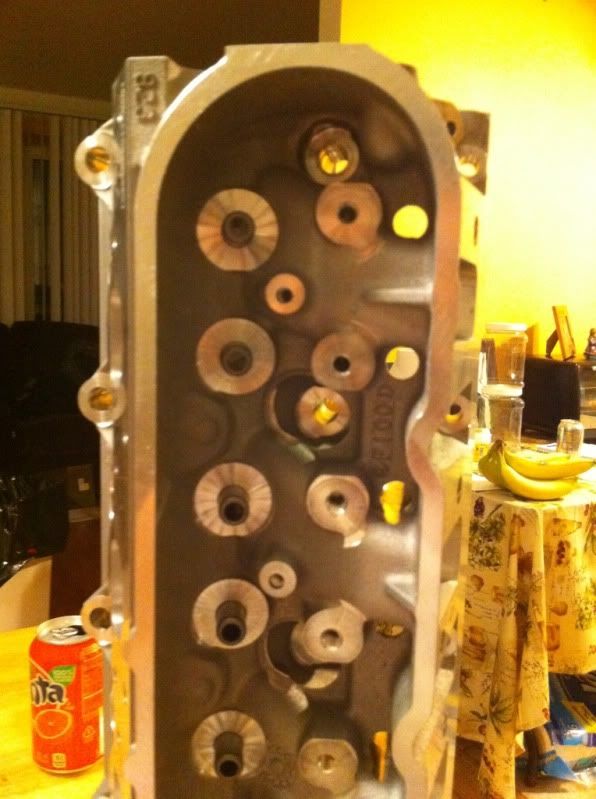

I don't think they're a thicker deck. They have a different casting process to make them stronger. The chambers finish texture themselves looks completely different.
"The LSA heads feature a unique “wing” cast into each intake port to promote a swirling motion that blends the pressurized air-fuel charge. The heads are also cast from a premium A356-T6 alloy, which better manages the heat generated in a supercharged engine. A356-T6 pays particular dividends in the thin bridge area between the intake and exhaust valves, where effective heat dissipation is crucial to both performance and long-term durability. Finally, the LSA heads are rotacast. This process rotates the head mold as the molten alloy cools and essentially eliminates porosity, or microscopic pockets of air trapped in the casting. Rotacasting delivers a stronger part that helps maintain performance and structural integrity over the life of the engine."
"The LSA heads feature a unique “wing” cast into each intake port to promote a swirling motion that blends the pressurized air-fuel charge. The heads are also cast from a premium A356-T6 alloy, which better manages the heat generated in a supercharged engine. A356-T6 pays particular dividends in the thin bridge area between the intake and exhaust valves, where effective heat dissipation is crucial to both performance and long-term durability. Finally, the LSA heads are rotacast. This process rotates the head mold as the molten alloy cools and essentially eliminates porosity, or microscopic pockets of air trapped in the casting. Rotacasting delivers a stronger part that helps maintain performance and structural integrity over the life of the engine."


Good info
I don't think they're a thicker deck. They have a different casting process to make them stronger. The chambers finish texture themselves looks completely different.
"The LSA heads feature a unique “wing” cast into each intake port to promote a swirling motion that blends the pressurized air-fuel charge. The heads are also cast from a premium A356-T6 alloy, which better manages the heat generated in a supercharged engine. A356-T6 pays particular dividends in the thin bridge area between the intake and exhaust valves, where effective heat dissipation is crucial to both performance and long-term durability. Finally, the LSA heads are rotacast. This process rotates the head mold as the molten alloy cools and essentially eliminates porosity, or microscopic pockets of air trapped in the casting. Rotacasting delivers a stronger part that helps maintain performance and structural integrity over the life of the engine."
"The LSA heads feature a unique “wing” cast into each intake port to promote a swirling motion that blends the pressurized air-fuel charge. The heads are also cast from a premium A356-T6 alloy, which better manages the heat generated in a supercharged engine. A356-T6 pays particular dividends in the thin bridge area between the intake and exhaust valves, where effective heat dissipation is crucial to both performance and long-term durability. Finally, the LSA heads are rotacast. This process rotates the head mold as the molten alloy cools and essentially eliminates porosity, or microscopic pockets of air trapped in the casting. Rotacasting delivers a stronger part that helps maintain performance and structural integrity over the life of the engine."
I thought I noticed something different about them . I forgot about the Rotocast process . I originally thought they were casting blocks with the same process as well . How can I get these LSA with LS3 valves ? The LS3 heads are being sold @ an awesome price but I'd like to get a set of these castings w/ the lightweight intake valves .


I had the same thought I have read they are .600+ on the deck but no one has solid proof that I can find. There is no doubt hey are a stronger material and a much.better casting process which was enough for me to try them.