








Balancing motor questions
 Balancing motor questions
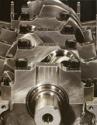
 I was going to balance my pistons to within a tenth of a gram but my engine builder says its pointless. He also says most aftermarket rods will be spot on good enough. I am going to run a LS2 crank from a motor that broke a piston from dropping a valve. The crank looks good but I was going to have him check it for trueness. Should the crank need to get balanced?
I’d find another builder. I’ve NEVER seen a set of rods that didn’t have have something done to them. I just picked up another 6liter build from my machinist Monday, and the brand new h-beam rods I dropped off have been considerably massaged.
So all the engines that come stock from gm, all the rods weigh exactly the same? so like in my ls1, are all my rods weight matched within a half a gram? should i pull my engine apart and weight match them?
I wouldn’t bother. Once oil starts to accumulate on the internal parts, all that work to get them all within a gram was basically for nothing.
Trending Topics
and this was exactly my point after an above poster said he should find another builder. If the rod weight is off by a little bit, that won’t amount to a hill of bean. Reciprocating weight doesn’t notice it near as much as rotating weight. As long as the rod weights and piston weights are close, it don’t matter. I agree with the original posters machinist.
LS1 Tech Stories
The Best V8 Stories One Small Block at Time

6 Common C5 Corvette Failures and What's Involved In Repairing Them
Pouria Savadkouei
Retro Modern Bandit Pontiac Trans AM Comes With Burt Reynolds' Autograph
Verdad Gallardo
Top 10 Greatest Cadillac V Series Performance Models Ever, Ranked
Pouria Savadkouei
Top 10 Most Powerful Chevy Trucks Ever Made!

Hennessey's New Supercharged Silverado ZR2 Has 700 HP
Verdad Gallardo
Coachbuilt N2A Anteros Is an LS2-Powered C6 Corvette In Italian Clothes
Verdad Gallardo
Awesome K5 Blazer Restomod Comes With C7 Corvette Power
Verdad Gallardo
10 Camaros You Should Never Buy

10 LS Engine Myths That Refuse to Die
Verdad Gallardo and this was exactly my point after an above poster said he should find another builder. If the rod weight is off by a little bit, that won’t amount to a hill of bean. Reciprocating weight doesn’t notice it near as much as rotating weight. As long as the rod weights and piston weights are close, it don’t matter. I agree with the original posters machinist.
when it makes zero difference then why worry about it. There’s many many fast cars around here that didn’t worry with that. And most of the fast factory stock cars included. But if you like throwing money away for fake peace of mind, that’s your choice, but why tell someone find another machinist when truly his machinist is correct? Makes zero sense to me.

So for my own personal learning and to help the OP, what is considered an acceptable +/- on the balance? At what point is it that it’s too far off and parts needs to be shaved?
when it makes zero difference then why worry about it. There’s many many fast cars around here that didn’t worry with that. And most of the fast factory stock cars included. But if you like throwing money away for fake peace of mind, that’s your choice, but why tell someone find another machinist when truly his machinist is correct? Makes zero sense to me.
FWIW, years ago I balanced a Ford mod motor crank without all of the rotating assembly compnents in hand. I was given the weight of the rod bearings by the owner and used that to calculate the bobweight. The engine was built, installed, and never had a problem. Months later, we had another one and I decided to check the weight of those bearings. Turns out they were heaver and that first crank was balanced almost 40 grams under. The customer never noticed and the engine never gave him any problems.

There isn’t really an answer for that. The Hines digital balancer I used to use would stop once you got within 2 grams, however, not all machinists calculate the bobweight the same way.
FWIW, years ago I balanced a Ford mod motor crank without all of the rotating assembly compnents in hand. I was given the weight of the rod bearings by the owner and used that to calculate the bobweight. The engine was built, installed, and never had a problem. Months later, we had another one and I decided to check the weight of those bearings. Turns out they were heaver and that first crank was balanced almost 40 grams under. The customer never noticed and the engine never gave him any problems.
Yeah, usually. It depends how much heavier the bobweight is. If it’s a lot, you have to add heavy metal. If its not a lot, you can sometimes get away with grinding on the crank 180 degrees opposite of where on the counterweight the weight needs to be added.
Thanks for all the great info. I may just balance my pistons myself just to get closer since it hardly takes any time and zero $$$. Good to hear of everyone's actual experiences. Its crazy to hear how different opinions this topic can have.
With that in mind, would there be any benefit in using a gen 4 6.0 crank when doing an iron LM7 347 forged rods and pistons build? Since it was balanced to heavier rods/pistons it may reduce the chance of needing to add weight to the crank when using forged rods/pistons? Have you ever checked an oem ls rotating assembly to see how well they are balanced?

I was going to balance my pistons to within a tenth of a gram but my engine builder says its pointless. He also says most aftermarket rods will be spot on good enough. I am going to run a LS2 crank from a motor that broke a piston from dropping a valve. The crank looks good but I was going to have him check it for trueness. Should the crank need to get balanced?
FWIW - My engine builds are money pits

I'm OK with ~ $250 to precision balance to make sure it's right. Long ago had a Callies LS stroker crank "within a couple of grams" for my rods & pistons per the shop selling it. Only minor tweaks would be needed at most. My SAM friend building the engine double checked. The crank needed a lot of heavy metal removed. The rough crank balance was for a heavy 900 hp nitrous piston, not the much lighter trick Wiseco pistons we were using. The aftermarket rods & pistons were very close out of the box with minor tweaks needed. After that experience, I always prefer having it checked.
I doubt a 1/10 of a gram balance vs 2 gram balance would critical in typical applications. My guess is in endurance racing or road racing or very high rpm, that 1/10 of a gram level of precision balance seems more likely to become critical.
Last edited by 99 Black Bird T/A; Dec 22, 2018 at 09:00 AM.

FYI, the typical "oil allowance" when determining the bob weight to balance the crank with is 8 grams. How close do you need each component to be?
Match a heavy rod with a light piston, number everything, and be done with it. As long as all the bob weights are the same in the end, it doesn't matter.
I used a stock 6.2 crank, stock gen IV rods and SRP forged 4032 4.070" pistons in my engine. I ended up having to drill the crank a little because the bob weights were slightly LIGHTER than stock.