When you click on links to various merchants on this site and make a purchase, this can result in this site earning a commission. Affiliate programs and affiliations include, but are not limited to, the eBay Partner Network.
I began having a random misfire on #2 a few days ago. Took it to a different local shop (Shop "B") for the health check than the one who built it (Shop "A") in summer 2019 because I wasn't happy at all with shop A's work (even though it's still under shop A's 10K/18mo warranty). The covers were never off the longblock since receiving the car back from the builder. I have had the TB off to replace the throttle cable bracket, and replaced the ignition harnesses. Multiple concerns, this is what was found so far:
* AC compressor leaking dye
* Steering rack seals leaking
* Rear end gasket leaking (shop A did this work while the engine was out, used a gasket instead of RTV)
* Likely a rear main seal leak
* Car has been street tuned using a new wideband sensor in the B1 collector, an air-calibrated NGK AFX controller, and HPT. Tuning shows VE fueling is within 5% error up until 4000RPM (about when the clutch starts slipping), MAF error generally within 3% error up until 9000Hz (when the clutch starts slipping)
* TR6 (installed new last summer) spark plugs are reported to be all rich and black. #2 was a little wet but not crazy, photo below. A few had broken porcelain.During removal, plugs were tight, but not overly tight. Jake said the pattern on the plugs could be related to incomplete combustion and recommended bumping up dwell tables to get me just under 5.5ms dwell and a lot hotter spark. He provided the data and I've loaded it into my tune for future upload to the PCM.
* Leak down and compression results attached below.
* I still have my original LS1 coils, but installed new Firecore 50 wires last summer with the engine rebuild. I was already considering buying new brackets and coils, but not because of any known problem with them, only because they look like *** due to their age.
* Injectors were cleaned last summer at shop A.
* Shop B is going to scope the bores tomorrow morning to see how much carbon buildup is on the pistons. At this time, they are leaning towards a ring or wall issue.
* When I bought this block used in 2010, we went with 4.070" bore. During cleanup by shop A, the bore is now supposedly 4.0791".
At this time, I'm curious on:
* What causes the plug insulators to break?
* Anything that would cause a false high leakdown through the oil cap?
* What would cause cyl6 compression to be so high compared to the rest?
Last edited by JimMueller; May 21, 2020 at 06:13 PM.
Reason: added new info
Haven't replaced the plugs yet. Going to scope the bores tomorrow. The shop owner feels like I could have an oil ring or wall issue, especially with the 20% leak on 2 cylinders. I'm irked at the range in the leakdown results and that one cylinder that has very high compression. Would you tear it down, or perform some minor repairs and monitor? Replace plugs & coils and check/replace injectors before tear down?
Oil usually causes the porcelain to break which the broken porcelain is probably the cause of your misfire. If you’re still misfiring after replacing the plugs, see if it’s misfiring at idle, or under a load, or all the time.
20% leakage shouldn’t cause a misfire unless the cranking compression is low
Pending the results of the bore scoping this morning, What kind of results from the bore scoping would require engine tear down for a re-ring, hone, etc vs. simply replacing external components like the plugs, injectors, coils, etc. and sending me on my way to continue monitoring? What about the large leakdown loss of 20% being a concern?
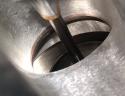
Bore photos from #2, requested photos for #4 & #6 also but Shop B says that there no point in testing further, they recommend pulling the motor and have it completely checked and measured for bore straightness, piston fitment and ring gap end clearance. This is with about 6K miles on the engine build.
Last edited by JimMueller; May 22, 2020 at 11:05 AM.
I've gotten a recommendation from another tech (who was partially involved with Shop A engine build, but moved away before I got my car back) who has seen the same photos. He said before going into open heart surgery, to consider upgraded PCV, change plugs, change coils and check/clean/replace injectors. Do I need to jump right in to tear down, or is that that recommendation reasonable? The Shop B owner comes across as strongly suggesting an immediate teardown. He's been rebuilding the LS engines for about 20 years, but he's a little known local shop with good reviews.
Oil usually causes the porcelain to break which the broken porcelain is probably the cause of your misfire. If you’re still misfiring after replacing the plugs, see if it’s misfiring at idle, or under a load, or all the time.
20% leakage shouldn’t cause a misfire unless the cranking compression is low
Whats the inside of your intake look like? Does your rocker bolts have sealant on them? What was the reason shop B gave you to tear it down?
What PCV system you run now?
Whats the inside of your intake look like? Does your rocker bolts have sealant on them? What was the reason shop B gave you to tear it down?
What PCV system you run now?
I don't think they've looked inside the intake yet, but the last time I had the TB off a few months ago, there was at least an oily film on the bottom of the intake. Heads are not ported, so rocker arms do not extend into runners thus no need for sealant. Very simple pcv... DS valvecover plugged, PS to TB, valley cover to catch can dirty in, catch can clean out to intake manifold. Pcv lines are 3/8" fuel lines, no pcv orifice inline.
Shop B is suggesting tear down to check walls, rings, bore straightness, etc based upon:
1) high leakdown numbers in some of the cylinders
2) the amount of carbon buildup shown above in cyl 2 at only 6K miles. Claims it looks like a 200K engine.
3) frequency of filling the catch can (about every 1000mi)
4) rear main seal appears to be leaking, I'm not sure if its related to high crankcase pressure
I'm not rich, and although I'm better off now than I often am, I'm trying to not spend frivolously nor redundantly. Invoice so far is 500, to scope the remaining cylinders would be another 200. Buying a mightymouse catch can setup would be 300, new injectors 180, to clean existing injectors cost unknown, new coils and brackets about 300. Is there a way to test my 22yr old coils? Would like to decarb the chambers, pistons and rings, sounds difficult to do a good job on that without pulling heads. If I do plugs/pcv/inj/coils first, reevaluate and problem continues, still need teardown. If I tear down now, and the problem is pcv/inj/cpils, I'd need to do them anyway during or after rebuild.
A GM master tech of 20 years who helped at Shop A on my car, but moved out of state prior to me taking delivery, suggests plugs/pcv/inj/coils first and to skip bore scoping the remaining cylinders. Monitor and go into engine later if necessary.
Another local friend and shop owner says I'm overthinking the carbon buildup and agreed with master tech process except suggests scoping the remaining cylinders also.
One concern with tear down is the current overbore of +.015 (4.080) is supposedly the service limit on the LS3 block. Without sonic testing (if that's available locally), I don't know if we can go bigger if something on the cylinder walls would dictate that. I'm only staying N/A, but I do need the engine to be reliable, preferably for 20min HPDE sessions also. If I can reuse the same block and pistons, that'd be simpler. If it will safely accept a wall cleanup but needs a larger piston, then I'm finding it tough to find LS pistons > 4.080 bore without ordering custom. New LS3 blocks are $2300, shipping block away for Darton liners is about the same cost, new built short blocks are at least 5K. I checked with Thompson and Katech and they don't stock what I want, lead time is 2-10 weeks depending on vendor.
And with the economic situation, risk of more parts being back ordered and longer lead times.
After writing all of this, I'm leaning towards going with the master tech's process simple due to concerns related to obtaining parts during the current economy. Hopefully the new coil dwell settings that Darth V8r gave me improves the combustion process and the new pcv design at least reduces the carbon buildup and oil issue. It'd be nice to start over with clean rings and pistons to easily compare in the future, but I'm undecided whether to approve Shop B to pull the heads simply to do that. I haven't asked them, but I suspect that would be a $1000 bill just in the labor to clean off carbon deposits.
Thanks all for the feedback.
Last edited by JimMueller; May 23, 2020 at 07:02 AM.
With your PCV system do you have a clean air in?
I have clean air into drivers head, passenger head blocked, dash16 from oil fill to catch can, upr one way breather on top of can, pcv tapped on can out to manifold, valley cover blocked....The UPR one way breather is key, system operates as oem when cruising then goes to atmosphere when into it. Without the one way breather when your into it , all will go thru manifold....
I think your rear main seal leaking tells you to much crank case pressure, hence filling your catch can , and how much isnt getting caught in catch can and going thru intake into cylinders where its burning really hot , toasting plugs. In my way of thinking 1st step is get your PCV working properly then new set of tr6 plugs and go from there. Id also fill with a mineral oil until your next usual oil change and drive it hard, load it up....
I'm not strong on the PCV terms, but there is a tube going from the side of my throttle body to the passenger side valve cover, but I don't know which way the air flows inside. I've seen reference on aftermarket designs that indicate that tube should be moved from the TB nipple to before the MAF. I'd rather buy a system that I know works than risk designing one from scratch that is questionable.
Since the engine was built, I've only used non-synthetic oil (either Valvoline Daily Protection 5W-30 or Pennzoil Conventional 5W-30). Catch can has a few small pot scrubber filters at the top, are you suggesting to fill the main reservoir with scrubbers also?
I've been recommended to try Seafoam or ACDelco X66P poured/spraying through the spark plug hole, two cylinders at a time, let sit for 4+ hours, siphon out remaining fluid, put everything back together, blast around, change oil, repeat with the rest of the cylinders. Shop B says the X66P doesn't work as well as people think and isn't aware of anything we can spray into the spark plug hole that would adequately clean off the carbon buildup as well as removing the head. If it's not going to work well, for the sake of simplicity I'd just as soon try a product I can put in through a vacuum line or through the throttle body, combined with more spirited driving.
I fill my can(main reservoir) to the top with stainless pot scrubbers, helps catch condensate/vapours turn back to a solid before gettin sucked thru intake
The tube on passenger side to TB is clean air in, after maf is best position, you dont want any vacuum
I wasnt going to pay $800au for a mighty mouse system to be delivered to australia , so built my own, same routing, hardest thing was to find the one way breather, finished, it only cost me $280. No oil in intake whatsoever. As said earlier the one way breather is KEY
If your not that inclined to do yourself definitely get the mighty mouse system. I think theres a mild system for sale in classifieds here for $280
Ive heard seafoam works well.
My old engine had same issue your having . Its definitely pcv related , wont fix the bad leakdown tho
No way I would tear the motor down with those compression dry/wet numbers. Even fr the terrible pics the tune is not as close as your original post stated, or what they set the car up for in the tune is way off. Have you confirmed they have good injector data in the tune? Get rid of any pcv connections to the intake and vent everything. Fresh plugs/wires. Get the tune right, verifying BOTH banks are in agreement. Drive it and then reassess.
I'm not strong on the PCV terms, but there is a tube going from the side of my throttle body to the passenger side valve cover, but I don't know which way the air flows inside. I've seen reference on aftermarket designs that indicate that tube should be moved from the TB nipple to before the MAF. I'd rather buy a system that I know works than risk designing one from scratch that is questionable.
Since the engine was built, I've only used non-synthetic oil (either Valvoline Daily Protection 5W-30 or Pennzoil Conventional 5W-30). Catch can has a few small pot scrubber filters at the top, are you suggesting to fill the main reservoir with scrubbers also?
I've been recommended to try Seafoam or ACDelco X66P poured/spraying through the spark plug hole, two cylinders at a time, let sit for 4+ hours, siphon out remaining fluid, put everything back together, blast around, change oil, repeat with the rest of the cylinders. Shop B says the X66P doesn't work as well as people think and isn't aware of anything we can spray into the spark plug hole that would adequately clean off the carbon buildup as well as removing the head. If it's not going to work well, for the sake of simplicity I'd just as soon try a product I can put in through a vacuum line or through the throttle body, combined with more spirited driving.
If you can get the X66P, it is the best product that I’ve ever used. Problem is they stopped making it a couple years ago. I’ve used it first hand hundreds of times and have seen how well it works.
I have several hundred bottles of it that I’ve accumulated over the past several years.
No way I would tear the motor down with those compression dry/wet numbers. Even fr the terrible pics the tune is not as close as your original post stated, or what they set the car up for in the tune is way off. Have you confirmed they have good injector data in the tune? Get rid of any pcv connections to the intake and vent everything. Fresh plugs/wires. Get the tune right, verifying BOTH banks are in agreement. Drive it and then reassess.
* Using LS3 injector data fitted to LS1 tables provided by Dave Steck on HPTuners forum probably a decade ago. I'll see if I can reconfirm the data.
* MAF tune is pretty close, VE isn't quite as close as I remember it, but I'm running closed loop. Most recent logs for MAF & VE tuning attached. But this is only from the (typically leaner) driver bank. I've never connected the wideband to B2, but since I'm running closed loop, the fuel trims should pick up on any large discrepancies, right?
* New Firecore50 wires were installed last summer.
* I've read other concerns about converting PCV to fresh air breather, something about vacuum. Would this piece with a check valve work fine? Is it going to leave residue in my engine compartment?
*** https://www.c-f-m.com/performancepar...2#.V-FM_VRHanM
* If I were to install that breather as the oil cap, how do I route the in.out connections for the catch can, or do I no longer need one?
If you vent both valve covers you no longer need an in/out of w catch can. You can vent both to a catch can but nothing goes to the intake. It guarantees no residue getting back into the motor. I would confirm those injectors cause the plugs are so black. You could also try leaving it open loop if the AFR is dialed in. Your O2 sensors may be fooling you which can happen with modified engines, especially if you have LTs or a cam with overlap.
If you can get the X66P, it is the best product that I’ve ever used. Problem is they stopped making it a couple years ago. I’ve used it first hand hundreds of times and have seen how well it works.
Can the X66P/BMW product be used without directly applying it through the spark plug hole, such as through a vacuum line or directly into the throttle body, that a typical aerosol top end cleaner uses? Does the GM upper engine cleaner come close to the X66P wrt cleaning cabability?
You can apply through vacuum.... suck the whole bottle into the engine then shut it off and let sit for a couple hours. Just be careful not to hydraulic lock the engine when doing so. Make sure it’s outside and the wife isn’t home. It’s going to make a god awful smoke show. Be sure to change the oil after as well.
Gas Monkey Built a 6-Wheel Ferrari Testarossa With a Corvette LT4 Engine
Slideshow: The controversial Ferrari F6 swaps its original flat-12 for a Corvette Z06-derived LT4 V8 and sends power to four rear wheels through a custom-built drivetrain.
7 Most Reliable High-Performance Engines GM Has Ever Built
Slideshow:These GM engines didn't just make huge power, they survived abuse, boost, track days, and six-digit mileage with a reputation for refusing to quit.
6 Common C5 Corvette Failures and What's Involved In Repairing Them
Slideshow: From wobbling harmonic balancers to failed EBCMs, these are the issues that define long-term C5 ownership and what repairs typically involve.
Retro Modern Bandit Pontiac Trans AM Comes With Burt Reynolds' Autograph
Slideshow: A modern Camaro transformed into a retro icon, this limited-run "Bandit" build blends nostalgia with brute force in a way few revivals manage.
Top 10 Greatest Cadillac V Series Performance Models Ever, Ranked
Slideshow: Cadillac didn't just crash the high-performance luxury vehicle party, it showed up loud, supercharged, and occasionally a little unhinged...




 Help with leakdown/compression results