











LSX 454 pushing smoke
 LSX 454 pushing smoke
 Looking for some insight on a unique situation, first I will list the ingredients.
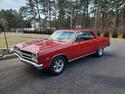
1958 GMC Truck
GMPP Crate LSX 454
Mast 285 Heads
Melling high volume pump
NGK TR6
12.2:1 Compression
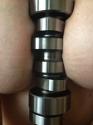
Intake Duration @ .050: 250
Intake Valve Lift: 648
Rocker Ratio Intake: 1.8
Exhaust Duration @ .050: 264
Exhaust Valve Lift: 630
Rocker Ratio Exhaust: 1.8
Lobe Separation: 112 Camshaft Advance: 4
Roller Lifter Wheel Diameter: Stock LS7
MSD Air Force intake
70lb injectors
Mighty Mouse Vented catch can
TR6060
McLeod RXT clutch, aluminum flywheel
Manual brakes, no booster, port capped on manifold
Engine has 3500 miles on it now, installed the Mast heads and Cam roughly 500 miles ago, no smoke at all. Truck suddenly started showing smoke on heavy deceleration a few weeks ago. This started happening after some pretty abusive driving, 6700-7000 RPM driving, just enjoying it really! When a buddy of mine noticed it was pushing smoke I checked the catch can and it was full Oil/condensation! Also checked the oil at that time and it was a full quart low. My hope was draining the can would resolve everything however it was still smoking on me. I pulled the intake manifold and saw pooled up oil on valves in the intake runners of the heads, also plugs were really black. The valve seals all looked good however I swapped them out anyway. Checked the oil catch can again and some really nasty oil/water slug in the bottom. Performed a compression check and all cylinders (warm, dry) came back between 195-200. Ran the truck again and again it produced smoke, FML! Next step I pulled the heads (no fun for 6 bolt heads) and sent them to the machine shop thinking the valves were side loading due to the amount of lift I'm running with stock LS7 rockers. My hope was the valve guides are shot and allowing oil to pass through to the valves. Engine shop reported back that the valve guides were in great shape and didn't require replacement. Back to troubleshooting I went. I was faced with decision of pulling the short block at that point and see what the oil rings looked like and possible replace them. I pulled the top off the MSD intake and discovered pooled oil along the bottom below the runner bellow's.
My catch can set up per conversation with Dave at Mighty Mouse
Driver side valve cover is clean air side from port between TB and MAF
Valley cover with PCV, capped
Passenger valve cover feeds venter MM Catch can
MM catch can (check valve) then hooked up to intake manifold for vacuum
I decided to utilize the valley cover PCV set up and scrap the vented catch can set up. I changed setup completely thinking my oil in the intake issue has to be a source of PCV set up.
New Catch can set up
Both valve covers receive fresh air from port on intake between TB and Maf
Valley cover with PCV hooked to non vented catch can
Other port on catch can to intake manifold
I put new head gaskets on and reinstalled the heads thinking I had this figured out and attributed the smoking and oil in the manifold as a result of bad PCV set up! WRONG!!!! Took truck for a drive and still smoking, so I pulled the fresh plugs (30 miles of driving) they are black and oil on the threads. Pulled the intake manifold and the intake runners on heads are wet with oil, separated intake manifold and discovered it was super wet after only 30 miles of driving.
New game plan to rule out the PCV, I cleaned the manifold with brake clean and simple green, cleaned intake runners on heads, will install the manifold tonight and run it in the shop with ports capped on valley cover and intake manifold, vented valve covers and see if I get smoke again and oil in the intake.
The biggest question I have here, can I get oil in the intake via bad oil rings???? Could the overlap on the cam help the oil move past the valves and up to intake manifold? Forgot to mention the bores look great and the pistons were not caked up at all. I would absolutely hate to pull the short block only to find out the oil rings are in great shape. Can anyone think of anything else that I'm missing? This has been a challenge and I'm trying not to loose my patience. So close to just ordering a new short block.
I will post up the results of what happens tonight, Thanks
1958 GMC Truck
GMPP Crate LSX 454
Mast 285 Heads
Melling high volume pump
NGK TR6
12.2:1 Compression
Intake Duration @ .050: 250
Intake Valve Lift: 648
Rocker Ratio Intake: 1.8
Exhaust Duration @ .050: 264
Exhaust Valve Lift: 630
Rocker Ratio Exhaust: 1.8
Lobe Separation: 112 Camshaft Advance: 4
Roller Lifter Wheel Diameter: Stock LS7
MSD Air Force intake
70lb injectors
Mighty Mouse Vented catch can
TR6060
McLeod RXT clutch, aluminum flywheel
Manual brakes, no booster, port capped on manifold
Engine has 3500 miles on it now, installed the Mast heads and Cam roughly 500 miles ago, no smoke at all. Truck suddenly started showing smoke on heavy deceleration a few weeks ago. This started happening after some pretty abusive driving, 6700-7000 RPM driving, just enjoying it really! When a buddy of mine noticed it was pushing smoke I checked the catch can and it was full Oil/condensation! Also checked the oil at that time and it was a full quart low. My hope was draining the can would resolve everything however it was still smoking on me. I pulled the intake manifold and saw pooled up oil on valves in the intake runners of the heads, also plugs were really black. The valve seals all looked good however I swapped them out anyway. Checked the oil catch can again and some really nasty oil/water slug in the bottom. Performed a compression check and all cylinders (warm, dry) came back between 195-200. Ran the truck again and again it produced smoke, FML! Next step I pulled the heads (no fun for 6 bolt heads) and sent them to the machine shop thinking the valves were side loading due to the amount of lift I'm running with stock LS7 rockers. My hope was the valve guides are shot and allowing oil to pass through to the valves. Engine shop reported back that the valve guides were in great shape and didn't require replacement. Back to troubleshooting I went. I was faced with decision of pulling the short block at that point and see what the oil rings looked like and possible replace them. I pulled the top off the MSD intake and discovered pooled oil along the bottom below the runner bellow's.
My catch can set up per conversation with Dave at Mighty Mouse
Driver side valve cover is clean air side from port between TB and MAF
Valley cover with PCV, capped
Passenger valve cover feeds venter MM Catch can
MM catch can (check valve) then hooked up to intake manifold for vacuum
I decided to utilize the valley cover PCV set up and scrap the vented catch can set up. I changed setup completely thinking my oil in the intake issue has to be a source of PCV set up.
New Catch can set up
Both valve covers receive fresh air from port on intake between TB and Maf
Valley cover with PCV hooked to non vented catch can
Other port on catch can to intake manifold
I put new head gaskets on and reinstalled the heads thinking I had this figured out and attributed the smoking and oil in the manifold as a result of bad PCV set up! WRONG!!!! Took truck for a drive and still smoking, so I pulled the fresh plugs (30 miles of driving) they are black and oil on the threads. Pulled the intake manifold and the intake runners on heads are wet with oil, separated intake manifold and discovered it was super wet after only 30 miles of driving.
New game plan to rule out the PCV, I cleaned the manifold with brake clean and simple green, cleaned intake runners on heads, will install the manifold tonight and run it in the shop with ports capped on valley cover and intake manifold, vented valve covers and see if I get smoke again and oil in the intake.
The biggest question I have here, can I get oil in the intake via bad oil rings???? Could the overlap on the cam help the oil move past the valves and up to intake manifold? Forgot to mention the bores look great and the pistons were not caked up at all. I would absolutely hate to pull the short block only to find out the oil rings are in great shape. Can anyone think of anything else that I'm missing? This has been a challenge and I'm trying not to loose my patience. So close to just ordering a new short block.
I will post up the results of what happens tonight, Thanks
Had a similar issue with my LSX build and I was thinking it was PCV related but mine would start to burn oil once it was heated up and smoked badly on decel, Removed the intake and oil was pooling up on the valves, most notably on the rear cylinders. I pulled the spark plugs and they all looked good except the back ones as they were wet and had cooked on oil. Cleaned everything up and said goodbye to PCV and just vented to atmosphere via 10AN lines off each valve cover to a breather can. Thought this would be the ticket but it was still burning oil and that's when I learned it was a ring issue.
It sucked having to pull it back out and tear it down when this was my fist engine build but if the oil is getting past the oil control rings then it's going to make its way into the combustion chambers and up into the intake manifold.
It sucked having to pull it back out and tear it down when this was my fist engine build but if the oil is getting past the oil control rings then it's going to make its way into the combustion chambers and up into the intake manifold.
Last edited by 01CamaroSSTx; May 18, 2021 at 06:16 PM.
Looking for some insight on a unique situation, first I will list the ingredients.
1958 GMC Truck
GMPP Crate LSX 454
Mast 285 Heads
Melling high volume pump
NGK TR6
12.2:1 Compression
Intake Duration @ .050: 250
Intake Valve Lift: 648
Rocker Ratio Intake: 1.8
Exhaust Duration @ .050: 264
Exhaust Valve Lift: 630
Rocker Ratio Exhaust: 1.8
Lobe Separation: 112 Camshaft Advance: 4
Roller Lifter Wheel Diameter: Stock LS7
MSD Air Force intake
70lb injectors
Mighty Mouse Vented catch can
TR6060
McLeod RXT clutch, aluminum flywheel
Manual brakes, no booster, port capped on manifold
Engine has 3500 miles on it now, installed the Mast heads and Cam roughly 500 miles ago, no smoke at all. Truck suddenly started showing smoke on heavy deceleration a few weeks ago. This started happening after some pretty abusive driving, 6700-7000 RPM driving, just enjoying it really! When a buddy of mine noticed it was pushing smoke I checked the catch can and it was full Oil/condensation! Also checked the oil at that time and it was a full quart low. My hope was draining the can would resolve everything however it was still smoking on me. I pulled the intake manifold and saw pooled up oil on valves in the intake runners of the heads, also plugs were really black. The valve seals all looked good however I swapped them out anyway. Checked the oil catch can again and some really nasty oil/water slug in the bottom. Performed a compression check and all cylinders (warm, dry) came back between 195-200. Ran the truck again and again it produced smoke, FML! Next step I pulled the heads (no fun for 6 bolt heads) and sent them to the machine shop thinking the valves were side loading due to the amount of lift I'm running with stock LS7 rockers. My hope was the valve guides are shot and allowing oil to pass through to the valves. Engine shop reported back that the valve guides were in great shape and didn't require replacement. Back to troubleshooting I went. I was faced with decision of pulling the short block at that point and see what the oil rings looked like and possible replace them. I pulled the top off the MSD intake and discovered pooled oil along the bottom below the runner bellow's.
My catch can set up per conversation with Dave at Mighty Mouse
Driver side valve cover is clean air side from port between TB and MAF
Valley cover with PCV, capped
Passenger valve cover feeds venter MM Catch can
MM catch can (check valve) then hooked up to intake manifold for vacuum
I decided to utilize the valley cover PCV set up and scrap the vented catch can set up. I changed setup completely thinking my oil in the intake issue has to be a source of PCV set up.
New Catch can set up
Both valve covers receive fresh air from port on intake between TB and Maf
Valley cover with PCV hooked to non vented catch can
Other port on catch can to intake manifold
I put new head gaskets on and reinstalled the heads thinking I had this figured out and attributed the smoking and oil in the manifold as a result of bad PCV set up! WRONG!!!! Took truck for a drive and still smoking, so I pulled the fresh plugs (30 miles of driving) they are black and oil on the threads. Pulled the intake manifold and the intake runners on heads are wet with oil, separated intake manifold and discovered it was super wet after only 30 miles of driving.
New game plan to rule out the PCV, I cleaned the manifold with brake clean and simple green, cleaned intake runners on heads, will install the manifold tonight and run it in the shop with ports capped on valley cover and intake manifold, vented valve covers and see if I get smoke again and oil in the intake.
The biggest question I have here, can I get oil in the intake via bad oil rings???? Could the overlap on the cam help the oil move past the valves and up to intake manifold? Forgot to mention the bores look great and the pistons were not caked up at all. I would absolutely hate to pull the short block only to find out the oil rings are in great shape. Can anyone think of anything else that I'm missing? This has been a challenge and I'm trying not to loose my patience. So close to just ordering a new short block.
I will post up the results of what happens tonight, Thanks
1958 GMC Truck
GMPP Crate LSX 454
Mast 285 Heads
Melling high volume pump
NGK TR6
12.2:1 Compression
Intake Duration @ .050: 250
Intake Valve Lift: 648
Rocker Ratio Intake: 1.8
Exhaust Duration @ .050: 264
Exhaust Valve Lift: 630
Rocker Ratio Exhaust: 1.8
Lobe Separation: 112 Camshaft Advance: 4
Roller Lifter Wheel Diameter: Stock LS7
MSD Air Force intake
70lb injectors
Mighty Mouse Vented catch can
TR6060
McLeod RXT clutch, aluminum flywheel
Manual brakes, no booster, port capped on manifold
Engine has 3500 miles on it now, installed the Mast heads and Cam roughly 500 miles ago, no smoke at all. Truck suddenly started showing smoke on heavy deceleration a few weeks ago. This started happening after some pretty abusive driving, 6700-7000 RPM driving, just enjoying it really! When a buddy of mine noticed it was pushing smoke I checked the catch can and it was full Oil/condensation! Also checked the oil at that time and it was a full quart low. My hope was draining the can would resolve everything however it was still smoking on me. I pulled the intake manifold and saw pooled up oil on valves in the intake runners of the heads, also plugs were really black. The valve seals all looked good however I swapped them out anyway. Checked the oil catch can again and some really nasty oil/water slug in the bottom. Performed a compression check and all cylinders (warm, dry) came back between 195-200. Ran the truck again and again it produced smoke, FML! Next step I pulled the heads (no fun for 6 bolt heads) and sent them to the machine shop thinking the valves were side loading due to the amount of lift I'm running with stock LS7 rockers. My hope was the valve guides are shot and allowing oil to pass through to the valves. Engine shop reported back that the valve guides were in great shape and didn't require replacement. Back to troubleshooting I went. I was faced with decision of pulling the short block at that point and see what the oil rings looked like and possible replace them. I pulled the top off the MSD intake and discovered pooled oil along the bottom below the runner bellow's.
My catch can set up per conversation with Dave at Mighty Mouse
Driver side valve cover is clean air side from port between TB and MAF
Valley cover with PCV, capped
Passenger valve cover feeds venter MM Catch can
MM catch can (check valve) then hooked up to intake manifold for vacuum
I decided to utilize the valley cover PCV set up and scrap the vented catch can set up. I changed setup completely thinking my oil in the intake issue has to be a source of PCV set up.
New Catch can set up
Both valve covers receive fresh air from port on intake between TB and Maf
Valley cover with PCV hooked to non vented catch can
Other port on catch can to intake manifold
I put new head gaskets on and reinstalled the heads thinking I had this figured out and attributed the smoking and oil in the manifold as a result of bad PCV set up! WRONG!!!! Took truck for a drive and still smoking, so I pulled the fresh plugs (30 miles of driving) they are black and oil on the threads. Pulled the intake manifold and the intake runners on heads are wet with oil, separated intake manifold and discovered it was super wet after only 30 miles of driving.
New game plan to rule out the PCV, I cleaned the manifold with brake clean and simple green, cleaned intake runners on heads, will install the manifold tonight and run it in the shop with ports capped on valley cover and intake manifold, vented valve covers and see if I get smoke again and oil in the intake.
The biggest question I have here, can I get oil in the intake via bad oil rings???? Could the overlap on the cam help the oil move past the valves and up to intake manifold? Forgot to mention the bores look great and the pistons were not caked up at all. I would absolutely hate to pull the short block only to find out the oil rings are in great shape. Can anyone think of anything else that I'm missing? This has been a challenge and I'm trying not to loose my patience. So close to just ordering a new short block.
I will post up the results of what happens tonight, Thanks
If everything was fine, no prob, then major issues after having the party, it probably detonated and the rings butted. Just my guess. When rings butt, all hell breaks loose in terms of oil/pressure control. If the plugs are super wet, I would tear it down too. Did you assemble or buy it as is?
Trending Topics
Report time, cleaned completely oil free and installed the intake last night. Capped the the PCV port on the valley cover and capped the vacuum port on the intake manifold, breather hose on each valve cover to atmosphere, also replaced oil fill cap with filter style cap. Fired engine and allowed to warm up to 180 and stab the pedal a few times and it produced smoke yet again. So this leads me to believe that the oil rings are bad and pushing oil in the the intake past the valves, which I still don't understand how that can happen. I will say this the plugs look much better since disconnecting the PCV this go around. I will report back with how the manifold looks when I get it removed tonight.
Hoping I can get a ring set from total seal for these GMPP pistons GM part
Hoping I can get a ring set from total seal for these GMPP pistons GM part
19166958 - LSX454, 4.185" BORE PISTON
Description Complete your all-LSX roatating assembly wtih GM Performance Parts' new LSX forged aluminum pistons. They're lightweight and tough, enabling higher reves and dependable performance, even with high-boost and nitrous-assisted applications. They're made of 4032 forged aluminum and available in 4.065" and 4.185" bores. Additional details include:- Flat-top or dished designs with valve relef cut-outs
- High-tech skirt coating
- Forced pin oiling
- Pistons come with wrist pins and rings
- Forged dished piston with valve reliefs
- Must be used with LSX connecting rods only
- Lightweight, includes rings and wrist pins
- 4.185" bore, .866" wrist pin size
- 1.2mm compression ring lands and a 2.0mm oil control ring land
LS1 Tech Stories
The Best V8 Stories One Small Block at Time

Topdon ONE vs. Artidiag 800 BT2: Which is the Diagnostic Tablet For You?
Pouria Savadkouei
Gas Monkey Built a 6-Wheel Ferrari Testarossa With a Corvette LT4 Engine
Verdad Gallardo
7 Most Reliable High-Performance Engines GM Has Ever Built
Verdad Gallardo
Amazing '71 Camaro Restomod Is Modern Muscle Car Under the Skin
Verdad Gallardo
6 Common C5 Corvette Failures and What's Involved In Repairing Them
Pouria Savadkouei
Retro Modern Bandit Pontiac Trans AM Comes With Burt Reynolds' Autograph
Verdad Gallardo
Top 10 Greatest Cadillac V Series Performance Models Ever, Ranked
Pouria Savadkouei
Top 10 Most Powerful Chevy Trucks Ever Made!

Hennessey's New Supercharged Silverado ZR2 Has 700 HP
Verdad Gallardo Had a similar issue with my LSX build and I was thinking it was PCV related but mine would start to burn oil once it was heated up and smoked badly on decel, Removed the intake and oil was pooling up on the valves, most notably on the rear cylinders. I pulled the spark plugs and they all looked good except the back ones as they were wet and had cooked on oil. Cleaned everything up and said goodbye to PCV and just vented to atmosphere via 10AN lines off each valve cover to a breather can. Thought this would be the ticket but it was still burning oil and that's when I learned it was a ring issue.
It sucked having to pull it back out and tear it down when this was my fist engine build but if the oil is getting past the oil control rings then it's going to make its way into the combustion chambers and up into the intake manifold.
It sucked having to pull it back out and tear it down when this was my fist engine build but if the oil is getting past the oil control rings then it's going to make its way into the combustion chambers and up into the intake manifold.
If everything was fine, no prob, then major issues after having the party, it probably detonated and the rings butted. Just my guess. When rings butt, all hell breaks loose in terms of oil/pressure control. If the plugs are super wet, I would tear it down too. Did you assemble or buy it as is?
Mine was still smoking and wetting the plugs on the 7 and 8 cylinders so I ended up re-honing and re-ringing the entire engine. I didn't feel that this was necessary being that the block was machined by LME and I measured the bores prior to assembly just for
 but lets just say I took the advice of someone who didn't speak to highly of LME or TSP which should have raised the red flag to a certain someone who should not have been trusted. He felt the rings were fuel washed and there was an issue with the heads that could've lead to a potential problem. I use a very trusted tuner and my engine fired up from the first turn of the key so I'm calling BS on the washed rings. I didn't feel that the block needed to be re-honed either but I bought a FLEXHONE and ran it through there anyway and I re-ringed the whole thing. It's important to note that a good tapered ring compressor is key here as I'll probably never use an adjustable one again.
I finally got my cylinder heads back from Mr. Untrustworthy that I later found he had swapped my Manley LS7 ti valves for some LS3 hollow stems. Anyway, I got it all back together with the jacked up heads and fired it up to take it out for drive. I'd get it into third gear and take it up to 85-90 MPH and then get out of it. I did this repeatedly to heat it up and I could just hear the laughs from people watching my car bellowing blue smoke from the pipes but it finally cleared up and I had a good ring seal.

Made the 1.5 hour drive to see the tuner and that's when I learned that I didn't have enough fuel pump and that my valve train had become a little on the noisy side of things. It got worse over time but I bought the tools and learned how to work on cylinder heads and luckily for me I managed to catch it before dropping a valve. I learned that my valves had been stolen and that all the guides for the intakes needed to be replaced I could've saved a few bucks and bought some more Manley Ti's but went with LME BR7's as a replacement. I'm still on 10AN lines to a breather can and after all of that mess I finally have a solid running car.
And the moral of the story is...Be careful who you trust!
Last edited by 01CamaroSSTx; May 19, 2021 at 12:47 PM.
ABSOLUTE GARBAGE from GMPP on this piston ring set!!!!! Get this the GM part number for the piston is 19166958 and you can NOT buy a ring set! You have to buy the entire piston and ring set together, WTF
Typical ring set from Total Seal is less then $200, however in this case I have to buy $1200 in pistons just to get rings.
Typical ring set from Total Seal is less then $200, however in this case I have to buy $1200 in pistons just to get rings.

Found a set guys, called Wiseco and they stock the 1.2,1.2,2.0 sets, they mentioned to me on the phone that 99% chance they make these sets specifically for GMPP, as its an odd size for the 4.185 bore. I went ahead and ordered a set, we will see how everything looks here in a few days.
Wiseco part number 4185LS 4.185" 1.2 x 1.2 x 2.0
$19.91
Thanks for all the input on how to resolve the rings issue. Jegs/Wiseco to the rescue
Wiseco part number 4185LS 4.185" 1.2 x 1.2 x 2.0
$19.91
Thanks for all the input on how to resolve the rings issue. Jegs/Wiseco to the rescue

Got it torn apart and what I found was sign of detonation on cylinders 3,4,5,6 and 5 being the worst. How did I determine this???? Well pulling the caps and looking at the rod bearing showed some mild signs until I pulled number 5 and it had no retention in the cap! Pretty much falls out when held upside down. The bearing didn't look great but also the crank for number 5 had a small heat mark on it. Other then that the crank looked great across the board. So new rod bearings for all cylinders is on the way.
Piston rings were all swapped out. One thing I did notice was the oil scrappers had hardly no tension in the bore and massive ring gaps. The new Wiseco set is installed and ball hone is all good.
My opinion here is that with the right combination of things it lead to detonation in 4 of my cylinders with number 5 being the worst.
Compression somewhat high 12.2:1
Crap octane of fuel 91
Lightweight clutch aluminum flywheel, very quick rev 7K + shifts
All those factors together lead to detonation which lead to oil control failure in those cylinders. Not to mention if rod bearing are wacky they could fling oil into the bores on up stroke.
So it will go back together this weekend and be rock solid again. Will post up some pics of the bearing later this week for anyone interested.
Piston rings were all swapped out. One thing I did notice was the oil scrappers had hardly no tension in the bore and massive ring gaps. The new Wiseco set is installed and ball hone is all good.
My opinion here is that with the right combination of things it lead to detonation in 4 of my cylinders with number 5 being the worst.
Compression somewhat high 12.2:1
Crap octane of fuel 91
Lightweight clutch aluminum flywheel, very quick rev 7K + shifts
All those factors together lead to detonation which lead to oil control failure in those cylinders. Not to mention if rod bearing are wacky they could fling oil into the bores on up stroke.
So it will go back together this weekend and be rock solid again. Will post up some pics of the bearing later this week for anyone interested.
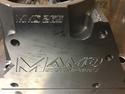

Got it torn apart and what I found was sign of detonation on cylinders 3,4,5,6 and 5 being the worst. How did I determine this???? Well pulling the caps and looking at the rod bearing showed some mild signs until I pulled number 5 and it had no retention in the cap! Pretty much falls out when held upside down. The bearing didn't look great but also the crank for number 5 had a small heat mark on it. Other then that the crank looked great across the board. So new rod bearings for all cylinders is on the way.
Piston rings were all swapped out. One thing I did notice was the oil scrappers had hardly no tension in the bore and massive ring gaps. The new Wiseco set is installed and ball hone is all good.
My opinion here is that with the right combination of things it lead to detonation in 4 of my cylinders with number 5 being the worst.
Compression somewhat high 12.2:1
Crap octane of fuel 91
Lightweight clutch aluminum flywheel, very quick rev 7K + shifts
All those factors together lead to detonation which lead to oil control failure in those cylinders. Not to mention if rod bearing are wacky they could fling oil into the bores on up stroke.
So it will go back together this weekend and be rock solid again. Will post up some pics of the bearing later this week for anyone interested.
Piston rings were all swapped out. One thing I did notice was the oil scrappers had hardly no tension in the bore and massive ring gaps. The new Wiseco set is installed and ball hone is all good.
My opinion here is that with the right combination of things it lead to detonation in 4 of my cylinders with number 5 being the worst.
Compression somewhat high 12.2:1
Crap octane of fuel 91
Lightweight clutch aluminum flywheel, very quick rev 7K + shifts
All those factors together lead to detonation which lead to oil control failure in those cylinders. Not to mention if rod bearing are wacky they could fling oil into the bores on up stroke.
So it will go back together this weekend and be rock solid again. Will post up some pics of the bearing later this week for anyone interested.
12.2 compression on 91 octane fuel would be the cause of the detonation. You have “peppering” on the domes and spark plugs?