









L92 DynoJet Numbers Plus Plan B, C, D, E and F...
 L92 DynoJet Numbers Plus Plan B, C, D, E and F...
 Here are the numbers on my 402 L92. This my original configuration.
SDPC LS2 402 2cc pistons
L92 heads - 12:1 SCR 8.8 DCR (untouched)
L76 Intake
Comp 921's
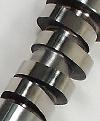
BRE custom cam spec'd for my setup
RAM Dual disc clutch and Aluminum Flywheel
American Racing 1 7/8 headers
42 lb Green Top injectors
Revised Cadillac Racing lifters - Good for 8k RPM
Trend .110 Pushrods.
etc
etc
Assembly/Installation and SD tune by Phil Thomas aka PHIL99VETTE
Plan B:
Ed Hutchings of Automotive Technologies in Chesapeake VA is handing the dyno work and Plan B.
The car runs incredibly strong. I think that's probably due to 375 RWT at 2200 RPM. I just got the numbers about 30 minutes ago.
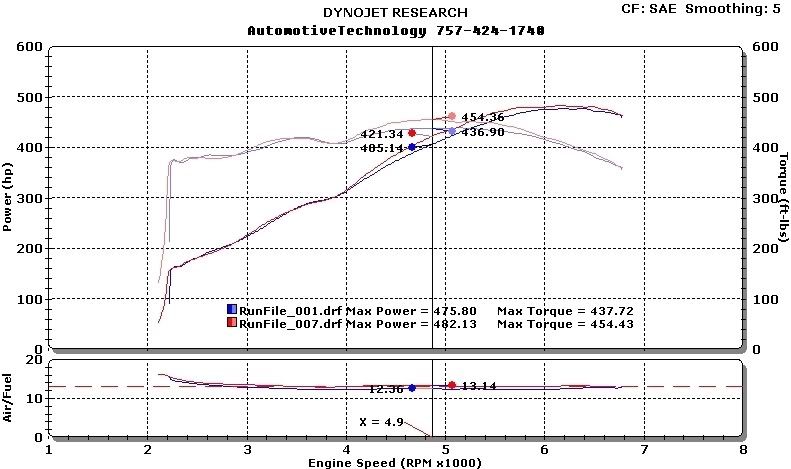
Maybe Ed Hutchings of Automotive Technologies can chime in here on the dyno methodology. I know there's been some issues lately. The cam has A LOT of overlap and but idles perfectly and drives very well.
We're going to be doing Plan B this week. WCCH Stage 2 CNC'd heads with a 234-240 XE-R 112 +0 cam. This is a cam that Richard and I agreed on for his CNC'd heads. Now that we have a base line with the current setup, Ed is going to install the cam and dyno with the untouched heads. Then he is going to install the WCCH heads and dyn again so we'll have good before and after head numbers. We're also dropping the compression ratio down to 11.5:1 so we can run a few more degrees of timing.
Stay tuned.
SDPC LS2 402 2cc pistons
L92 heads - 12:1 SCR 8.8 DCR (untouched)
L76 Intake
Comp 921's
BRE custom cam spec'd for my setup
RAM Dual disc clutch and Aluminum Flywheel
American Racing 1 7/8 headers
42 lb Green Top injectors
Revised Cadillac Racing lifters - Good for 8k RPM
Trend .110 Pushrods.
etc
etc
Assembly/Installation and SD tune by Phil Thomas aka PHIL99VETTE
Plan B:
Ed Hutchings of Automotive Technologies in Chesapeake VA is handing the dyno work and Plan B.
The car runs incredibly strong. I think that's probably due to 375 RWT at 2200 RPM. I just got the numbers about 30 minutes ago.
Maybe Ed Hutchings of Automotive Technologies can chime in here on the dyno methodology. I know there's been some issues lately. The cam has A LOT of overlap and but idles perfectly and drives very well.
We're going to be doing Plan B this week. WCCH Stage 2 CNC'd heads with a 234-240 XE-R 112 +0 cam. This is a cam that Richard and I agreed on for his CNC'd heads. Now that we have a base line with the current setup, Ed is going to install the cam and dyno with the untouched heads. Then he is going to install the WCCH heads and dyn again so we'll have good before and after head numbers. We're also dropping the compression ratio down to 11.5:1 so we can run a few more degrees of timing.
Stay tuned.
Last edited by WKMCD; Jun 5, 2008 at 05:14 PM.
The torque numbers look a little soft for as high as your static and dynamic compression is. How does the current cam compare to the new cam? How will the old L92 heads compare to the new ones? I'm interested in finding out how you got 12.0:1 SCR with untouched heads. Not doubting, just wanting some clarification.
__________________
2013 Corvette Grand Sport A6 LME forged 416, Greg Good ported TFS 255 LS3 heads, 222/242 .629"/.604" 121LSA Pat G blower cam, ARH 1 7/8" headers, ESC Novi 1500 Supercharger w/8 rib direct drive conversion, 747rwhp/709rwtq on 93 octane, 801rwhp/735rwtq on race fuel, 10.1 @ 147.25mph 1/4 mile, 174.7mph Half Mile.
2016 Corvette Z51 M7 Magnuson Heartbeat 2300 supercharger, TSP LT headers, Pat G tuned, 667rwhp, 662rwtq, 191mph TX Mile.
2009.5 Pontiac G8 GT 6.0L, A6, AFR 230v2 heads. 506rwhp/442rwtq. 11.413 @ 121.29mph 1/4 mile, 168.7mph TX Mile
2000 Pewter Ram Air Trans Am M6 heads/cam 508 rwhp/445 rwtq SAE, 183.092 TX Mile
2022 Cadillac Escalade 6.2L A10 S&B CAI, Corsa catback.
2023 Corvette 3LT Z51 soon to be modified.
Custom LSX tuning in person or via email press here.
2013 Corvette Grand Sport A6 LME forged 416, Greg Good ported TFS 255 LS3 heads, 222/242 .629"/.604" 121LSA Pat G blower cam, ARH 1 7/8" headers, ESC Novi 1500 Supercharger w/8 rib direct drive conversion, 747rwhp/709rwtq on 93 octane, 801rwhp/735rwtq on race fuel, 10.1 @ 147.25mph 1/4 mile, 174.7mph Half Mile.
2016 Corvette Z51 M7 Magnuson Heartbeat 2300 supercharger, TSP LT headers, Pat G tuned, 667rwhp, 662rwtq, 191mph TX Mile.
2009.5 Pontiac G8 GT 6.0L, A6, AFR 230v2 heads. 506rwhp/442rwtq. 11.413 @ 121.29mph 1/4 mile, 168.7mph TX Mile
2000 Pewter Ram Air Trans Am M6 heads/cam 508 rwhp/445 rwtq SAE, 183.092 TX Mile
2022 Cadillac Escalade 6.2L A10 S&B CAI, Corsa catback.
2023 Corvette 3LT Z51 soon to be modified.
Custom LSX tuning in person or via email press here.
Originally Posted by Patrick G
The torque numbers look a little soft for as high as your static and dynamic compression is. How does the current cam compare to the new cam? How will the old L92 heads compare to the new ones? I'm interested in finding out how you got 12.0:1 SCR with untouched heads. Not doubting, just wanting some clarification.
Flat tops with valve reliefs should put you around 11.2:1 right?? How did ya get to 12:1??
good question.
Originally Posted by Patrick G
The torque numbers look a little soft for as high as your static and dynamic compression is. How does the current cam compare to the new cam? How will the old L92 heads compare to the new ones? I'm interested in finding out how you got 12.0:1 SCR with untouched heads. Not doubting, just wanting some clarification.
The numbers are what the numbers are.
Last edited by WKMCD; Aug 2, 2007 at 07:47 AM.
I could understand why you might want to be a little secretive about the cam specs if you just nailed the ultimate power/torque number, but since the one coming out is a failed experiment, how about sharing the specs so we can learn more about what works and even more importantly, what doesn't?
__________________
2013 Corvette Grand Sport A6 LME forged 416, Greg Good ported TFS 255 LS3 heads, 222/242 .629"/.604" 121LSA Pat G blower cam, ARH 1 7/8" headers, ESC Novi 1500 Supercharger w/8 rib direct drive conversion, 747rwhp/709rwtq on 93 octane, 801rwhp/735rwtq on race fuel, 10.1 @ 147.25mph 1/4 mile, 174.7mph Half Mile.
2016 Corvette Z51 M7 Magnuson Heartbeat 2300 supercharger, TSP LT headers, Pat G tuned, 667rwhp, 662rwtq, 191mph TX Mile.
2009.5 Pontiac G8 GT 6.0L, A6, AFR 230v2 heads. 506rwhp/442rwtq. 11.413 @ 121.29mph 1/4 mile, 168.7mph TX Mile
2000 Pewter Ram Air Trans Am M6 heads/cam 508 rwhp/445 rwtq SAE, 183.092 TX Mile
2022 Cadillac Escalade 6.2L A10 S&B CAI, Corsa catback.
2023 Corvette 3LT Z51 soon to be modified.
Custom LSX tuning in person or via email press here.
2013 Corvette Grand Sport A6 LME forged 416, Greg Good ported TFS 255 LS3 heads, 222/242 .629"/.604" 121LSA Pat G blower cam, ARH 1 7/8" headers, ESC Novi 1500 Supercharger w/8 rib direct drive conversion, 747rwhp/709rwtq on 93 octane, 801rwhp/735rwtq on race fuel, 10.1 @ 147.25mph 1/4 mile, 174.7mph Half Mile.
2016 Corvette Z51 M7 Magnuson Heartbeat 2300 supercharger, TSP LT headers, Pat G tuned, 667rwhp, 662rwtq, 191mph TX Mile.
2009.5 Pontiac G8 GT 6.0L, A6, AFR 230v2 heads. 506rwhp/442rwtq. 11.413 @ 121.29mph 1/4 mile, 168.7mph TX Mile
2000 Pewter Ram Air Trans Am M6 heads/cam 508 rwhp/445 rwtq SAE, 183.092 TX Mile
2022 Cadillac Escalade 6.2L A10 S&B CAI, Corsa catback.
2023 Corvette 3LT Z51 soon to be modified.
Custom LSX tuning in person or via email press here.
Originally Posted by WKMCD
Revised Cadillac Racing lifters - Good for 8k RPM.
Trending Topics
The cam in it is of "secret" specs. I'll send it to comp and have it spun, so we know what we're dealing with. I have been told what it is, but will be looking for clarification. the person who speced it out may not want it posted. If thats the case, then it wont be. we will also be cc'ing the heads, both sets, and figuring the EXACT comp both before and after. this is one of the vehicles we've ran on a DD and then on our DJ248, for a little dyno to dyno comparison. Because of some "questionable" results that we've noticed ourselves, as well as being posted here.
I'll be posting in the thread started by v6 bird later today.
I'll be posting in the thread started by v6 bird later today.
LS1 Tech Stories
The Best V8 Stories One Small Block at Time

Topdon ONE vs. Artidiag 800 BT2: Which is the Diagnostic Tablet For You?
Pouria Savadkouei
Gas Monkey Built a 6-Wheel Ferrari Testarossa With a Corvette LT4 Engine
Verdad Gallardo
7 Most Reliable High-Performance Engines GM Has Ever Built
Verdad Gallardo
Amazing '71 Camaro Restomod Is Modern Muscle Car Under the Skin
Verdad Gallardo
6 Common C5 Corvette Failures and What's Involved In Repairing Them
Pouria Savadkouei
Retro Modern Bandit Pontiac Trans AM Comes With Burt Reynolds' Autograph
Verdad Gallardo
Top 10 Greatest Cadillac V Series Performance Models Ever, Ranked
Pouria Savadkouei
Top 10 Most Powerful Chevy Trucks Ever Made!

Hennessey's New Supercharged Silverado ZR2 Has 700 HP
Verdad Gallardo
Originally Posted by Patrick G
I could understand why you might want to be a little secretive about the cam specs if you just nailed the ultimate power/torque number, but since the one coming out is a failed experiment, how about sharing the specs so we can learn more about what works and even more importantly, what doesn't?
Secondly, I really didn't want to go down this road again. The cam is a wide split on a tight lsa. I'm not being secretive at all. I'm simply honoring a commitment. I'm sure you can respect that. Now that I am able to discuss the cam I will be running in detail - I will.
Originally Posted by RyneZ06
yeah but remember the race cars that are using the lifters up 8k... are using ti valves, and proper springs. very lightweight valve train parts
Most any hyd roller aint gonna make power above about 6800 without some light weight stuff. Alot of the cams being run, just by nature of their profile, are running out before the true potential is reached, based soley on the limitations of the valve train.


Nothing stellar on the numbers, but I'm interested in seeing where things go with the new heads, lower DCR, and some more timing. This could turn out very well, depending on how well the cam was spec'd. I shall be staying tuned for a fellow NVA'er.
Originally Posted by ArcticZ28
Nothing stellar on the numbers, but I'm interested in seeing where things go with the new heads, lower DCR, and some more timing. This could turn out very well, depending on how well the cam was spec'd. I shall be staying tuned for a fellow NVA'er.
Just because its XXX by XXX on a XXX LSA doesnt mean its gonna work.
hopefully we will get better results with "less" camshaft.
The car runs good. plenty of power. Tip in at 2000 is pretty dramatic.
The tune was petty good. Driveability is/was fair. Some slight twitching down low. Pretty smooth (barely noticable) at 1700 and up.
We, the owner and I, just thought it should/could be better.
When it was first ran (on a DD) it was disappointing. Especially to the owner. Hes the guy who forked out the dough.
Originally Posted by WKMCD
Patrick, firstly I don't think I would call it a "failed experiment". It's right there with LG touched up heads results. Perhaps you should notify them of their failed experiment also. Touch my heads up and I'm sure the results would be better than LG's. I'm not really sure what your point is.
Secondly, I really didn't want to go down this road again. The cam is a wide split on a tight lsa. I'm not being secretive at all. I'm simply honoring a commitment. I'm sure you can respect that. Now that I am able to discuss the cam I will be running in detail - I will.
Secondly, I really didn't want to go down this road again. The cam is a wide split on a tight lsa. I'm not being secretive at all. I'm simply honoring a commitment. I'm sure you can respect that. Now that I am able to discuss the cam I will be running in detail - I will.
__________________
2013 Corvette Grand Sport A6 LME forged 416, Greg Good ported TFS 255 LS3 heads, 222/242 .629"/.604" 121LSA Pat G blower cam, ARH 1 7/8" headers, ESC Novi 1500 Supercharger w/8 rib direct drive conversion, 747rwhp/709rwtq on 93 octane, 801rwhp/735rwtq on race fuel, 10.1 @ 147.25mph 1/4 mile, 174.7mph Half Mile.
2016 Corvette Z51 M7 Magnuson Heartbeat 2300 supercharger, TSP LT headers, Pat G tuned, 667rwhp, 662rwtq, 191mph TX Mile.
2009.5 Pontiac G8 GT 6.0L, A6, AFR 230v2 heads. 506rwhp/442rwtq. 11.413 @ 121.29mph 1/4 mile, 168.7mph TX Mile
2000 Pewter Ram Air Trans Am M6 heads/cam 508 rwhp/445 rwtq SAE, 183.092 TX Mile
2022 Cadillac Escalade 6.2L A10 S&B CAI, Corsa catback.
2023 Corvette 3LT Z51 soon to be modified.
Custom LSX tuning in person or via email press here.
2013 Corvette Grand Sport A6 LME forged 416, Greg Good ported TFS 255 LS3 heads, 222/242 .629"/.604" 121LSA Pat G blower cam, ARH 1 7/8" headers, ESC Novi 1500 Supercharger w/8 rib direct drive conversion, 747rwhp/709rwtq on 93 octane, 801rwhp/735rwtq on race fuel, 10.1 @ 147.25mph 1/4 mile, 174.7mph Half Mile.
2016 Corvette Z51 M7 Magnuson Heartbeat 2300 supercharger, TSP LT headers, Pat G tuned, 667rwhp, 662rwtq, 191mph TX Mile.
2009.5 Pontiac G8 GT 6.0L, A6, AFR 230v2 heads. 506rwhp/442rwtq. 11.413 @ 121.29mph 1/4 mile, 168.7mph TX Mile
2000 Pewter Ram Air Trans Am M6 heads/cam 508 rwhp/445 rwtq SAE, 183.092 TX Mile
2022 Cadillac Escalade 6.2L A10 S&B CAI, Corsa catback.
2023 Corvette 3LT Z51 soon to be modified.
Custom LSX tuning in person or via email press here.
Originally Posted by Patrick G
. On the contrary, I'm trying to learn something new (like all of us).
And again, its not as if the car is a total turd. It runs pretty strong. It just falls a little short of where it should be.

TECH Apprentice
Joined: Oct 2004
Posts: 329
Likes: 0
Still haven't figured out what to make the L92/L76 combination work.
Still havent' figured out what to make the LS7 combination to work.
If so, would be WELL out front of Ported Fast90 in HP and at least similar peak TQ values.
Until more consistent high results lots of work to be done.
What I haven't seen yet, reverse split camshafts. Tight LSA of 110 and under.
We've seen single split, exhaust bias and wide LSA of 114 and up.
Still alot of work to be done.
Still havent' figured out what to make the LS7 combination to work.
If so, would be WELL out front of Ported Fast90 in HP and at least similar peak TQ values.
Until more consistent high results lots of work to be done.
What I haven't seen yet, reverse split camshafts. Tight LSA of 110 and under.
We've seen single split, exhaust bias and wide LSA of 114 and up.
Still alot of work to be done.
Here's what the collective resourses are showing so far:
The bigger L92 numbers for 400+ CID motors seem to favor an intake valve closing point of 50-52 degrees ABDC at .050" (just like a cathedral-port motor).
The L92 motors like around 4 degrees more ignition timing than cathedral port motors. If you're running less than 30 degrees of timing, you're probably leaving power on the table.
The L92 motors respond well to higher DCR as long as it does not limit total ignition timing (see above). Better to have full timing and lower DCR than high DCR and low ignition timing.
The 400+ CID L92s seem to be more exhaust sensitive. 1 7/8" headers seem to help more than on cathedral port motors.
The L92 402s don't seem to not like much more than 15 degrees of overlap at .050" (which baffles the hell out of me). Start making more overlap than 15 and they really start to get lazy down low.
I think with the large intake port, the airspeed must be pretty slow. This might explain why they're so overlap sensitive. This does not mean you have to run a wide LSA cam or a narrow one, you just have to hit the valve events that fit the critical criteria (IVC and overlap).
The bigger L92 numbers for 400+ CID motors seem to favor an intake valve closing point of 50-52 degrees ABDC at .050" (just like a cathedral-port motor).
The L92 motors like around 4 degrees more ignition timing than cathedral port motors. If you're running less than 30 degrees of timing, you're probably leaving power on the table.
The L92 motors respond well to higher DCR as long as it does not limit total ignition timing (see above). Better to have full timing and lower DCR than high DCR and low ignition timing.
The 400+ CID L92s seem to be more exhaust sensitive. 1 7/8" headers seem to help more than on cathedral port motors.
The L92 402s don't seem to not like much more than 15 degrees of overlap at .050" (which baffles the hell out of me). Start making more overlap than 15 and they really start to get lazy down low.
I think with the large intake port, the airspeed must be pretty slow. This might explain why they're so overlap sensitive. This does not mean you have to run a wide LSA cam or a narrow one, you just have to hit the valve events that fit the critical criteria (IVC and overlap).
__________________
2013 Corvette Grand Sport A6 LME forged 416, Greg Good ported TFS 255 LS3 heads, 222/242 .629"/.604" 121LSA Pat G blower cam, ARH 1 7/8" headers, ESC Novi 1500 Supercharger w/8 rib direct drive conversion, 747rwhp/709rwtq on 93 octane, 801rwhp/735rwtq on race fuel, 10.1 @ 147.25mph 1/4 mile, 174.7mph Half Mile.
2016 Corvette Z51 M7 Magnuson Heartbeat 2300 supercharger, TSP LT headers, Pat G tuned, 667rwhp, 662rwtq, 191mph TX Mile.
2009.5 Pontiac G8 GT 6.0L, A6, AFR 230v2 heads. 506rwhp/442rwtq. 11.413 @ 121.29mph 1/4 mile, 168.7mph TX Mile
2000 Pewter Ram Air Trans Am M6 heads/cam 508 rwhp/445 rwtq SAE, 183.092 TX Mile
2022 Cadillac Escalade 6.2L A10 S&B CAI, Corsa catback.
2023 Corvette 3LT Z51 soon to be modified.
Custom LSX tuning in person or via email press here.
2013 Corvette Grand Sport A6 LME forged 416, Greg Good ported TFS 255 LS3 heads, 222/242 .629"/.604" 121LSA Pat G blower cam, ARH 1 7/8" headers, ESC Novi 1500 Supercharger w/8 rib direct drive conversion, 747rwhp/709rwtq on 93 octane, 801rwhp/735rwtq on race fuel, 10.1 @ 147.25mph 1/4 mile, 174.7mph Half Mile.
2016 Corvette Z51 M7 Magnuson Heartbeat 2300 supercharger, TSP LT headers, Pat G tuned, 667rwhp, 662rwtq, 191mph TX Mile.
2009.5 Pontiac G8 GT 6.0L, A6, AFR 230v2 heads. 506rwhp/442rwtq. 11.413 @ 121.29mph 1/4 mile, 168.7mph TX Mile
2000 Pewter Ram Air Trans Am M6 heads/cam 508 rwhp/445 rwtq SAE, 183.092 TX Mile
2022 Cadillac Escalade 6.2L A10 S&B CAI, Corsa catback.
2023 Corvette 3LT Z51 soon to be modified.
Custom LSX tuning in person or via email press here.
Originally Posted by Big-DEN
What I haven't seen yet, reverse split camshafts. Tight LSA of 110 and under.
We've seen single split, exhaust bias and wide LSA of 114 and up.
Still alot of work to be done.


I have to think we are looking at a fairly small cam, being that the peak is ~6K.
All in all I think it was a pretty damn good effort for being the one of the very first cams spec'd out for L92 heads.
How long did we have to play with the cathedral port stuff before the torque numbers were close to what we have now?? Honestly I don't know if anything that was learned on the earlier stuff is applicable to the L92/LS7 style ports. I know that camshaft design has a basis in the same principles no matter what the heads are, but the difference in port sizes, shapes, and velocities has to play a SIGNIFICANT factor.
Just my $.02
Keith
All in all I think it was a pretty damn good effort for being the one of the very first cams spec'd out for L92 heads.
How long did we have to play with the cathedral port stuff before the torque numbers were close to what we have now?? Honestly I don't know if anything that was learned on the earlier stuff is applicable to the L92/LS7 style ports. I know that camshaft design has a basis in the same principles no matter what the heads are, but the difference in port sizes, shapes, and velocities has to play a SIGNIFICANT factor.
Just my $.02
Keith
Originally Posted by Patrick G
Here's what the collective resourses are showing so far:
The L92 motors like around 4 degrees more ignition timing than cathedral port motors. If you're running less than 30 degrees of timing, you're probably leaving power on the table.).
The L92 motors like around 4 degrees more ignition timing than cathedral port motors. If you're running less than 30 degrees of timing, you're probably leaving power on the table.).
Originally Posted by Patrick G
The L92 motors respond well to higher DCR as long as it does not limit total ignition timing (see above). Better to have full timing and lower DCR than high DCR and low ignition timing..).
Originally Posted by Patrick G
The 400+ CID L92s seem to be more exhaust sensitive. 1 7/8" headers seem to help more than on cathedral port motors.
Originally Posted by Patrick G
The L92 402s don't seem to not like much more than 15 degrees of overlap at .050" (which baffles the hell out of me). Start making more overlap than 15 and they really start to get lazy down low
I think with the large intake port, the airspeed must be pretty slow. This might explain why they're so overlap sensitive. This does not mean you have to run a wide LSA cam or a narrow one, you just have to hit the valve events that fit the critical criteria (IVC and overlap).
I think with the large intake port, the airspeed must be pretty slow. This might explain why they're so overlap sensitive. This does not mean you have to run a wide LSA cam or a narrow one, you just have to hit the valve events that fit the critical criteria (IVC and overlap).
We had the cam ground with no advance, so I have the option of moving it around a few degrees.
Maybe I can get me a cool gig like a custom cam specialist?