



600RW n/a...

Thread Starter
TECH Addict
iTrader: (9)
Joined: Apr 2002
Posts: 2,085
Likes: 0
From: Texas, it's like your state, but better.
 600RW n/a...
 This thread is a no holds barred discussion. Let the opinions fly!
The main purpose here is to establish an easily replicated recipe for a 600+ RWHP combo n/a streetable or not, idle friendly or not, forget about fuel mileage, ect...
Figure 18-20% drive train loss through a Manual trans, 23-26% loss through an Auto. Rough figures only, We're looking at 750+ crank HP for starters.
This is a basic rundown of my mindset.
14.5-15:1 CR
400+ cubes
6L, LS2 or LQ4, LSX, L92 block
Solid Roller cam in the neighborhood of 260-270ish Duration at .050, 108-114 LSA
Livernois S3 L92's or LS7 heads, ETP's ect..
Sheet metal intake?
Single plane w/ elbow and 100+mm TB?
LS7 Manifold?
Dry sump?
external pump?
Lets see if we can cook up a formula thats not too overly exotic parts wise and could be duplicated easily. It seems fairly simple to do with the parts we have access to now, and I feel that this can be somewhat of a community standard here in the near future. Lets see what we can do.
The main purpose here is to establish an easily replicated recipe for a 600+ RWHP combo n/a streetable or not, idle friendly or not, forget about fuel mileage, ect...
Figure 18-20% drive train loss through a Manual trans, 23-26% loss through an Auto. Rough figures only, We're looking at 750+ crank HP for starters.
This is a basic rundown of my mindset.
14.5-15:1 CR
400+ cubes
6L, LS2 or LQ4, LSX, L92 block
Solid Roller cam in the neighborhood of 260-270ish Duration at .050, 108-114 LSA
Livernois S3 L92's or LS7 heads, ETP's ect..
Sheet metal intake?
Single plane w/ elbow and 100+mm TB?
LS7 Manifold?
Dry sump?
external pump?
Lets see if we can cook up a formula thats not too overly exotic parts wise and could be duplicated easily. It seems fairly simple to do with the parts we have access to now, and I feel that this can be somewhat of a community standard here in the near future. Lets see what we can do.

TECH Veteran
Joined: Dec 2001
Posts: 4,117
Likes: 0
From: Ft. Lauderdale, FL, USA
Everything you listed, 600 RWHP is a guarantee. And streetable, and pump gas, and decent idle quality. There is no argument about it. By years end there's gonna be dozens of 600+ RWHP daily drivers everywhere.
650-680 RWHP is the goal, at least for me.
.
650-680 RWHP is the goal, at least for me.
.
Originally Posted by Quickin
Everything you listed, 600 RWHP is a guarantee. And streetable, and pump gas, and decent idle quality. There is no argument about it. By years end there's gonna be dozens of 600+ RWHP daily drivers everywhere.
650-680 RWHP is the goal, at least for me.
.
650-680 RWHP is the goal, at least for me.
.
Dan
Thread Starter
TECH Addict
iTrader: (9)
Joined: Apr 2002
Posts: 2,085
Likes: 0
From: Texas, it's like your state, but better.
Let me clarify, I'm leaning more along the lines of biulding a solid basic combo for others to base a build from. I'm not too concerned about my specifics making the mark.
most hyd. roller 408's are doing quite well with L92 heads and intakes. 550 RW seems to be commonplace. I guess im just trying to see what it's going to take to get that extra little umph to take it up a notch. Maybe solid cammed motors with a single plane L92 intake will get there. Probably sacrifice a bit of low end, but there just the same.
most hyd. roller 408's are doing quite well with L92 heads and intakes. 550 RW seems to be commonplace. I guess im just trying to see what it's going to take to get that extra little umph to take it up a notch. Maybe solid cammed motors with a single plane L92 intake will get there. Probably sacrifice a bit of low end, but there just the same.
TECH Veteran
Joined: Dec 2001
Posts: 4,117
Likes: 0
From: Ft. Lauderdale, FL, USA
Originally Posted by SLPSS99
Are you sure about pump gas with 14.5 to 1 or 15 to1 compression, because I don't think so. and I don't think there will be 600rwhp N/A all over the place, they are streetable but not daily friendly plus filling up with 110 octane plus is not a cheap fill. Now if you were to say there will be 600rwhp cars with forced induction all over that would be a little more easy to imagine because you can do that on pump gas with really good street manners
Dan
Dan
I really think I'll be at 650 RWHP. Daily driver with A/C, A4 tranny.
.
TECH Veteran
Joined: Dec 2001
Posts: 4,117
Likes: 0
From: Ft. Lauderdale, FL, USA
Originally Posted by Vents
Let me clarify, I'm leaning more along the lines of biulding a solid basic combo for others to base a build from. I'm not too concerned about my specifics making the mark.
most hyd. roller 408's are doing quite well with L92 heads and intakes. 550 RW seems to be commonplace. I guess im just trying to see what it's going to take to get that extra little umph to take it up a notch. Maybe solid cammed motors with a single plane L92 intake will get there. Probably sacrifice a bit of low end, but there just the same.
most hyd. roller 408's are doing quite well with L92 heads and intakes. 550 RW seems to be commonplace. I guess im just trying to see what it's going to take to get that extra little umph to take it up a notch. Maybe solid cammed motors with a single plane L92 intake will get there. Probably sacrifice a bit of low end, but there just the same.
.
Trending Topics
I guess you haven't been watching the dyno section lately. Vengeance just had a 440 with TFS 235 heads and Fast intake make over 600 RWHP. They compared the dyno numbers to another 449 with ET LS7 heads and sheetmetal intake. Here is the graph of the two and a link to the post.
https://ls1tech.com/forums/dynamometer-results-comparisons/730759-vengeance-racing-440-ls7-trickflow-235s-preliminary-results.html
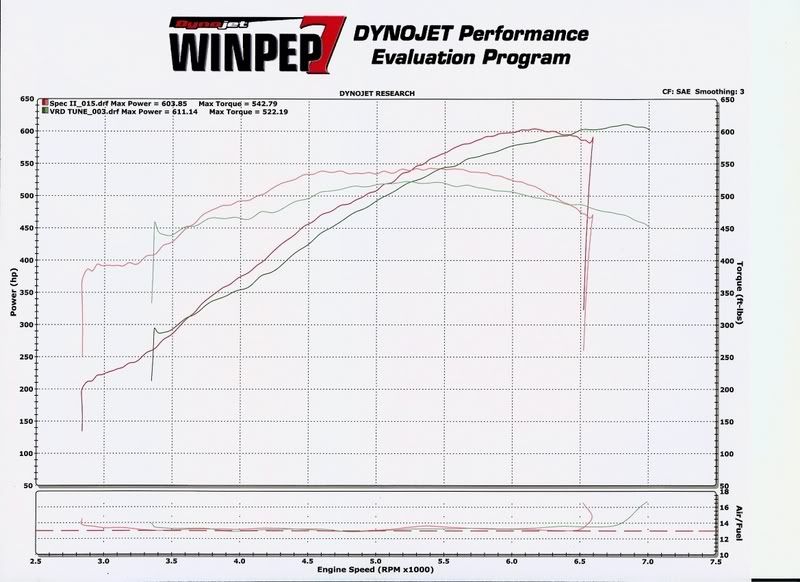
They made that power through the cats also.
https://ls1tech.com/forums/dynamometer-results-comparisons/730759-vengeance-racing-440-ls7-trickflow-235s-preliminary-results.html
They made that power through the cats also.
LS1 Tech Stories
The Best V8 Stories One Small Block at Time

6 Common C5 Corvette Failures and What's Involved In Repairing Them
Pouria Savadkouei
Retro Modern Bandit Pontiac Trans AM Comes With Burt Reynolds' Autograph
Verdad Gallardo
Top 10 Greatest Cadillac V Series Performance Models Ever, Ranked
Pouria Savadkouei
Top 10 Most Powerful Chevy Trucks Ever Made!

Hennessey's New Supercharged Silverado ZR2 Has 700 HP
Verdad Gallardo
Coachbuilt N2A Anteros Is an LS2-Powered C6 Corvette In Italian Clothes
Verdad Gallardo
Awesome K5 Blazer Restomod Comes With C7 Corvette Power
Verdad Gallardo
10 Camaros You Should Never Buy

10 LS Engine Myths That Refuse to Die
Verdad Gallardo TECH Veteran
Joined: Dec 2001
Posts: 4,117
Likes: 0
From: Ft. Lauderdale, FL, USA
Originally Posted by Brian Tooley
I guess you haven't been watching the dyno section lately. Vengeance just had a 440 with TFS 235 heads and Fast intake make over 600 RWHP. They compared the dyno numbers to another 449 with ET LS7 heads and sheetmetal intake. Here is the graph of the two and a link to the post.
https://ls1tech.com/forums/showthread.php?t=730759
https://ls1tech.com/forums/showthread.php?t=730759
Hmmmmm.
.

Originally Posted by Brian Tooley
I guess you haven't been watching the dyno section lately. Vengeance just had a 440 with TFS 235 heads and Fast intake make over 600 RWHP. They compared the dyno numbers to another 449 with ET LS7 heads and sheetmetal intake. Here is the graph of the two and a link to the post.
https://ls1tech.com/forums/showthread.php?t=730759
They made that power through the cats also.
https://ls1tech.com/forums/showthread.php?t=730759
They made that power through the cats also.

I'm with Quicken, it isn't going to take 14+:1 SCR's to get 600 rwhp out of a 427+ ci. The more cubes you add, the easier its going to get, and like quicken said, if you build a LSX based 454, you will see 600+ rwhp with the right combination.


This all comes down to the old saying " NO REPLACEMENT FOR DISPLACEMENT"
The most common formula, Not very scientific, but a good estimate none the less. This is for N/A pump gas 93 octane with an auto trans, take the CI X 1.32 and you have a very achievable streetable RWHP # . Do some research on most cars on this forum with an auto and a 9" or 12 bolt and you will find this formula to be dead on with the higher RWHP #'S. I'm not saying the highest, but well above the average. Obviously one can get real exotic with internal engine parts and high rpm applications and go well beyond these numbers but assuming a 7,000ish max rpm, truly streetable and affordable setup this is a good formula to use.
346 x 1.32 = 456
408 x 1.32 = 538
427 x 1.32 = 563
440 x 1.32 = 580
454 x 1.32 = 599
The most common formula, Not very scientific, but a good estimate none the less. This is for N/A pump gas 93 octane with an auto trans, take the CI X 1.32 and you have a very achievable streetable RWHP # . Do some research on most cars on this forum with an auto and a 9" or 12 bolt and you will find this formula to be dead on with the higher RWHP #'S. I'm not saying the highest, but well above the average. Obviously one can get real exotic with internal engine parts and high rpm applications and go well beyond these numbers but assuming a 7,000ish max rpm, truly streetable and affordable setup this is a good formula to use.
346 x 1.32 = 456
408 x 1.32 = 538
427 x 1.32 = 563
440 x 1.32 = 580
454 x 1.32 = 599

TECH Apprentice
Joined: Oct 2006
Posts: 322
Likes: 0
From: Wichita, Ks.
That is Excellent! Going to fire up the LME built wet sump LS7 this week, hopefully to the dyno for a final tune before the end of the month. Since this project started I've been guessitmating the RWHP and was hoping for over 500 ponies with a 4L60 and a 3.73. The LS7 is a modified powerplant in a 69 built for the street. A gearhead friend and previous street racer insisted that 600 crank hp was PLENTY for city concrete and that any more wasn't practical and he had ALOT of street experience. So with the above formula I won't be concerned with power just with traction!
Originally Posted by Quickin
Only 8 hp more with the sheet metal intake, more cubes and better heads???
Hmmmmm.
.
Hmmmmm.
.
The TFS 235 heads have 2.08 intake valve diameters and THE most important flow point on the flow curve is the intake flow at .400" and at that point the TFS 235 heads flow almost 300 cfm, which is as much as a factory LS7, I have not flowed the aftermarket LS7 stuff.
Don't be fooled into thinking a bigger valve makes more power on a hyd roller cam, pump gas street engine, because in our testing it does not. Also 300 cfm around a 2.08" valve equals far more velocity than 300 cfm around a 2.20" valve...
TECH Veteran
Joined: Dec 2001
Posts: 4,117
Likes: 0
From: Ft. Lauderdale, FL, USA
Originally Posted by Brian Tooley
Better heads? I don't think super big ports with super big valves that flow about the same amount of airflow as much smaller ports and valves would be classified as a better head...
The TFS 235 heads have 2.08 intake valve diameters and THE most important flow point on the flow curve is the intake flow at .400" and at that point the TFS 235 heads flow almost 300 cfm, which is as much as a factory LS7, I have not flowed the aftermarket LS7 stuff.
Don't be fooled into thinking a bigger valve makes more power on a hyd roller cam, pump gas street engine, because in our testing it does not. Also 300 cfm around a 2.08" valve equals far more velocity than 300 cfm around a 2.20" valve...
The TFS 235 heads have 2.08 intake valve diameters and THE most important flow point on the flow curve is the intake flow at .400" and at that point the TFS 235 heads flow almost 300 cfm, which is as much as a factory LS7, I have not flowed the aftermarket LS7 stuff.
Don't be fooled into thinking a bigger valve makes more power on a hyd roller cam, pump gas street engine, because in our testing it does not. Also 300 cfm around a 2.08" valve equals far more velocity than 300 cfm around a 2.20" valve...
Why do you say .400" is the most important point, what is the flow at max lift for both heads?
I would think the LS7's flow much more at the higher lift than the TFS 235's, and with the sheet metal intake the power should be 30-40 hp more. Intake and heads, the two items on an engine that kill flow, if you maximize both you have to make big gains, especially on a big cube engine, right?

.
.
Last edited by Quickin; Jul 2, 2007 at 12:04 PM.


https://ls1tech.com/forums/dynamometer-results-comparisons/690695-project-crazy-power-ii-688rwhp-1st-pull.html
this one made it by a ittle bit.......
this one made it by a ittle bit.......


Originally Posted by Quickin
Why do you say .400" is the most important point, what is the flow at max lift for both heads?
__________________

2013 Corvette Grand Sport A6 LME forged 416, Greg Good ported TFS 255 LS3 heads, 222/242 .629"/.604" 121LSA Pat G blower cam, ARH 1 7/8" headers, ESC Novi 1500 Supercharger w/8 rib direct drive conversion, 747rwhp/709rwtq on 93 octane, 801rwhp/735rwtq on race fuel, 10.1 @ 147.25mph 1/4 mile, 174.7mph Half Mile.
2016 Corvette Z51 M7 Magnuson Heartbeat 2300 supercharger, TSP LT headers, Pat G tuned, 667rwhp, 662rwtq, 191mph TX Mile.
2009.5 Pontiac G8 GT 6.0L, A6, AFR 230v2 heads. 506rwhp/442rwtq. 11.413 @ 121.29mph 1/4 mile, 168.7mph TX Mile
2000 Pewter Ram Air Trans Am M6 heads/cam 508 rwhp/445 rwtq SAE, 183.092 TX Mile
2022 Cadillac Escalade 6.2L A10 S&B CAI, Corsa catback.
2023 Corvette 3LT Z51 soon to be modified.
Custom LSX tuning in person or via email press here.
2013 Corvette Grand Sport A6 LME forged 416, Greg Good ported TFS 255 LS3 heads, 222/242 .629"/.604" 121LSA Pat G blower cam, ARH 1 7/8" headers, ESC Novi 1500 Supercharger w/8 rib direct drive conversion, 747rwhp/709rwtq on 93 octane, 801rwhp/735rwtq on race fuel, 10.1 @ 147.25mph 1/4 mile, 174.7mph Half Mile.
2016 Corvette Z51 M7 Magnuson Heartbeat 2300 supercharger, TSP LT headers, Pat G tuned, 667rwhp, 662rwtq, 191mph TX Mile.
2009.5 Pontiac G8 GT 6.0L, A6, AFR 230v2 heads. 506rwhp/442rwtq. 11.413 @ 121.29mph 1/4 mile, 168.7mph TX Mile
2000 Pewter Ram Air Trans Am M6 heads/cam 508 rwhp/445 rwtq SAE, 183.092 TX Mile
2022 Cadillac Escalade 6.2L A10 S&B CAI, Corsa catback.
2023 Corvette 3LT Z51 soon to be modified.
Custom LSX tuning in person or via email press here.
Originally Posted by Patrick G
When you bolt up a plastic intake, the high lift flow gets pinched off, hence the importance of strong low and mid-lift flow. The TFS heads have HUGE mid-lift flow. We picked up major hp by swapping heads with average mid-lift flow and 330 cfm at .600" to heads with outstanding low and mid-lift flow and 300 cfm flow at .600". The results are chronicled here: https://ls1tech.com/forums/showthread.php?t=732392
I can understand that a bigger valve is different to cam, maybe even harder for some, but to say there are no benefits to one is ridiculous. It is much easier to get flow out of a larger valve. That is the reason iit is done, period. It makes good sense (to me!!)that a larger valve will like more lift to hit the peak flow on it than a smaller valve.
For Brian to make a blanket statement that .400 lift is the most important number is hard for me to digest. To me and my simple little mind, it seems like each lift point that a valve passes on the way to peak lift would be equally important. Doesn't it pass all of these points twice? Won't the lift point at which peak intake flow occurs help decide what lift point is the most important? I can theoretically understand how one point will be most influential in the range of lift, but like anything else, other factors will determine what that point is.
Using port volume to determine whether a head is worth anything is as useless as using just flow numbers. IF that arguement held water, the L92 heads would make no torque and incredible upper rpm power, when in fact when done properly they make phenomenal low rpm torque and peak rather low. I know that is kind of a blanket statement, but I have seen many of these setups produce very similiar results.
Originally Posted by Quickin
Yeah, I guess if the heads are close to the same the sheet metal intake won't help much, and if you can't feed the extra cubes the power won't change much.
Why do you say .400" is the most important point, what is the flow at max lift for both heads?
I would think the LS7's flow much more at the higher lift than the TFS 235's, and with the sheet metal intake the power should be 30-40 hp more. Intake and heads, the two items on an engine that kill flow, if you maximize both you have to make big gains, especially on a big cube engine, right?
.
.
Why do you say .400" is the most important point, what is the flow at max lift for both heads?
I would think the LS7's flow much more at the higher lift than the TFS 235's, and with the sheet metal intake the power should be 30-40 hp more. Intake and heads, the two items on an engine that kill flow, if you maximize both you have to make big gains, especially on a big cube engine, right?
.
.
I remember when the et headed engine was built and dynoed. Something was wrong on that car, it had major issues above ~6200 or so. With that intake on it, it should pull to 7500 rpm cleanly.
IMHO, there are two many difference's between those two motor's to make a direct comparison and say " This is the reason for the power difference"