



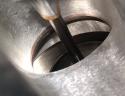



#7 way way lean

Thread Starter
TECH Enthusiast
iTrader: (2)
Joined: May 2006
Posts: 564
Likes: 0
From: IN A VAN, DOWN BY THE RIVER!
 #7 way way lean
 ok so i pulled my plugs and all of them look alright except good ol' #7 the ground strap is gone and so is the most of the porcelean. that was on a 150 with the stock fuel pump . i just installed a racetronix pump with hot wire kit. what can i do to help this not happen again?
. i just installed a racetronix pump with hot wire kit. what can i do to help this not happen again? ok so i pulled my plugs and all of them look alright except good ol' #7 the ground strap is gone and so is the most of the porcelean. that was on a 150 with the stock fuel pump. i just installed a racetronix pump with hot wire kit. what can i do to help this not happen again?
. i just installed a racetronix pump with hot wire kit. what can i do to help this not happen again?How much timing? What fuel? What plugs?
Thread Starter
TECH Enthusiast
iTrader: (2)
Joined: May 2006
Posts: 564
Likes: 0
From: IN A VAN, DOWN BY THE RIVER!
93 octane with octane boost. tr6 plugs. and the timing i think has like 6 degrees pulled. i never thought of the one step colder plug there, does any one have any more info on that?
ok so i pulled my plugs and all of them look alright except good ol' #7 the ground strap is gone and so is the most of the porcelean. that was on a 150 with the stock fuel pump. i just installed a racetronix pump with hot wire kit. what can i do to help this not happen again?
. i just installed a racetronix pump with hot wire kit. what can i do to help this not happen again?Trending Topics
LS1 Tech Stories
The Best V8 Stories One Small Block at Time

Topdon ONE vs. Artidiag 800 BT2: Which is the Diagnostic Tablet For You?
Pouria Savadkouei
Gas Monkey Built a 6-Wheel Ferrari Testarossa With a Corvette LT4 Engine
Verdad Gallardo
7 Most Reliable High-Performance Engines GM Has Ever Built
Verdad Gallardo
Amazing '71 Camaro Restomod Is Modern Muscle Car Under the Skin
Verdad Gallardo
6 Common C5 Corvette Failures and What's Involved In Repairing Them
Pouria Savadkouei
Retro Modern Bandit Pontiac Trans AM Comes With Burt Reynolds' Autograph
Verdad Gallardo
Top 10 Greatest Cadillac V Series Performance Models Ever, Ranked
Pouria Savadkouei
Top 10 Most Powerful Chevy Trucks Ever Made!

Hennessey's New Supercharged Silverado ZR2 Has 700 HP
Verdad Gallardo Thread Starter
TECH Enthusiast
iTrader: (2)
Joined: May 2006
Posts: 564
Likes: 0
From: IN A VAN, DOWN BY THE RIVER!
Thread Starter
TECH Enthusiast
iTrader: (2)
Joined: May 2006
Posts: 564
Likes: 0
From: IN A VAN, DOWN BY THE RIVER!

Increased internal cylinder pressure (ICP) will result in increased heat. The ICP will trend up until the exhaust gas temp (EGT) reaches it's peak value. As you continue to lean the mixture beyond peak EGT the ICP and temps will actually start to trend down again. We refer to this as lean of peak operation (LOP). LOP is very useful for obtaining best economy (cruise operation) but, by definition, an engine cannot make its maximum hp with a LOP mixture.
 Gasoline Thermodynamics 101
Originally Posted by silverbandit0996
but will being lean not heat the cylinder up?
WTD is correct, if you have not fuel, you will not have a fire, but that's not the issue when dealing with N2O - there is fuel present, and air, and a second gas (N2O - is a gas when it is in the cylinder, so let's NOT go down that Liquid / Gas rabbit trail!) which addes Oxygen.
Now why, if the correct Fuel to Air ratio, called the stoichiometric ratio, is approximately 14.7 times the mass of air to fuel. Given this, why do N2O users prefer to be in the 12's vs. the 'correct' 14.7? Is this because 'additional' fuel is needed to account for the additional Oxygen? No, this requirement for extra fuel is already calibrated into a "wet" system's extra fuel line (and a "dry" system increases the PWM of the injectors).
So, with a N2O equipped vehicle, because there is extra fuel and air in the cylinder during combustion, extra BTU's / heat energy is released. This causes cylinder temps and pressure to increase beyond what is seen in a NA combustion (this is KEY!).
(When is the "Lean" issue explained? - I'm getting to that...)
Before combustion, with a cylinder head that is elevated beyond it's 'normal' temperature, "gasoline cooling" becomes critical to prevent detonation.
Remember: PV = NRT - the ideal gas law!
Gasoline cooling occurs when LIQUID gasoline is injected into the cylinder runner - this liquid requires heat to change form to a gas. The action of changing forn 'cools' the cylinder head, allowing the cylinder to function w/o pre-combustion, as the gas takes heat from the cylinder head, bringing the temperature of the head back into the 'safe' range.
So, as an added safe measure, N2O equipeed vehicles typically add additional gasoline into the cylinder to provide an additional factor of safety for 'extra' gasoline cooling; hence the reccommendations to go from a 14.7 : 1 ratio to more like 12.5 : 1.
Now, when ratios are considered "Lean" for an N2O car, the ratio is between 13 : 1 (rich for a NON - N2O car) and 14.7 :1 which is technically perfect, but because added gasoline is needed to cool the combustion chamber, racers refer to this range of ratios as "Lean". When the mixture is "Lean", not enough additional fuel is added to the combustion chamber to sufficiently cool it and it detonates - damaging plugs, pistons, and rings.
Having said ALL that, being "Lean" in an N2O car is actually "not rich enough" to provide the secondary need for the fuel, and cool the combustion chamber.
A "Lean" mixture only 'burns hotter' because it doesn't cool the combustion chamber enough, NOT because the laws of physics change and a lean mixture suddenly releases additional BTU's.
Simple!


12 Second Club
Joined: Jul 2008
Posts: 106
Likes: 0
From: amarillo, tx
Very good explanation...yes being too lean will raise temps, cause detonation and melt everthing in the chamber if it can. If you don't think so take your wet system and drop a few jet sizes on the fuel side and see how many runs you get! Alot of guys will try and run the air/fuel as rich as 11.8 to be real safe...but then you can be way too rich and cause problems also, that's the beauty of nitrous and why a good tune is important.
not totally correct, and I think 421 was hitting on this. not being rich enough (while ROP) will cause ICPs that lead to detonation. also, not being lean enough (while LOP) will cause ICPs that lead to detonation. all mixtures should be thought of relative to an absolute reference, be that peak EGT or stoich. just for grins, what is your cars A/F mixture when cruising down the highway, low load, with the EGR doing its job?
OK, The original question from SB makes an attempt to understand revolves around the concepts of Cylinder Temps and how being "lean" causes those temps to increase.
WTD is correct, if you have not fuel, you will not have a fire, but that's not the issue when dealing with N2O - there is fuel present, and air, and a second gas (N2O - is a gas when it is in the cylinder, so let's NOT go down that Liquid / Gas rabbit trail!) which addes Oxygen.
Now why, if the correct Fuel to Air ratio, called the stoichiometric ratio, is approximately 14.7 times the mass of air to fuel. Given this, why do N2O users prefer to be in the 12's vs. the 'correct' 14.7? Is this because 'additional' fuel is needed to account for the additional Oxygen? No, this requirement for extra fuel is already calibrated into a "wet" system's extra fuel line (and a "dry" system increases the PWM of the injectors).
So, with a N2O equipped vehicle, because there is extra fuel and air in the cylinder during combustion, extra BTU's / heat energy is released. This causes cylinder temps and pressure to increase beyond what is seen in a NA combustion (this is KEY!).
(When is the "Lean" issue explained? - I'm getting to that...)
Before combustion, with a cylinder head that is elevated beyond it's 'normal' temperature, "gasoline cooling" becomes critical to prevent detonation.
Remember: PV = NRT - the ideal gas law!
Gasoline cooling occurs when LIQUID gasoline is injected into the cylinder runner - this liquid requires heat to change form to a gas. The action of changing forn 'cools' the cylinder head, allowing the cylinder to function w/o pre-combustion, as the gas takes heat from the cylinder head, bringing the temperature of the head back into the 'safe' range.
So, as an added safe measure, N2O equipeed vehicles typically add additional gasoline into the cylinder to provide an additional factor of safety for 'extra' gasoline cooling; hence the reccommendations to go from a 14.7 : 1 ratio to more like 12.5 : 1.
Now, when ratios are considered "Lean" for an N2O car, the ratio is between 13 : 1 (rich for a NON - N2O car) and 14.7 :1 which is technically perfect, but because added gasoline is needed to cool the combustion chamber, racers refer to this range of ratios as "Lean". When the mixture is "Lean", not enough additional fuel is added to the combustion chamber to sufficiently cool it and it detonates - damaging plugs, pistons, and rings.
Having said ALL that, being "Lean" in an N2O car is actually "not rich enough" to provide the secondary need for the fuel, and cool the combustion chamber.
A "Lean" mixture only 'burns hotter' because it doesn't cool the combustion chamber enough, NOT because the laws of physics change and a lean mixture suddenly releases additional BTU's.
Simple!
WTD is correct, if you have not fuel, you will not have a fire, but that's not the issue when dealing with N2O - there is fuel present, and air, and a second gas (N2O - is a gas when it is in the cylinder, so let's NOT go down that Liquid / Gas rabbit trail!) which addes Oxygen.
Now why, if the correct Fuel to Air ratio, called the stoichiometric ratio, is approximately 14.7 times the mass of air to fuel. Given this, why do N2O users prefer to be in the 12's vs. the 'correct' 14.7? Is this because 'additional' fuel is needed to account for the additional Oxygen? No, this requirement for extra fuel is already calibrated into a "wet" system's extra fuel line (and a "dry" system increases the PWM of the injectors).
So, with a N2O equipped vehicle, because there is extra fuel and air in the cylinder during combustion, extra BTU's / heat energy is released. This causes cylinder temps and pressure to increase beyond what is seen in a NA combustion (this is KEY!).
(When is the "Lean" issue explained? - I'm getting to that...)
Before combustion, with a cylinder head that is elevated beyond it's 'normal' temperature, "gasoline cooling" becomes critical to prevent detonation.
Remember: PV = NRT - the ideal gas law!
Gasoline cooling occurs when LIQUID gasoline is injected into the cylinder runner - this liquid requires heat to change form to a gas. The action of changing forn 'cools' the cylinder head, allowing the cylinder to function w/o pre-combustion, as the gas takes heat from the cylinder head, bringing the temperature of the head back into the 'safe' range.
So, as an added safe measure, N2O equipeed vehicles typically add additional gasoline into the cylinder to provide an additional factor of safety for 'extra' gasoline cooling; hence the reccommendations to go from a 14.7 : 1 ratio to more like 12.5 : 1.
Now, when ratios are considered "Lean" for an N2O car, the ratio is between 13 : 1 (rich for a NON - N2O car) and 14.7 :1 which is technically perfect, but because added gasoline is needed to cool the combustion chamber, racers refer to this range of ratios as "Lean". When the mixture is "Lean", not enough additional fuel is added to the combustion chamber to sufficiently cool it and it detonates - damaging plugs, pistons, and rings.
Having said ALL that, being "Lean" in an N2O car is actually "not rich enough" to provide the secondary need for the fuel, and cool the combustion chamber.
A "Lean" mixture only 'burns hotter' because it doesn't cool the combustion chamber enough, NOT because the laws of physics change and a lean mixture suddenly releases additional BTU's.
Simple!
And on nitrous engines, you don't look at the a/f ratio, you look at the n/f ratio. I've seen, and run nitrous combos in the 14's flawlessly. Optimal a/f ratio with nitrous will be different from engine to engine.
Everyone is correct to a point. We have to look at the whole picture for a safe tune. If we are going to attempt to run a leaner mix, which can make more power, we also need to pull some timing, add race gas and go to a colder plug.
So a safe tune for any given combo must take into account, octane rating, timing at WOT, Plug heat range, A/F ratio and size of hit. So the answer would be, do a nitrous tune and you will be fine. For that shot at least a TR6 plug, pull timing and add a little race gas and you will be fine. You may be fine doing just one of those, but by doing all three you will have a nice safety factor.
Now with all that said, if you have a fuel pump that is not up to par, that can certainly cause issues as well.
In conclusion, it could be from a lean mix. If you drop the timing down you can get away with a leaner mix.
It could be from to much timing and a a/f ratio that could be fine.
It could be from a hot plug with timing OK and a/f OK, or at least acceptable if the plug was correct.
It could be a fine tune and some shitty gas.
It could be from a tune that is way off for spraying, meaning more than one area that needs attention.
So as we can see all of the parameters need attention for a safe nitrous tune, and for some breathing room.
Robert
So a safe tune for any given combo must take into account, octane rating, timing at WOT, Plug heat range, A/F ratio and size of hit. So the answer would be, do a nitrous tune and you will be fine. For that shot at least a TR6 plug, pull timing and add a little race gas and you will be fine. You may be fine doing just one of those, but by doing all three you will have a nice safety factor.
Now with all that said, if you have a fuel pump that is not up to par, that can certainly cause issues as well.
In conclusion, it could be from a lean mix. If you drop the timing down you can get away with a leaner mix.
It could be from to much timing and a a/f ratio that could be fine.
It could be from a hot plug with timing OK and a/f OK, or at least acceptable if the plug was correct.
It could be a fine tune and some shitty gas.
It could be from a tune that is way off for spraying, meaning more than one area that needs attention.
So as we can see all of the parameters need attention for a safe nitrous tune, and for some breathing room.
Robert