When you click on links to various merchants on this site and make a purchase, this can result in this site earning a commission. Affiliate programs and affiliations include, but are not limited to, the eBay Partner Network.
Idle Surging Coming To A Stop and sometimes stalling
I have an issue with my swap where when coming to a stop, the idle will hunt or surge when approaching 0 vehicle speed. 0411 PCM with 92mm NW cable throttle body, 231/242 @0.050 0.600/0.600 on 113+3 cam, 799 heads, 6.0L with flat tops and gen 4 rods, TBSS Intake, 50 lb/hr injectors (12613412 injectors, gen 4 flex fuel), 4L80e with 2800-3200 stall lockup converter. Not sure what to log to see what is causing this issue. Seems to be worse with adaptive idle enabled.
here is a snip of my recent log, I have attached both the log and the tune file.
The next steps are to adjust throttle cracker and throttle follower. At least it helped me to get the car to idle down when coming to a stop. Car wanted to cruise when I let off the throttle and then it would die when I would brake to stop. Also wanted to die when blipping the throttle (fix explained by Maslic in above 4 videos)
The next steps are to adjust throttle cracker and throttle follower. At least it helped me to get the car to idle down when coming to a stop. Car wanted to cruise when I let off the throttle and then it would die when I would brake to stop. Also wanted to die when blipping the throttle (fix explained by Maslic in above 4 videos)
thanks for the suggestions on these, I have actually watched about all the videos online that talk about idle tuning and cracker / follower tables, and even found some nice tutorials on the hpt forum for doing the RAF tuning that I have done several times over. When I do the RAF tuning, I get numbers in the teens - low 20s for g/s flow, but when driving around it drops down to around 10-11g/s for some reason.
also, how do I tune the cracker / follower tables without just guessing? Is there a way to set up the scanner to log how much additional flow is needed?
Did you watch bottom link of an HP tuners video? I followed Maslics, ChopperDoc, and some HP tuners videos and got mine to always idle down and stay idling. I think I might have changed decay rate too. Found a lot of info on EFI live as well.
My tuner wasn't of much help so I tried myself by searching and reading what others were doing. I didn't think I could do any damage with idle. In a cruise mode left by previous tuner IMO is much more dangerous or stalling out at a stop sign or halfway thru an intersection like it did when done by professional tuners.
I recall Chopper doc explains what PIDs to set up to log airflow. There are too many variables for a one size fits all.
Setting your TPS is important too.
My car has an SD tune and TB is cable driven. TB is also stock and not ported.
Did you watch bottom link of an HP tuners video? I followed Maslics, ChopperDoc, and some HP tuners videos and got mine to always idle down and stay idling. I think I might have changed decay rate too. Found a lot of info on EFI live as well.
My tuner wasn't of much help so I tried myself by searching and reading what others were doing. I didn't think I could do any damage with idle. In a cruise mode left by previous tuner IMO is much more dangerous or stalling out at a stop sign or halfway thru an intersection like it did when done by professional tuners.
I recall Chopper doc explains what PIDs to set up to log airflow. There are too many variables for a one size fits all.
Setting your TPS is important too.
My car has an SD tune and TB is cable driven. TB is also stock and not ported.
I just recently found chopperdoc, and really like his explanation and digging into the details of the formulas behind everything. I probably need to do more airflow and spark logging too.
You might also invest in a digital download from Maslic - like ChopperDoc he teaches by example after explaining theory in the first half of his manual.
You might also invest in a digital download from Maslic - like ChopperDoc he teaches by example after explaining theory in the first half of his manual.
love the goat rope garage channel - I’ve watched his stuff over and over. That got me into tuning on my Gen 5 L86. Granted that was just tweaking what was already there in a stock setup and not starting from scratch like his 6L build.
Tuning return-to-idle is a whole other thing, and I never did get that figured out. Massively frustrating.
Throttle follower, as I understand it, adds to the target idle airflow when you release the gas pedal (the value depends on where you release it from), and then the follower value slowly decays.
Throttle cracker, as I understand it, adds a fixed to the target idle airflow while you're driving (the value depends on RPM and speed), and this value slowly decays when you release the throttle.
In both cases, the idea is that when you release the pedal, RPM will quickly drop to a level above the target idle (because the increased target airflow value causes the IAC or DBW throttle blade to open just a bit more), and then as the value decays the RPM will slowly settle to the target RPM and the adaptive stuff can smoothly take over.
So think about which circumstances you have trouble with, and try adding some extra airflow using the right mechanism for those circumstances.
The annoying thing (I'd even go so far as to call this a bug) is that the extra airflow begins decaying when you lift the pedal. So if you lift and engine-brake for a while, the extra airflow value can decay to zero even though RPM is still high. So then the PCM tries to return to idle without the extra airflow, and the transition is harder to make. Then it's entirely up to the tuning of the adaptive-idle parameters. But the whole reason those extra airflow mechanisms exist is that the adaptive-idle system by itself has a hard time making that transition sometimes. Especially with a bigger cam or lighter flywheel. So it's hard to get it reliable.
If any of the above is wrong, I'd love to know exactly what/how/where/why because as soon as my new motor shows up I'm pretty sure I'm going to be fighting this battle again.
It seems to be worse in my case with the adaptives on and the MAF enabled. If I am running in SD mode, it seems to be much better. I also notice that if I abruptly come to a stop, it has a harder time than if I ease it down from about 10mph or so. I did another 2 days of the RussK idle config and got my RAF dialed in a little better both in gear and in P/N. Right now, I can't hit any lower than the 68* cell, and even that only has a few hits before moving to the next one.
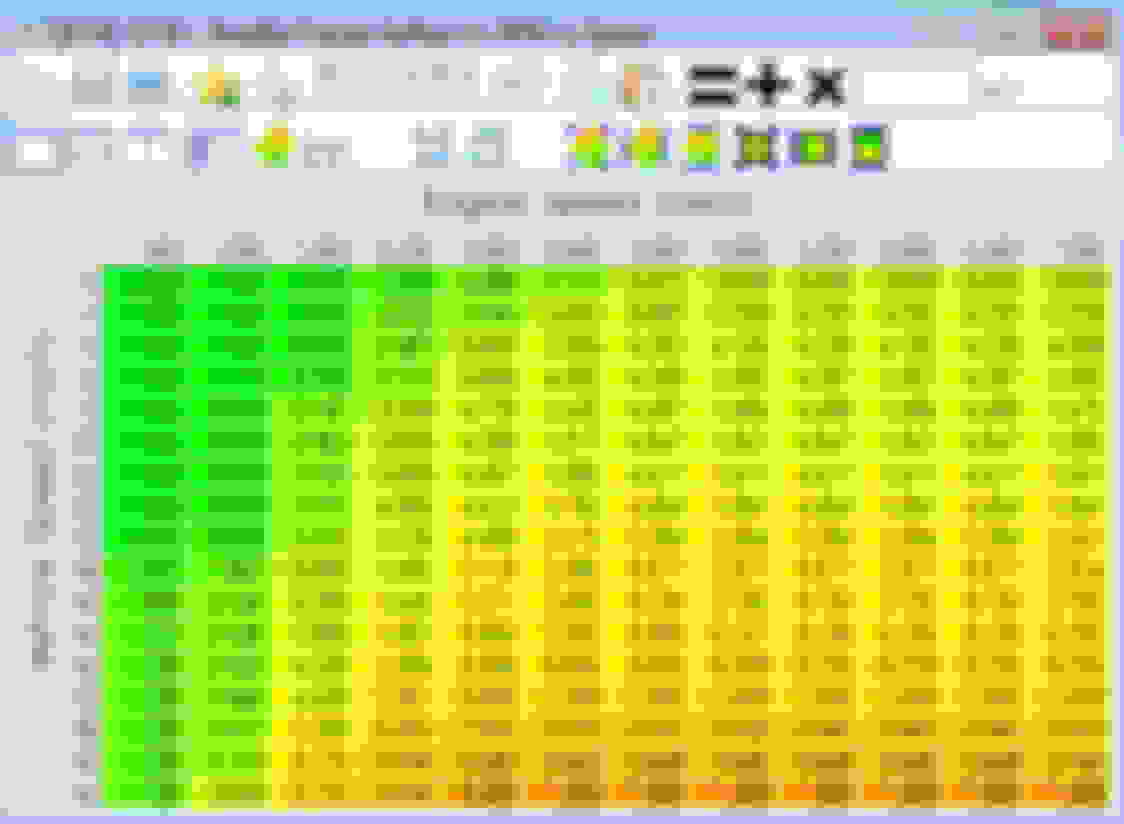
It's not consistent though - sometimes it surges and swings back and forth like an under-damped mass-spring-damper system where the oscillations get larger and larger with each period until it stalls, other times under the same circumstances (or what look like the same circumstances) it idles down just fine to my target idle speed with no issue. I'll have to dig deeper into what my throttle cracker and follower are doing during these, but I have the cracker set to be disabled under 8mph and my table looks like this:
Also, I haven't found any definitive information on the rolling idle setting. It appears to me to only work on manual trans vehicles and only when the clutch is depressed or in neutral. However, I have seen conflicting information (maybe it's my misunderstanding in those sources) that it will work for an Auto vehicle too. Does anyone know rolling idle works on an Auto? The general info I found was to put the rolling idle ~150rpm higher than your idle setpoint so engine rpm can come down to the "rolling idle" setpoint and then when vehicle speed = 0, it would idle down to the target idle speed.
I have a manual car, and the rolling idle works as you describe. I have no idea whether it works similarly with an automatic.
like an under-damped mass-spring-damper system where the oscillations get larger and larger with each period until it stalls, other times under the same circumstances (or what look like the same circumstances)
You'll have this fixed quick. What you're seeing is a feedback loop (which controls idle airflow) )with the gains turned up too high, so the mass-spring-damper analogy covers most of it. If you're familiar with proportional / integral / derivated (PID) feedback loops, you'll have that fixed in no time. If not, read some info about PID feedback and then go for it. DarthV8r suggested using higher gain values for the underspeed corrections, so that the PCM will aggressively work to avoid stalling, and then use lower gain values for overspeed so that it settles down slowly, and that helped a lot for my car.
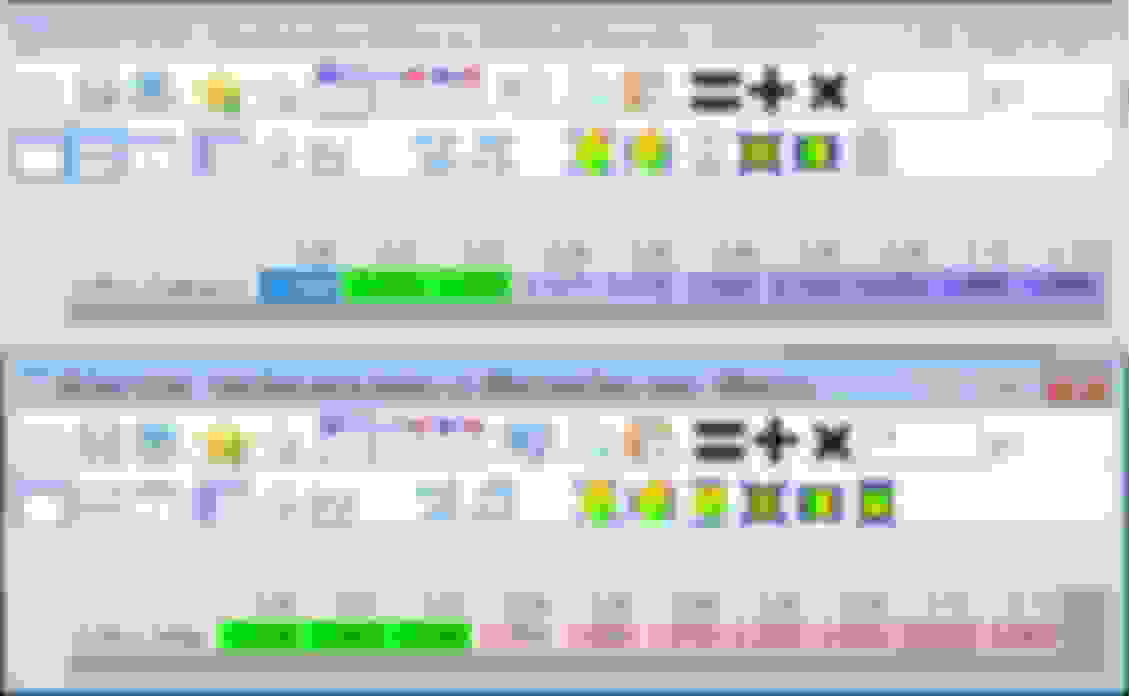
I'll give that a try. Here's my first shot (probably overkill) at modifying the High / Low tables for Derivative airflow. I added 50% to the Low table and subtracted 50% from the High table to try and get it to act fast on the undershoot and not as fast on the overshoot. If this works, I'll start dialing it back to the point where the surging just comes back, then increase it from there.
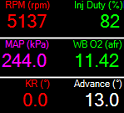
Here's an example of what I am seeing where I am off the throttle, slowing to a stop, and the rpms start swinging back and forth uncontrollably (you will notice I tried to help it out by opening the throttle some more, but to no avail). My IAC and spark are both trying to reign it in with no success. My AFR is also swinging wildly for some reason too during this.
Tuning return-to-idle is a whole other thing, and I never did get that figured out. Massively frustrating.
It is definitely nice to see some detailed thought put into this stuff...compared to the usual guess and check
Your analysis of it was spot on. Steady state idle is very different than a transition to idle. The primary difference is the desired net torque output from the crankshaft. At idle, that must be either zero in P/N or slightly positive in D/R. Being very close to zero torque and at the target RPM necessitates tuned closed loop control. Transition to idle (from higher engine speed) should be somewhere from slightly to moderately negative in terms of crankshaft torque...so the transmission is actually delivering torque to the engine which the engine opposes via engine braking. Or at least, that's what should be happening. This data suggests that the trans-engine torque delta during decel is close to zero, as with idle; and being uncontrolled outside of feedforward values, it's free to oscillate. Part of this is the torque converter being looser - extra slip further decouples the engine and trans, making idle more sensitive to engine torque. Part of it looks to be late downshifts. Late shifts down from higher gear doesn't rev the engine high enough to utilize that negative torque...try increasing the downshift speed for each gear. Next data file you might want to grab trans input shaft speed too so you can have a better idea of how to avoid the oscillation. The remaining contributor to the oscillation appears to be base airflow that's a bit too high and some RPM driven air/spark via throttle cracker and the main spark table. Both of those tables are producing more torque as RPM creeps above 1000, which is what helps drive that idle swing. That cam will be sensitive to the delta, so flatten out spark and throttle cracker until a bit higher in the RPM.
It’s also important to get the fueling correct below your idle speed. Both MAF and VE.
If the idle sags and hits those cells and the fueling isn’t right there, it will surge.
To do this, use the VCM controls and slowly reduce the idle speed until it hits those cells. Depending on the cam, these things will idle as low as 400 rpm.
I have an issue with my swap where when coming to a stop, the idle will hunt or surge when approaching 0 vehicle speed. 0411 PCM with 92mm NW cable throttle body, 231/242 @0.050 0.600/0.600 on 113+3 cam, 799 heads, 6.0L with flat tops and gen 4 rods, TBSS Intake, 50 lb/hr injectors (12613412 injectors, gen 4 flex fuel), 4L80e with 2800-3200 stall lockup converter. Not sure what to log to see what is causing this issue. Seems to be worse with adaptive idle enabled.
here is a snip of my recent log, I have attached both the log and the tune file.
hey i recently just cane across a problem similar to this. When coming to a stop it stalls, rpm’s dropping too low, and wants to shut off,if i ease to a stop really slow itll be fine. Then when in park if i rev it any little bit the rpms hang at 2-2200k rpm for a minute or two then go back to normal.. btw this just started happening randomly and ive had it for a while.
6 Common C5 Corvette Failures and What's Involved In Repairing Them
Slideshow: From wobbling harmonic balancers to failed EBCMs, these are the issues that define long-term C5 ownership and what repairs typically involve.
Retro Modern Bandit Pontiac Trans AM Comes With Burt Reynolds' Autograph
Slideshow: A modern Camaro transformed into a retro icon, this limited-run "Bandit" build blends nostalgia with brute force in a way few revivals manage.
Top 10 Greatest Cadillac V Series Performance Models Ever, Ranked
Slideshow: Cadillac didn't just crash the high-performance luxury vehicle party, it showed up loud, supercharged, and occasionally a little unhinged...
Coachbuilt N2A Anteros Is an LS2-Powered C6 Corvette In Italian Clothes
Slideshow: A one-off sports car that looks like a vintage Italian exotic-but hides a C6 Corvette underneath-just sold for the price of a new mid-engine Corvette.




 Idle Surging Coming To A Stop and sometimes stalling