







help with top speed stability

Thread Starter
Staging Lane
Joined: Jan 2008
Posts: 97
Likes: 0
 help with top speed stability
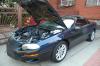
 Ive noticed the more weight i pull from my car the more unstable it is. Ive got a 2000ss and its down to 2900lbs. But now its sits extremely high and has a lot of body roll and very unstable. I would like to re do my intire suspension for top speed runs. Any sugestions would be greatly appreciated thank you.
Ive noticed the more weight i pull from my car the more unstable it is. Ive got a 2000ss and its down to 2900lbs. But now its sits extremely high and has a lot of body roll and very unstable. I would like to re do my intire suspension for top speed runs. Any sugestions would be greatly appreciated thank you.
The reason I mention this is because even though I've built several cars more for road courses, I had to struggle hard with weight distribution, which forced me to make compromises. I've also witnessed F-bodies that weigh between 3100 to 3200 dry that ended up being more "stable" and "predictable" than ones that were ~2900lbs. dry. This was down to good vehicle weight distribution, which then allowed me to properly tune my suspension.

TECH Resident
Joined: Feb 2003
Posts: 827
Likes: 0
From: Dallas, TX
Thread Starter
Staging Lane
Joined: Jan 2008
Posts: 97
Likes: 0
Could you give a general list of what's been removed, added, and modified so far?
The reason I mention this is because even though I've built several cars more for road courses, I had to struggle hard with weight distribution, which forced me to make compromises. I've also witnessed F-bodies that weigh between 3100 to 3200 dry that ended up being more "stable" and "predictable" than ones that were ~2900lbs. dry. This was down to good vehicle weight distribution, which then allowed me to properly tune my suspension.
The reason I mention this is because even though I've built several cars more for road courses, I had to struggle hard with weight distribution, which forced me to make compromises. I've also witnessed F-bodies that weigh between 3100 to 3200 dry that ended up being more "stable" and "predictable" than ones that were ~2900lbs. dry. This was down to good vehicle weight distribution, which then allowed me to properly tune my suspension.
Trending Topics
I will echo what Foxx and others have said ... you need get some quality shocks and spring rates on the car. Get the car down out of the air.
Also, with 72K and 1/2 a dozen years, the bushings have got be deflecting significantly. Need tighten up all the suspesnion points.
Finally, for straight line, speed runs, you need to do an alignment.
Dial in:
-1.0 camber
max + caster
just a tick of toe in
Also, with 72K and 1/2 a dozen years, the bushings have got be deflecting significantly. Need tighten up all the suspesnion points.
Finally, for straight line, speed runs, you need to do an alignment.
Dial in:
-1.0 camber
max + caster
just a tick of toe in
LS1 Tech Stories
The Best V8 Stories One Small Block at Time

Topdon ONE vs. Artidiag 800 BT2: Which is the Diagnostic Tablet For You?
Pouria Savadkouei
Gas Monkey Built a 6-Wheel Ferrari Testarossa With a Corvette LT4 Engine
Verdad Gallardo
7 Most Reliable High-Performance Engines GM Has Ever Built
Verdad Gallardo
Amazing '71 Camaro Restomod Is Modern Muscle Car Under the Skin
Verdad Gallardo
6 Common C5 Corvette Failures and What's Involved In Repairing Them
Pouria Savadkouei
Retro Modern Bandit Pontiac Trans AM Comes With Burt Reynolds' Autograph
Verdad Gallardo
Top 10 Greatest Cadillac V Series Performance Models Ever, Ranked
Pouria Savadkouei
Top 10 Most Powerful Chevy Trucks Ever Made!

Hennessey's New Supercharged Silverado ZR2 Has 700 HP
Verdad Gallardo
From what I understand, for high-speed stability, F-bodies like a little bit of rake, with fairly neutral camber, but slightly more toe-in. Along with the proper shocks/springs/suspension mentioned, similar sized wheels and tires (front to rear) with similar offsets that will track in-line. Quality, Ultra High-Performance Summer/Road Race tires, with moderate widths and moderate sidewall height (the lighter, the better, too). Lighter weight wheels will help, and brakes/pads that operate well with a little extra heat.

I will echo what Foxx and others have said ... you need get some quality shocks and spring rates on the car. Get the car down out of the air.
Also, with 72K and 1/2 a dozen years, the bushings have got be deflecting significantly. Need tighten up all the suspesnion points.
Finally, for straight line, speed runs, you need to do an alignment.
Dial in:
-1.0 camber
max + caster
just a tick of toe in
Also, with 72K and 1/2 a dozen years, the bushings have got be deflecting significantly. Need tighten up all the suspesnion points.
Finally, for straight line, speed runs, you need to do an alignment.
Dial in:
-1.0 camber
max + caster
just a tick of toe in
Losts of caster slows the steering input down and resistance forces try and keep the wheel straight. At -1* camber, you should get close to +6* caster.
The toe in keeps the car moving in a straight line and reduces trammelling.
Still need a little camber to help the car react. And cambering the tire reduces rolling resistance.

I will echo what Foxx and others have said ... you need get some quality shocks and spring rates on the car. Get the car down out of the air.
Also, with 72K and 1/2 a dozen years, the bushings have got be deflecting significantly. Need tighten up all the suspesnion points.
Finally, for straight line, speed runs, you need to do an alignment.
Dial in:
-1.0 camber
max + caster
just a tick of toe in
Also, with 72K and 1/2 a dozen years, the bushings have got be deflecting significantly. Need tighten up all the suspesnion points.
Finally, for straight line, speed runs, you need to do an alignment.
Dial in:
-1.0 camber
max + caster
just a tick of toe in
It's a best guess.
Losts of caster slows the steering input down and resistance forces try and keep the wheel straight. At -1* camber, you should get close to +6* caster.
The toe in keeps the car moving in a straight line and reduces trammelling.
Still need a little camber to help the car react. And cambering the tire reduces rolling resistance.
Losts of caster slows the steering input down and resistance forces try and keep the wheel straight. At -1* camber, you should get close to +6* caster.
The toe in keeps the car moving in a straight line and reduces trammelling.
Still need a little camber to help the car react. And cambering the tire reduces rolling resistance.
ill tell him to Dial in:
-1.0 camber
max + caster
i read that 0mm for ronts will be good.
anything else i need to know ?

i was about to say exactly what mitch said, get the castor higher. to put what he said in layman terms, higher castor makes the car harder to turn. at low speeds you might notice a bit more resistance, but at higher speeds you will realize that your wheel is not very sensitive to the touch, which makes it a very gentle ride and much safer.
don't try and do an alignment yourself...changing castor can also affect camber and toe as well.
my alignment is:
-.7 camber
6.8 castor
0 toe
to the "is this proven?" question, BMW's and Mercedes have very high castor, like +7-10, and as you know are both very well known for their suspension stability.
don't try and do an alignment yourself...changing castor can also affect camber and toe as well.
my alignment is:
-.7 camber
6.8 castor
0 toe
to the "is this proven?" question, BMW's and Mercedes have very high castor, like +7-10, and as you know are both very well known for their suspension stability.

On The Tree
Joined: Jun 2007
Posts: 191
Likes: 0
From: Bristol, TN/Knoxville, TN/Mooresville, NC/Phoenix, AZ
a shop that does road racing cars did my alignment. they said they have worked on many f-bodys and never gotten a castor as high as mine, but they were very happy they did. they attributed the higher castor to the rear isolator being out (and my car already lowered), plus the weight of the stereo. it made the rear sit lower so that positive castor was easier to achieve.
you are right in the mere fact that a factory f-body could probably not get the castor i mentioned because of their design. but, that doesn't mean that if you could get those specs it is bad for the car because the car wasn't designed for it. you're on ls1tech...i'd say about 80% of the users on here do things to their car all the time that the cars weren't designed for. but that doesn't mean it's a bad thing. any suspension guru will tell you more positive castor isn't going to hurt your car as long as you aren't sacrificing camber/toe.
you are right in the mere fact that a factory f-body could probably not get the castor i mentioned because of their design. but, that doesn't mean that if you could get those specs it is bad for the car because the car wasn't designed for it. you're on ls1tech...i'd say about 80% of the users on here do things to their car all the time that the cars weren't designed for. but that doesn't mean it's a bad thing. any suspension guru will tell you more positive castor isn't going to hurt your car as long as you aren't sacrificing camber/toe.