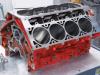


OHV vs OHC
 OHV vs OHC
 For my Public Speaking class I have an informative speech to do by next week, and the topic I chose to do is comparing OHC and pushrod motors by giving basic info, and pros and cons of BOTH. However, this is not a persuasive speech, and as much as I am slightly biased towards pushrod motors, I have to remain as neutral as possible, although my professor does understand there may naturally be a bit of bias present. I think I have my intro and conclusion covered, but I have to cover 3 main points. So something probably like...
1. OHV/pushrod
a. arguments for
b. arguments against
2. OHC
a. arguments for
b. arguments against
3. Myths
a. displacement =/= engine size and weight
b. something else... whatever
Now I have read some articles, whatever I found on google, and quite a bit of threads on other forums debating between the two designs, but just in case I missed anything, anything you guys can add or contribute will help. Thanks!
1. OHV/pushrod
a. arguments for
b. arguments against
2. OHC
a. arguments for
b. arguments against
3. Myths
a. displacement =/= engine size and weight
b. something else... whatever
Now I have read some articles, whatever I found on google, and quite a bit of threads on other forums debating between the two designs, but just in case I missed anything, anything you guys can add or contribute will help. Thanks!
Heres a few:
People often assume that the OHV design is an "older" design than OHC. Fact is, both were used from the start of internal combustion engines.
OHV engines tend to have wider torque curves than OHC motors. In general, they also produce better low end power.
GM considered both OHV as well as OHC designs for the 1997 Corvette engine, which later became known as the now famous LS1. Prototypes of both head designs were made, and after GM employees were asked to test each version, the votes were far in favor of the OHV version, mainly for its excellent driveability and instant power.
OHC motors tend to be better at higher RPM's. They have less valve train components and therefore less valve train mass. A stock 03-04 Mustang Mach 1 with the DOHC 4.6 Modular has a redline of 7,000RPM, as compared to a stock LS1, which hits the fuel cutoff at 6200RPM.
OHC tend to be much more expensive to upgrade the valvetrain with aftermarket components, since you have anywhere from twice to 4 times as many cams as an OHV motor.
People often assume that the OHV design is an "older" design than OHC. Fact is, both were used from the start of internal combustion engines.
OHV engines tend to have wider torque curves than OHC motors. In general, they also produce better low end power.
GM considered both OHV as well as OHC designs for the 1997 Corvette engine, which later became known as the now famous LS1. Prototypes of both head designs were made, and after GM employees were asked to test each version, the votes were far in favor of the OHV version, mainly for its excellent driveability and instant power.
OHC motors tend to be better at higher RPM's. They have less valve train components and therefore less valve train mass. A stock 03-04 Mustang Mach 1 with the DOHC 4.6 Modular has a redline of 7,000RPM, as compared to a stock LS1, which hits the fuel cutoff at 6200RPM.
OHC tend to be much more expensive to upgrade the valvetrain with aftermarket components, since you have anywhere from twice to 4 times as many cams as an OHV motor.
ohc are also much bigger at the same displacement then the ohv motor. look at the stang mod motor and the ls1( i know the mod motor is a 4.6. ford dosnt make a 5.7 mod motor). ls1 is smaller then the 4.6, chevy had a ohc v8 it was called the LT5. the reason they went a way from it was it cost to much to maunfactor 4 cams vs 1, 32 valves and springs vs 16. more metal to cast for the bigger heads and more metal for the block. the LSx ohv motor gets better MPG then the ohc 4.6 ford mod motor.
and just to let you know the LS7 revs to 7,000rpm. 427ci ohv motor still gets better mpg's then a 4.6L ohc motor
and just to let you know the LS7 revs to 7,000rpm. 427ci ohv motor still gets better mpg's then a 4.6L ohc motor

Registered User
Joined: Jan 2009
Posts: 43
Likes: 0
Some of the mileage gain is due in part to the LS7(corvette) is quite a bit lighter than the Mustang. Not to mention the heavier Mustang is making a smaller engine do more work than the bigger engine in the lighter Corvette. Although the LS7 is slightly better in the H.P. per CID than the Mustangs 4.6, (GT only). And lets not forget aerodynamics also play a role. So the better MPG is not just a "better" engine issue at all.

Launching!

Joined: Mar 2008
Posts: 260
Likes: 2
From: Pittsburgh
I believe that the OHC was invented in 1912 and the OHV came 7 to 8 years later.
OHV motors are very efficient. A Cup motor is about 99% as efficient as an F1 motor and Pro stock is more efficient.
If I can find the link I will post, it extensively compares the OHC vs. OHV.
OHV motors are very efficient. A Cup motor is about 99% as efficient as an F1 motor and Pro stock is more efficient.
If I can find the link I will post, it extensively compares the OHC vs. OHV.
I believe that the OHC was invented in 1912 and the OHV came 7 to 8 years later.
OHV motors are very efficient. A Cup motor is about 99% as efficient as an F1 motor and Pro stock is more efficient.
If I can find the link I will post, it extensively compares the OHC vs. OHV.
OHV motors are very efficient. A Cup motor is about 99% as efficient as an F1 motor and Pro stock is more efficient.
If I can find the link I will post, it extensively compares the OHC vs. OHV.

12 Second Club
Joined: Jul 2005
Posts: 2,213
Likes: 1
From: Chesapeake va
i had heard, actually on this website, when a member had posted that ohv motors were old news and ohc motors were the way of the future, that someone else posted that in WW1 or 2, cant remeber which, that thier were planes using ohc motors.
Trending Topics
Launching!
Joined: Mar 2008
Posts: 260
Likes: 2
From: Pittsburgh
I looked and could not find anything. I believe it was called "Pushrods vs. Extinction". I copied most of the inof but it is on my other hard drive that I have to send to a clearoom. Sorry I could not help.
LS1 Tech Stories
The Best V8 Stories One Small Block at Time

Top 10 Greatest Cadillac V Series Performance Models Ever, Ranked
Pouria Savadkouei
Top 10 Most Powerful Chevy Trucks Ever Made!

Hennessey's New Supercharged Silverado ZR2 Has 700 HP
Verdad Gallardo
Coachbuilt N2A Anteros Is an LS2-Powered C6 Corvette In Italian Clothes
Verdad Gallardo
Awesome K5 Blazer Restomod Comes With C7 Corvette Power
Verdad Gallardo
10 Camaros You Should Never Buy

10 LS Engine Myths That Refuse to Die
Verdad Gallardo
Five Reasons the Camaro Was the Most Pivotal Player in the Pony Car Wars 2.0
Brett Foote
10 Reasons the LS7 Is GM's Most Extreme Naturally Aspirated V8 Engine Ever
Verdad Gallardo
yeah yeah alot of people also say that the v8 is on its way out also but who is gonna give theirs up? not me. oh and the LT5 was actually made by lotus its the only engine ever to go in a corvette that was and ohc and also the only engine not made by chevy to go into it

TECH Enthusiast
Joined: Oct 2007
Posts: 605
Likes: 0
From: NC

TECH Addict
Joined: Aug 2004
Posts: 2,866
Likes: 4
its not where the cam is that makes the difference, its the number of valves you run and thus the 'curtain area' of the valves
Chris.
yeah yeah alot of people also say that the v8 is on its way out also but who is gonna give theirs up? not me. oh and the LT5 was actually made by lotus its the only engine ever to go in a corvette that was and ohc and also the only engine not made by chevy to go into it
TECH Enthusiast
Joined: Oct 2007
Posts: 605
Likes: 0
From: NC
Haha nah man he is right. GM contracted Lotus to design it. Then the plant they had going at the time was not able to produce it, so they got Mercury to manufacture them...