


Fast 90 Intake porting..


Originally Posted by NSTY WS6
Lethl Z06 did a comparison between a stock fast 90/90 and a ported fast 90/90, the casting flash was taken out, runners smoothed out, blending was done on the underside of the middle piece where the air comes around to "enter" the runner. Test was done back to back. There were no gains. This was posted in another thread by him after people were asking for results. Not one person replied after he posted no gains.
I dont think it could hurt to port match and clean up the casting flash, but I do not believe any more porting will result a gain of any kind.
I dont think it could hurt to port match and clean up the casting flash, but I do not believe any more porting will result a gain of any kind.





 Fast 90
 [QUOTE=JL ws-6]mamno gets 500 to do the job on a new intake. I looked into it, and seriously woule have to have my head examined to put another 500 into an 800 dollar plastic intake.
+1
+1
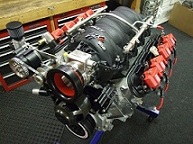

I couldn't disagree more....
If your looking for all the money from a particular combination (which is a big if and doesn't apply to everyone), you would have to have your head examined not to do it. It drops your HP per dollar cost some 25% and gives you alot more of it.
https://ls1tech.com/forums/generation-iii-external-engine/675860-my-custom-ported-fast-85-85-pics.html
Check my post #28 specifically to reinforce the point I was making above.
Tony M.
If your looking for all the money from a particular combination (which is a big if and doesn't apply to everyone), you would have to have your head examined not to do it. It drops your HP per dollar cost some 25% and gives you alot more of it.
https://ls1tech.com/forums/generation-iii-external-engine/675860-my-custom-ported-fast-85-85-pics.html
Check my post #28 specifically to reinforce the point I was making above.
Tony M.
Last edited by Tony Mamo @ AFR; Apr 2, 2007 at 02:17 PM.
Actually,
Im just going to copy and paste post 28 referenced above....feel free to click the link in my previous post if you would like a better understanding of the 85mm info I also included in this quick spreadsheet shown below. In a nutshell, someone opened up a FAST 78 and modified the snout to accept a larger 85mm TB which are reasonably inexpensive to purchase (cheaper than a 90).
------------------------------------------------------------
Consider this in your search for "value" (I look at everything on a HP per dollar basis).
If you already have a good epoxied and ported 78 mm TB (like a Mark Shaner piece or something similar) score a 78 unit cheap and just consider having it ported. Even at the prices I charge to do a very neat and thorough job your return on investment is still better than buying a larger 85 mm TB and cutting up the snout which might close the gap in half between the 78 and the 90 netting you 2-3 HP. For an extra few hundred you would see an additional gain of 10 RWHP and a similar bump in TQ (my ported FAST 78 set-up went 20 RWHP and 15 RWTQ stronger than my former LS6/78 set-up as I previously mentioned).
For grins I just whipped up this spreadsheet....prices and performance may vary slightly but I think the general point I am making would still be intact.
Manifold.............Avg Retail $$...........Typical Gain.........Cost/HP
Stk FAST 78.............700........................8....... ............. $87
Stk FAST 90 (w/ TB)..1200......................13................. ...$92
FAST 78 w/ 85 mm.....900.......................11............... .....$82
Ported FAST 78.........1200......................18........... .........$67
Ported FAST 90/90.....1700......................23............... .....$74
The key is to understand that the snout doesn't represent the largest restriction in the FAST hence the smaller gains when messing with it. Reshaping and reconfiguring the ports are where the larger gains in airflow and power can be unlocked....
Tony
-----------------------------------------------------------------
As I said, if your looking to really maximize the swap, considering having the intake properly ported is money well spent.
Just sharing my opinion and we all know about opinions....LOL
Tony
Im just going to copy and paste post 28 referenced above....feel free to click the link in my previous post if you would like a better understanding of the 85mm info I also included in this quick spreadsheet shown below. In a nutshell, someone opened up a FAST 78 and modified the snout to accept a larger 85mm TB which are reasonably inexpensive to purchase (cheaper than a 90).
------------------------------------------------------------
Consider this in your search for "value" (I look at everything on a HP per dollar basis).
If you already have a good epoxied and ported 78 mm TB (like a Mark Shaner piece or something similar) score a 78 unit cheap and just consider having it ported. Even at the prices I charge to do a very neat and thorough job your return on investment is still better than buying a larger 85 mm TB and cutting up the snout which might close the gap in half between the 78 and the 90 netting you 2-3 HP. For an extra few hundred you would see an additional gain of 10 RWHP and a similar bump in TQ (my ported FAST 78 set-up went 20 RWHP and 15 RWTQ stronger than my former LS6/78 set-up as I previously mentioned).
For grins I just whipped up this spreadsheet....prices and performance may vary slightly but I think the general point I am making would still be intact.
Manifold.............Avg Retail $$...........Typical Gain.........Cost/HP
Stk FAST 78.............700........................8....... ............. $87
Stk FAST 90 (w/ TB)..1200......................13................. ...$92
FAST 78 w/ 85 mm.....900.......................11............... .....$82
Ported FAST 78.........1200......................18........... .........$67
Ported FAST 90/90.....1700......................23............... .....$74
The key is to understand that the snout doesn't represent the largest restriction in the FAST hence the smaller gains when messing with it. Reshaping and reconfiguring the ports are where the larger gains in airflow and power can be unlocked....
Tony
-----------------------------------------------------------------
As I said, if your looking to really maximize the swap, considering having the intake properly ported is money well spent.
Just sharing my opinion and we all know about opinions....LOL
Tony
Last edited by Tony Mamo @ AFR; Apr 2, 2007 at 03:26 PM.


Tony there is no doubt that your porting works.. that's not the point I tried to make earlier.
The point I tried to make, is having a 1300 dollar plastic intake that will still have the same distribution problems that it has in any form is just a waste to anyone that's trying to get every last ounce of power... at that point they would be a TON better off having a victor or GMPP port matched to their heads and running that setup with a well designed elbow.
I know you'll probably get on the power under the curve argument which is valid too... but only to a point. Anyone trying to get every last bit out of a car, is obviously concerned with racing it. And who races a car at anything less then 5000 rpm anyway? Point I try to make is even if the fast 90 made 15 more hp everywhere under 4500 rpm.... it's senseless, noone is racing at those rpm's, so it makes no difference. Id take 20 more hp in the peak where I'm at wen racing, then down at an rpm I never see at the track.
The point I tried to make, is having a 1300 dollar plastic intake that will still have the same distribution problems that it has in any form is just a waste to anyone that's trying to get every last ounce of power... at that point they would be a TON better off having a victor or GMPP port matched to their heads and running that setup with a well designed elbow.
I know you'll probably get on the power under the curve argument which is valid too... but only to a point. Anyone trying to get every last bit out of a car, is obviously concerned with racing it. And who races a car at anything less then 5000 rpm anyway? Point I try to make is even if the fast 90 made 15 more hp everywhere under 4500 rpm.... it's senseless, noone is racing at those rpm's, so it makes no difference. Id take 20 more hp in the peak where I'm at wen racing, then down at an rpm I never see at the track.
Originally Posted by JL ws-6
Tony there is no doubt that your porting works.. that's not the point I tried to make earlier.
The point I tried to make, is having a 1300 dollar plastic intake that will still have the same distribution problems that it has in any form is just a waste to anyone that's trying to get every last ounce of power... at that point they would be a TON better off having a victor or GMPP port matched to their heads and running that setup with a well designed elbow.
I know you'll probably get on the power under the curve argument which is valid too... but only to a point. Anyone trying to get every last bit out of a car, is obviously concerned with racing it. And who races a car at anything less then 5000 rpm anyway? Point I try to make is even if the fast 90 made 15 more hp everywhere under 4500 rpm.... it's senseless, noone is racing at those rpm's, so it makes no difference. Id take 20 more hp in the peak where I'm at wen racing, then down at an rpm I never see at the track.
The point I tried to make, is having a 1300 dollar plastic intake that will still have the same distribution problems that it has in any form is just a waste to anyone that's trying to get every last ounce of power... at that point they would be a TON better off having a victor or GMPP port matched to their heads and running that setup with a well designed elbow.
I know you'll probably get on the power under the curve argument which is valid too... but only to a point. Anyone trying to get every last bit out of a car, is obviously concerned with racing it. And who races a car at anything less then 5000 rpm anyway? Point I try to make is even if the fast 90 made 15 more hp everywhere under 4500 rpm.... it's senseless, noone is racing at those rpm's, so it makes no difference. Id take 20 more hp in the peak where I'm at wen racing, then down at an rpm I never see at the track.
Also, please point me to some independent dyno and track results with the single plane intakes you mentioned. I see more posts in the "for sale" section related to those than promising dyno results....IMO mainly due to the fact most people are trying to package those inductions under stock or near stock height hoods where they are not as effective.
A friend of mine tried that intake with a 90' elbow and lost almost 40 ft/lbs of TQ with zero gains in power (actually lost about 10 ponies). This was on a good 408 with decent cylinder heads making over 500 RWHP, pretty representative of what's out there....his ended up in the "for sale" section as well. I also heard second hand (not as reliable info) of someone else trying the same (different combo obviously) with very similar results. I personally haven't seen any well documented info that proves either of those single planes will give a big boost in top end power (enough to justify the swap) although on paper the shorter runner lengths would obviously be condusive to HP at higher RPM's.
A properly ported FAST is hard to beat....it has good runner length for TQ production and does a good job hanging on upstairs with the right induction and camshaft selection as well (wide LSA's preferable).
Look at this engine dyno gragh of the current 383 in my C5.....granted it's a solid roller motor but I dont see any sign's of the FAST runner design hurting high RPM power and the TQ is obviously very impressive for an engine this size at 11 to 1 CR. You can't argue with that power curve....it seems to be effective from 3K to well over 7K (still making within 10 HP of its peak number at 7200 RPM's).

Is a ported FAST 90 the ultimate end all, be all design....certainly not, but properly modified its about as good a compromise as it gets with the exception of an all out strip car with big compression that can turn huge RPM's and benefit from something like a billet bank Wilson piece or other properly designed sheet metal style intake.
I can provide other dyno data as well with a few other combo's I was involved with (all running one of my ported FAST intakes) that shows similar clean high RPM power. Take note the solid roller in my 383 is on the conservative side (242 intake lobe) so the gragh above wasn't helped by a huge duration stick.
Again, all of this info represents my opinions but they have been formed by real hard data and a fair amount of dyno time with all different types of combinations....not some BS I read on the Internet that's been regurgitated and was based on questionable data in the first place.
BTW....when I feel a better intake is out there, that will be the one I talk about and run on my own vehicle....right now nothing is changing on either of those fronts although I may try the billet bank Wilson piece on the 415 solid roller motor I'm putting the finishing touches on, knowing I will have to twist it pretty hard to take full advantage of it.
I will keep you posted in the event that I do but that motor wont be very representative of the "average" engine seen here day in and day out where the ported FAST is still the best bang for the buck (although that is a highly debated topic).
Tony
Last edited by Tony Mamo @ AFR; Apr 3, 2007 at 12:22 AM.

Great info Tony.
We have a car with AFR 225's (out of the box)and a Mamo ported 90/90 that is in the process of finishing up the swap to a Vic. Jr. and Arons elbow / 90mm Tb.
Car has been 10.4 on the motor @ 3600+ lbs with the 90/90 set up.
Should have it on the dyno in the next day or 2.
We have a car with AFR 225's (out of the box)and a Mamo ported 90/90 that is in the process of finishing up the swap to a Vic. Jr. and Arons elbow / 90mm Tb.
Car has been 10.4 on the motor @ 3600+ lbs with the 90/90 set up.
Should have it on the dyno in the next day or 2.

Just wanted to chime in here as I have just installed a ported FAST 90 intake on my relatively small heads/cam combo in my GTO and it kind of fits the theme of this thread.  For some background on my combo the cam is a custom cam from flowtech, 220/224-111 lsa and the heads are slightly milled AFR 205s. The setup was just designed for torque, efficiency, and driveability for my daily driver. 91 octane sucks so I am not running much timing timing and it literally drives like stock which is what I wanted for my daily driver. I decided I wanted a bit more power though and was interested to see what a ported FAST would do for my relatively small torquey combo. Now it isn't a direct comparison because I did install a much heavier LS7 clutch right before I installed the FAST intake compared to my stocker from before with the old dyno, otherwise that's the only difference and is worth ~5 rwhp loss just from the heavier clutch. The final result is that it doesn't lose anything anywhere in the curve and made good gains.

For some background on my combo the cam is a custom cam from flowtech, 220/224-111 lsa and the heads are slightly milled AFR 205s. The setup was just designed for torque, efficiency, and driveability for my daily driver. 91 octane sucks so I am not running much timing timing and it literally drives like stock which is what I wanted for my daily driver. I decided I wanted a bit more power though and was interested to see what a ported FAST would do for my relatively small torquey combo. Now it isn't a direct comparison because I did install a much heavier LS7 clutch right before I installed the FAST intake compared to my stocker from before with the old dyno, otherwise that's the only difference and is worth ~5 rwhp loss just from the heavier clutch. The final result is that it doesn't lose anything anywhere in the curve and made good gains. Nic...
Good info....and very typical of what I see time and time again. Assuming you swapped from an LS2 to a ported FAST you can expect even larger gains than an LS6 baseline (at least 5 more due to the LS2 being on par with an LS1 regarding performance). And the heavy clutch may have even cost you more than 5 but that is a very reasonable assumtion. Either way the gains from the swap were solid and inline.
ATV....Im looking foward to your single plane test. That should be very good info as well. I assume you were able to use a more substantial 90' elbow in this application or was it a tight fit due to hood fitment issues?
Good stuff....
Tony
Good info....and very typical of what I see time and time again. Assuming you swapped from an LS2 to a ported FAST you can expect even larger gains than an LS6 baseline (at least 5 more due to the LS2 being on par with an LS1 regarding performance). And the heavy clutch may have even cost you more than 5 but that is a very reasonable assumtion. Either way the gains from the swap were solid and inline.
ATV....Im looking foward to your single plane test. That should be very good info as well. I assume you were able to use a more substantial 90' elbow in this application or was it a tight fit due to hood fitment issues?
Good stuff....
Tony
Originally Posted by Tony Mamo @ AFR
ATV....Im looking foward to your single plane test. That should be very good info as well. I assume you were able to use a more substantial 90' elbow in this application or was it a tight fit due to hood fitment issues?
Tony

This is the one we are using and yes because of hood fitment.
Do you think there is another elbow that will work better?
Originally Posted by ATVracr
This is the one we are using and yes because of hood fitment.
Do you think there is another elbow that will work better?
Think about your current elbow design (which looks very well made) and what the air feeding the front cylinders will need to do (make a 180' turn) which becomes more and more difficult as the airspeed increases at higher RPM's. The bottom line is a 90' elbow (in an N/A application especially) is a source of another restriction in the intake pipeline but due to packaging constraints there isnt a whole lot of ways around it.
I'm looking foward to your results....were you able to baseline the FAST combo recently to keep the variables to a minimum??
Tony
Originally Posted by Tony Mamo @ AFR
The smaller the bend and the straighter the shot to the manifold flange the better. A 90' elbow with a comfortable radius and the ability to actually straighten out a few inches would work much better but wont fit under anything with the exception of a huge cowl hood.
Think about your current elbow design (which looks very well made) and what the air feeding the front cylinders will need to do (make a 180' turn) which becomes more and more difficult as the airspeed increases at higher RPM's. The bottom line is a 90' elbow (in an N/A application especially) is a source of another restriction in the intake pipeline but due to packaging constraints there isnt a whole lot of ways around it.
I'm looking foward to your results....were you able to baseline the FAST combo recently to keep the variables to a minimum??
Tony
Think about your current elbow design (which looks very well made) and what the air feeding the front cylinders will need to do (make a 180' turn) which becomes more and more difficult as the airspeed increases at higher RPM's. The bottom line is a 90' elbow (in an N/A application especially) is a source of another restriction in the intake pipeline but due to packaging constraints there isnt a whole lot of ways around it.
I'm looking foward to your results....were you able to baseline the FAST combo recently to keep the variables to a minimum??
Tony
Yes it is unchanged except for the intake and elbow.
Made 45x cant remember the exact number, on a mustang dyno

Originally Posted by 1989GTA
Anyone know what the CFM flow of a 90mm throttle body is. My search has turned up with nothing.
A stock (unported) 78mm is like 775 CFM and one of my ported 78's went around 900 or so with a fair amount of time invested and of course epoxy in that disruptive cavern thats there when the TB is stock.
Tony
PS....This is tested at 20" of water which is the same test depression used for carb ratings (its not 28" which is more common for cylinder heads).

