When you click on links to various merchants on this site and make a purchase, this can result in this site earning a commission. Affiliate programs and affiliations include, but are not limited to, the eBay Partner Network.
Not sure what the requirements are for the site, I know that vendors have preference when they are selling things, but you could certainly post something in the Marketplace where people sell items.
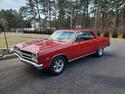
I am getting close with my Gen 1 ibooster swap into my 65 nova. Of course as soon as i get everything set, the proportioning valve starts leaking. I still have a couple Gen 1 units from a Chevy Volt if anyone needs one. Happy to sell them at cost to a member. I am curious to see how it works out for everyone. Thanks for the info!
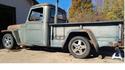
I'm remote mounting one under a 53 pickup due to space constraints and a smooth firewall request. This is a NOS chevy bolt? Volt? whatever junk chevy EV made in 2019 or so. Ebay special
Anyways, the connectors were going to be the most expensive parts. Instead I used Delphi metripack 150/480 terminals for the big connector and Delphi multitech inj terminals for the travel sensor. Injected potting compound into them and added a simple 3pin weatherpack for power/grd/IGN from the chassis. The travel sensors are no longer replaceable, but I have a whole other unit to swap in if something fails
Hardest to find part was the metric to STD flare nuts. The chevys use a very odd metric fine thread inverted flare (not bubble). M12x1.25 IIRC, maybe M12x1.0. Eventually I found adapters, but they were only available in 7/16 inv fl, but those are common for 3/16 and 1/4 line. I think hondas use a more common metric bubble flare. Youtuber superfastmatt did the intro video that got me interested in the booster and he goes over the honda fitting size
For this build, I needed to change the contained reservoir for a remote. I thought swapping to a honda master would solve the wierd fitting and res problem in one go. Turns out the masters have different bolt patterns AND insertion depths. Totally not interchangeable. One good thing is the res does swap. I think the chevy used a roll pin to retain the res where the honda had a shoulder bolt. I may be backwards there, going from memory. No biggie, and super simple to swap
Overall, I really like the units. They're compact, readily available and really push some brakes. Older single diaphram boosters simply can't compare. Do be aware they spike to 40A, so be sure the batt/alt are up to snuff
To explain the slave cyl, it's a remote setup. The brake pedal has a 90* under the dash to a compact clutch master. Pedal pushes the master which moves the slave which pushes the booster and engages the brakes. Yes, it's a couple more failure points in the system, but thats the price for super clean hidden everything
Hello- did you get to test drive this? If so, how was it? Also, how was the braking performance without any electrical power?
The challenge I've run into with the Tesla Gen 2 (right) is the ECU is clocked wonky and the rear bolt pattern is a bit odd. Honda (left) makes for a tidier install and has the more standard 60 x 80 bolt mounting pattern. If anyone is looking for a Tesla booster let me know, I'll make you a smoking deal.
Hello- did you get to test drive this? If so, how was it? Also, how was the braking performance without any electrical power?
Yes, it's on the road
It works awesome. Normal braking, it feels like any normal modern car. Easy on, easy off. Panic stops will remove your dentures
Unpowered is kind of wierd. It's not rock hard like a normal vacuum booster system. I'm not sure if the iBooster is simply easy to push through, or the clutch combo may offer more mechanical advantage vs a standard firewall mount. You can still safely stop, but it's not going to lock all 4 tires. The truck has Baer 6 pots with 14" rotors all around and is right at 3,000lbs. Those may also help
It works awesome. Normal braking, it feels like any normal modern car. Easy on, easy off. Panic stops will remove your dentures
Unpowered is kind of wierd. It's not rock hard like a normal vacuum booster system. I'm not sure if the iBooster is simply easy to push through, or the clutch combo may offer more mechanical advantage vs a standard firewall mount. You can still safely stop, but it's not going to lock all 4 tires. The truck has Baer 6 pots with 14" rotors all around and is right at 3,000lbs. Those may also help
Of all the installs I’ve seen so far, yours is, hands down, the most creative. Well thought out and executed sir! I’m interested in why you chose an OE style prop valve vs. adjustable?
Regarding power off pedal pressure I would agree. No doubt you’ve gained some leverage advantage with hydraulics but even in conventional installs we’ve noticed that pedal effort doesn’t immediately go “full manual” when power is cut. I’ve wondered if the unit doesn’t remain at least partially energized for a bit after the switched circuit is interrupted.
Gas Monkey Built a 6-Wheel Ferrari Testarossa With a Corvette LT4 Engine
Slideshow: The controversial Ferrari F6 swaps its original flat-12 for a Corvette Z06-derived LT4 V8 and sends power to four rear wheels through a custom-built drivetrain.
7 Most Reliable High-Performance Engines GM Has Ever Built
Slideshow:These GM engines didn't just make huge power, they survived abuse, boost, track days, and six-digit mileage with a reputation for refusing to quit.
6 Common C5 Corvette Failures and What's Involved In Repairing Them
Slideshow: From wobbling harmonic balancers to failed EBCMs, these are the issues that define long-term C5 ownership and what repairs typically involve.
Retro Modern Bandit Pontiac Trans AM Comes With Burt Reynolds' Autograph
Slideshow: A modern Camaro transformed into a retro icon, this limited-run "Bandit" build blends nostalgia with brute force in a way few revivals manage.
Top 10 Greatest Cadillac V Series Performance Models Ever, Ranked
Slideshow: Cadillac didn't just crash the high-performance luxury vehicle party, it showed up loud, supercharged, and occasionally a little unhinged...