







What's up with Comp Cams ?

More is not always better 
I prefer synthetic oil. I believe mine is 1400ppm after rislone treatment. Standard 0w-40 is 1100
It's plenty.
I've pulled out a few cams from my car, and all looked pretty much brand new, even the whining ones. Same with the lifters.
I prefer synthetic oil. I believe mine is 1400ppm after rislone treatment. Standard 0w-40 is 1100
It's plenty.
I've pulled out a few cams from my car, and all looked pretty much brand new, even the whining ones. Same with the lifters.
http://www.cam2racing.com/
I ran their break-in oil for the first 500 miles, which was 3 oil changes, then have been running their Blue Blood ever since.
Here is a link to an article relating ZDDP ratings to wear protection for 40 different oils. Some are diesel oils and some that people have mentioned are not listed, however I found it to be interesting and I think some of you will as well.
http://speedtalk.com/forum/viewtopic.php?f=1&t=35836
Enjoy
http://speedtalk.com/forum/viewtopic.php?f=1&t=35836
Enjoy
Quote from another article
A higher level of ZDDP was good for flat-tappet valve-train scuffing and wear,
but it turned out that more was not better. Although break-in scuffing was
reduced by using more phosphorus, longer-term wear increased when
phosphorus rose above 0.14%. And, at about 0.20% phosphorus, the ZDDP
started attacking the grain boundaries in the iron, resulting in camshaft spalling.
Here is a link to the article;
http://www.nonlintec.com/sprite/oils_and_zddp.pdf
A higher level of ZDDP was good for flat-tappet valve-train scuffing and wear,
but it turned out that more was not better. Although break-in scuffing was
reduced by using more phosphorus, longer-term wear increased when
phosphorus rose above 0.14%. And, at about 0.20% phosphorus, the ZDDP
started attacking the grain boundaries in the iron, resulting in camshaft spalling.
Here is a link to the article;
http://www.nonlintec.com/sprite/oils_and_zddp.pdf
Here is a link to an article relating ZDDP ratings to wear protection for 40 different oils. Some are diesel oils and some that people have mentioned are not listed, however I found it to be interesting and I think some of you will as well.
http://speedtalk.com/forum/viewtopic.php?f=1&t=35836
Enjoy
http://speedtalk.com/forum/viewtopic.php?f=1&t=35836
Enjoy
VR1 Conventional... but I run Joe Gibbs break in oil for the first 100 miles or so after a cam swap.
Actually, when using a stock shortblock with heads/cam I run the cheapest oil I can find and run it for 30-45 seconds... then i drain it and change the oil to Joe Gibbs. Why? To make sure all crude, skin oil, etc are flushed from the motor. Then the Joe Gibbs BR oil during the first few heat cycles... then VR1 conventional thereafter.
Actually, when using a stock shortblock with heads/cam I run the cheapest oil I can find and run it for 30-45 seconds... then i drain it and change the oil to Joe Gibbs. Why? To make sure all crude, skin oil, etc are flushed from the motor. Then the Joe Gibbs BR oil during the first few heat cycles... then VR1 conventional thereafter.
As these engines have roller lifters, the need for zinc is really not there.
Literally thousands of engines are manufactured every day across the world and they survive just fine without zinc heavy oils.
While I'm sure the JG break in oil is great, I'm sure a quality conventional brand name oil will do well.
I doubt the cam failures discussed here are the result of using the "wrong" oil.
LS1 Tech Stories
The Best V8 Stories One Small Block at Time

Gas Monkey Built a 6-Wheel Ferrari Testarossa With a Corvette LT4 Engine
Verdad Gallardo
7 Most Reliable High-Performance Engines GM Has Ever Built
Verdad Gallardo
Amazing '71 Camaro Restomod Is Modern Muscle Car Under the Skin
Verdad Gallardo
6 Common C5 Corvette Failures and What's Involved In Repairing Them
Pouria Savadkouei
Retro Modern Bandit Pontiac Trans AM Comes With Burt Reynolds' Autograph
Verdad Gallardo
Top 10 Greatest Cadillac V Series Performance Models Ever, Ranked
Pouria Savadkouei
Top 10 Most Powerful Chevy Trucks Ever Made!

Hennessey's New Supercharged Silverado ZR2 Has 700 HP
Verdad Gallardo
Coachbuilt N2A Anteros Is an LS2-Powered C6 Corvette In Italian Clothes
Verdad Gallardo
The tuner shops are the main culprit of the guinea pig effect...
I've said it before, too many simply choose lobes base on which ones have the most lift, combine them with the least expensive springs they can find, and send it out the door.
Most everything in the valve train is a fuse. If a fuse blows, is the problem the fuse, or a over loaded circuit? The cam core, the lifters, the rocker trunnions, the valve springs and the valve tips are all the fuse. The entire setup is the circuit, if it's over loaded, then it's a design engineering problem.
Look at how many have broke lifters, or failed trunnions, same thing, over loaded circuit...
I've said it before and it's worth saying again, since 1998 I've never had a customer fail a cam core, lifter, rocker trunnion and not a single BTR Platinum spring (since their inception in 2005).
No shop will ever admit that the "package" they engineered came up short.
I remember a VERY popular cam guru chewing my butt around 2007 after I posted on here that LSK lobes shouldn't be run on the street. Now he no longer sells Comp because of all the "failures", yet none of the failures was his fault?
You guys are on the band wagon against a cam supplier when you should be on the band wagon against the people who engineered the package...
I'm not saying Comp is without some blame with producing some of the lobe designs that they did, but to rest 100% of the blame on them is just not accurate.
The failure that you're seeing on these cam cores isn't so much a QA problem as it is the design of the entire valve train package.
I've said it before, too many simply choose lobes base on which ones have the most lift, combine them with the least expensive springs they can find, and send it out the door.
Most everything in the valve train is a fuse. If a fuse blows, is the problem the fuse, or a over loaded circuit? The cam core, the lifters, the rocker trunnions, the valve springs and the valve tips are all the fuse. The entire setup is the circuit, if it's over loaded, then it's a design engineering problem.
Look at how many have broke lifters, or failed trunnions, same thing, over loaded circuit...
I've said it before and it's worth saying again, since 1998 I've never had a customer fail a cam core, lifter, rocker trunnion and not a single BTR Platinum spring (since their inception in 2005).
No shop will ever admit that the "package" they engineered came up short.
I remember a VERY popular cam guru chewing my butt around 2007 after I posted on here that LSK lobes shouldn't be run on the street. Now he no longer sells Comp because of all the "failures", yet none of the failures was his fault?
You guys are on the band wagon against a cam supplier when you should be on the band wagon against the people who engineered the package...
I'm not saying Comp is without some blame with producing some of the lobe designs that they did, but to rest 100% of the blame on them is just not accurate.
The failure that you're seeing on these cam cores isn't so much a QA problem as it is the design of the entire valve train package.
![Ethan[ws6]'s Avatar](https://ls1tech.com/forums/customavatars/avatar139269_2.gif)
I've said it before, too many simply choose lobes base on which ones have the most lift, combine them with the least expensive springs they can find, and send it out the door.
Most everything in the valve train is a fuse. If a fuse blows, is the problem the fuse, or a over loaded circuit? The cam core, the lifters, the rocker trunnions, the valve springs and the valve tips are all the fuse. The entire setup is the circuit, if it's over loaded, then it's a design engineering problem.
Look at how many have broke lifters, or failed trunnions, same thing, over loaded circuit...
I've said it before and it's worth saying again, since 1998 I've never had a customer fail a cam core, lifter, rocker trunnion and not a single BTR Platinum spring (since their inception in 2005).
No shop will ever admit that the "package" they engineered came up short.
I remember a VERY popular cam guru chewing my butt around 2007 after I posted on here that LSK lobes shouldn't be run on the street. Now he no longer sells Comp because of all the "failures", yet none of the failures was his fault?
You guys are on the band wagon against a cam supplier when you should be on the band wagon against the people who engineered the package...
I'm not saying Comp is without some blame with producing some of the lobe designs that they did, but to rest 100% of the blame on them is just not accurate.
The failure that you're seeing on these cam cores isn't so much a QA problem as it is the design of the entire valve train package.
Most everything in the valve train is a fuse. If a fuse blows, is the problem the fuse, or a over loaded circuit? The cam core, the lifters, the rocker trunnions, the valve springs and the valve tips are all the fuse. The entire setup is the circuit, if it's over loaded, then it's a design engineering problem.
Look at how many have broke lifters, or failed trunnions, same thing, over loaded circuit...
I've said it before and it's worth saying again, since 1998 I've never had a customer fail a cam core, lifter, rocker trunnion and not a single BTR Platinum spring (since their inception in 2005).
No shop will ever admit that the "package" they engineered came up short.
I remember a VERY popular cam guru chewing my butt around 2007 after I posted on here that LSK lobes shouldn't be run on the street. Now he no longer sells Comp because of all the "failures", yet none of the failures was his fault?
You guys are on the band wagon against a cam supplier when you should be on the band wagon against the people who engineered the package...
I'm not saying Comp is without some blame with producing some of the lobe designs that they did, but to rest 100% of the blame on them is just not accurate.
The failure that you're seeing on these cam cores isn't so much a QA problem as it is the design of the entire valve train package.
More and more people sending me PMs and emails about the whining noise.
I've said this from the beginning, it is not such a rare issue, it is just under reported because it isn't regarding the "tap tap tap" valvetrain noise and sounds like an alternator noise or power steering noise.
Now that we have fleshed the issue out and proved it's the cams, more people are coming forward. The videos everyone took have helped tremendously.
I've said this from the beginning, it is not such a rare issue, it is just under reported because it isn't regarding the "tap tap tap" valvetrain noise and sounds like an alternator noise or power steering noise.
Now that we have fleshed the issue out and proved it's the cams, more people are coming forward. The videos everyone took have helped tremendously.
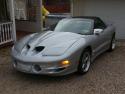
This has been a interesting thread to say the least. The most informative information seems to me has come from BTR on the use of aggressive cams in the attempt to maximize huge H.P. gains with out properly matching valve system component's thus causing problems. My back ground comes mostly from the two wheel area and have built some serious H.P. Machines for street use as well as off road. My experience's have showed me that street & race applications are two different worlds and someone attempting to having a extremely stout all motor street car/bike end up with a non street friendly race car/bike with plates. JMO.
I bought my TA Ls1 because these motors are the baddest small blocks that can make some serious H.P. Gains with low costs. However parts need to be matched no matter the cost to match the end result of the build. Street or Strip? I'm at a point in my build after I finish my Ls6 intake swap I'm moving on to suspension parts and ending with a mild cam and head package with the end result a car I can drive across the country and take it to a track day and enjoy the performance these cars can have. As far as the cam topic I'm glad I have some time to see where this all goes and for the oil topic would I be wise to use the VR1 in a high mileage car(124k) with basic bolt on's? I have been using castrol high mileage semi synthetic but plan a few track days this summer and want the best protection possible..any thoughts please.
I bought my TA Ls1 because these motors are the baddest small blocks that can make some serious H.P. Gains with low costs. However parts need to be matched no matter the cost to match the end result of the build. Street or Strip? I'm at a point in my build after I finish my Ls6 intake swap I'm moving on to suspension parts and ending with a mild cam and head package with the end result a car I can drive across the country and take it to a track day and enjoy the performance these cars can have. As far as the cam topic I'm glad I have some time to see where this all goes and for the oil topic would I be wise to use the VR1 in a high mileage car(124k) with basic bolt on's? I have been using castrol high mileage semi synthetic but plan a few track days this summer and want the best protection possible..any thoughts please.
^^^ VR1 in would be a very wise choice. It sits at the top of the list of oils that contain high ZDDP content and is an overall great oil.
I also agree with what Brian said. It's funny because the cam I have has very aggressive lobes, but my valve train is by no means "loud". Installing parts the correct way also goes hand in hand with using the right supporting parts.
I also agree with what Brian said. It's funny because the cam I have has very aggressive lobes, but my valve train is by no means "loud". Installing parts the correct way also goes hand in hand with using the right supporting parts.


TECH Apprentice
Joined: Sep 2006
Posts: 328
Likes: 3
Martin, you could learn a lot from kip

Some people use oils off that test and then see how they do in their own applications. I've had nothing but good experiences with VR1 and it's what a lot of the well know speed shops (LS and non LS) recommend.