





Reverse split cams (heads?)

Thread Starter
TECH Fanatic
Joined: Nov 2001
Posts: 1,413
Likes: 0
From: PURDUE
 Reverse split cams (heads?)
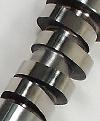
 Recently we've seen a trend of reverse split cams for our LS1/6 based motors. Profiles such as 230/224 with lifts in the .560+ range are becoming quite popular. It seems apparent to me (looking at the specs) that these cams are more agressive on the intake to offset a stock headed car? And the exhaust isn't as agressive because generally we have excelent flowing exhausts?
So basically what i'm looking for is this: Are these cams (TR230, X1, F1, etx) better suited for stock heads? And if they are recommended for ported heads, which do you suggest. Obviously I like the CNC LS6 heads (only 1800), but I seem to recall they work better on lower lift cams? Suggestions/comments are welcome.
So basically what i'm looking for is this: Are these cams (TR230, X1, F1, etx) better suited for stock heads? And if they are recommended for ported heads, which do you suggest. Obviously I like the CNC LS6 heads (only 1800), but I seem to recall they work better on lower lift cams? Suggestions/comments are welcome.
Re: Reverse split cams (heads?) We were the first that I'm aware of to publicize the idea of a using a reverse-split in an LS1. Most every tuner that you talk to bitches about the stock LS1 or LS6 intake restricting top-end power. The problem is that every time some one has introduced an 'improved' intake for the LS1 it seems only to kill low-end torque and not give good gains in top-end power for the loss of low-end.
Contrast the intake to the exhaust system: Most people are running some form of long-tube header and a very efficient exhaust down stream of the headers. The exhaust systems on most of these cars are capable of supporting whatever level of horsepower most stock cubic inch engines are capable of producing at whatever RPM level. In fact we have seen some people with conventional split pattern cams lose power when they would remove their exhaust system and try to run open headers.
The LS1 and LS6 cylinder heads also have a very good Intake/Exhaust flow relationship in stock form: In other words, the exhaust flows a very high percentage of what the intake does.
With all of that in mind we decided to try crutching the intake (specifically the intake manifold) with slightly more duration. In every case we have tried it, we have seen a boost in power from about 5000 to 7000 RPM over a normal single pattern cam without losing anything below 5000 RPM.
The point of this is that the reason for the reverse-split in to crutch the intake manifold, not necessarily the intake port on the head. The reverse-split cam will work fine with any ported head as long as the head has Intake/Exhaust port flow relationship that is similar to stock . We aren't too concerned with the absolute numbers but more the relationship between the intake and exhaust. If you have a head that flows real well on the Intake side but has a mediocre exhaust, then the reverse-split probably won't work very well.
I hope this sheds some light on the subject.
Contrast the intake to the exhaust system: Most people are running some form of long-tube header and a very efficient exhaust down stream of the headers. The exhaust systems on most of these cars are capable of supporting whatever level of horsepower most stock cubic inch engines are capable of producing at whatever RPM level. In fact we have seen some people with conventional split pattern cams lose power when they would remove their exhaust system and try to run open headers.
The LS1 and LS6 cylinder heads also have a very good Intake/Exhaust flow relationship in stock form: In other words, the exhaust flows a very high percentage of what the intake does.
With all of that in mind we decided to try crutching the intake (specifically the intake manifold) with slightly more duration. In every case we have tried it, we have seen a boost in power from about 5000 to 7000 RPM over a normal single pattern cam without losing anything below 5000 RPM.
The point of this is that the reason for the reverse-split in to crutch the intake manifold, not necessarily the intake port on the head. The reverse-split cam will work fine with any ported head as long as the head has Intake/Exhaust port flow relationship that is similar to stock . We aren't too concerned with the absolute numbers but more the relationship between the intake and exhaust. If you have a head that flows real well on the Intake side but has a mediocre exhaust, then the reverse-split probably won't work very well.
I hope this sheds some light on the subject.
Re: Reverse split cams (heads?) So... Is there a percentage that we are looking for? I mean exhaust to intake ratio.. 70 to 80 percent, 80 to 90 percent? Which do you think this would benefit best?
Re: Reverse split cams (heads?) Vince, read what Geoff is saying...the intake manifold is what's making the reverse split cams work. It has very little to do with whether the cylinder head was ported or not. Ported heads ususally mean the intake is going to be restricted even more over the exhaust. Why? Let's say you increase cfm on intake side from 230 to 280 cfm and exhaust from 170 to 200 cfm (at .500 lift). That means the stock head had an exhaust that flowed 74% of the intake and the ported head had exhaust that flowed 71.4% of the intake. Makes it look like the stock head needs the reverse split cam more right? WRONG.
Here's what you're missing: The LS6 intake manifold will drop the intake flow at least 20 cfm at .500 lift on the ported heads, but only 1 or 2 cfm on the stock heads. So adding the LS6 intake manifold, the numbers really look like this:
Stock heads with intake manifold: 228 intake, 170 exhaust. Exhaust flows 74.5% of intake
Ported heads with Intake manifold: 260 intake, 200 exhaust. Exhaust flows 76.9% of intake
So you see, adding the restrictive intake manifold to the equation skews the numbers. Look at it this was. When you include the intake manifold, the increase in flow on the intake goes up 14% (260 cfm vs. 228 cfm), while the exhaust increases 17.6% on ported heads. I hope this illustration shows in better detail why reverse split cams help ported heads even more than they do stock heads.
Here's what you're missing: The LS6 intake manifold will drop the intake flow at least 20 cfm at .500 lift on the ported heads, but only 1 or 2 cfm on the stock heads. So adding the LS6 intake manifold, the numbers really look like this:
Stock heads with intake manifold: 228 intake, 170 exhaust. Exhaust flows 74.5% of intake
Ported heads with Intake manifold: 260 intake, 200 exhaust. Exhaust flows 76.9% of intake
So you see, adding the restrictive intake manifold to the equation skews the numbers. Look at it this was. When you include the intake manifold, the increase in flow on the intake goes up 14% (260 cfm vs. 228 cfm), while the exhaust increases 17.6% on ported heads. I hope this illustration shows in better detail why reverse split cams help ported heads even more than they do stock heads.
__________________

2013 Corvette Grand Sport A6 LME forged 416, Greg Good ported TFS 255 LS3 heads, 222/242 .629"/.604" 121LSA Pat G blower cam, ARH 1 7/8" headers, ESC Novi 1500 Supercharger w/8 rib direct drive conversion, 747rwhp/709rwtq on 93 octane, 801rwhp/735rwtq on race fuel, 10.1 @ 147.25mph 1/4 mile, 174.7mph Half Mile.
2016 Corvette Z51 M7 Magnuson Heartbeat 2300 supercharger, TSP LT headers, Pat G tuned, 667rwhp, 662rwtq, 191mph TX Mile.
2009.5 Pontiac G8 GT 6.0L, A6, AFR 230v2 heads. 506rwhp/442rwtq. 11.413 @ 121.29mph 1/4 mile, 168.7mph TX Mile
2000 Pewter Ram Air Trans Am M6 heads/cam 508 rwhp/445 rwtq SAE, 183.092 TX Mile
2022 Cadillac Escalade 6.2L A10 S&B CAI, Corsa catback.
2023 Corvette 3LT Z51 soon to be modified.
Custom LSX tuning in person or via email press here.
2013 Corvette Grand Sport A6 LME forged 416, Greg Good ported TFS 255 LS3 heads, 222/242 .629"/.604" 121LSA Pat G blower cam, ARH 1 7/8" headers, ESC Novi 1500 Supercharger w/8 rib direct drive conversion, 747rwhp/709rwtq on 93 octane, 801rwhp/735rwtq on race fuel, 10.1 @ 147.25mph 1/4 mile, 174.7mph Half Mile.
2016 Corvette Z51 M7 Magnuson Heartbeat 2300 supercharger, TSP LT headers, Pat G tuned, 667rwhp, 662rwtq, 191mph TX Mile.
2009.5 Pontiac G8 GT 6.0L, A6, AFR 230v2 heads. 506rwhp/442rwtq. 11.413 @ 121.29mph 1/4 mile, 168.7mph TX Mile
2000 Pewter Ram Air Trans Am M6 heads/cam 508 rwhp/445 rwtq SAE, 183.092 TX Mile
2022 Cadillac Escalade 6.2L A10 S&B CAI, Corsa catback.
2023 Corvette 3LT Z51 soon to be modified.
Custom LSX tuning in person or via email press here.
Re: Reverse split cams (heads?) Patrick G I understand what Geoff is saying. I was asking him to explain a little more...
Geoff said " The reverse-split cam will work fine with any ported head as long as the head has Intake/Exhaust port flow relationship that is similar to stock . We aren't too concerned with the absolute numbers but more the relationship between the intake and exhaust. If you have a head that flows real well on the Intake side but has a mediocre exhaust, then the reverse-split probably won't work very well."
His last part mentioned EXHAUST.. Therefore implying if the exhaust was weak... The Reverse-Split probably won't work very well.. My thinking is Geoff was referring to the exhaust/intake ratio.. That is what I was asking Geoff.. Of course I know that the INTAKE is restrictive. I am not denying the idea does not work. I was trying to help with making this an informative thread. By asking Geoff to explain in more detail what ported head would really benefit from a reverse split secondary to Geoffs comment that a head with a weak exhaust would not. So what did I miss?
Geoff said " The reverse-split cam will work fine with any ported head as long as the head has Intake/Exhaust port flow relationship that is similar to stock . We aren't too concerned with the absolute numbers but more the relationship between the intake and exhaust. If you have a head that flows real well on the Intake side but has a mediocre exhaust, then the reverse-split probably won't work very well."
His last part mentioned EXHAUST.. Therefore implying if the exhaust was weak... The Reverse-Split probably won't work very well.. My thinking is Geoff was referring to the exhaust/intake ratio.. That is what I was asking Geoff.. Of course I know that the INTAKE is restrictive. I am not denying the idea does not work. I was trying to help with making this an informative thread. By asking Geoff to explain in more detail what ported head would really benefit from a reverse split secondary to Geoffs comment that a head with a weak exhaust would not. So what did I miss?
Re: Reverse split cams (heads?) Vince,
I have some stock LS1 flow figures at the shop. I think the absolute Intake/Exhaust flow ratio on the stock heads is in the 75 to 80 percent range. I don't have the exact numbers in front of me, so this is just from memory. If you would like I can give some more definitive answers on this tomorrow when I can look up the exact numbers.
Patrick has also done a good job of explaining this in another way. The bottom line is the reverse-split is here to 'crutch' the intake. However I still have my doubts that it will work with a set of heads that have a bad exhaust port.
One thing I would like to add to Patricks comments is that sometimes it is possible to have an intake that may flow well in a static flow test that will still be RPM limited because of tuning affects such as runner length and plenum volume.
I would also like to thank Patrick and Jason for helping out a lot in developing the reverse-split profile that Thunder Racing is using for the LS1. Without their help and that of others, these cams would have never been developed.
I have some stock LS1 flow figures at the shop. I think the absolute Intake/Exhaust flow ratio on the stock heads is in the 75 to 80 percent range. I don't have the exact numbers in front of me, so this is just from memory. If you would like I can give some more definitive answers on this tomorrow when I can look up the exact numbers.
Patrick has also done a good job of explaining this in another way. The bottom line is the reverse-split is here to 'crutch' the intake. However I still have my doubts that it will work with a set of heads that have a bad exhaust port.
One thing I would like to add to Patricks comments is that sometimes it is possible to have an intake that may flow well in a static flow test that will still be RPM limited because of tuning affects such as runner length and plenum volume.
I would also like to thank Patrick and Jason for helping out a lot in developing the reverse-split profile that Thunder Racing is using for the LS1. Without their help and that of others, these cams would have never been developed.

TECH Junkie
Joined: Nov 2001
Posts: 3,604
Likes: 0
From: Los Angeles
Re: Reverse split cams (heads?) So I understand the concept of "crutching" the intake...but what is the advantage of keeping the exhaust duration down? Why not crutch both? Is it purely a drivability/low end power thing?
What I'm mainly wondering is, is a 227/224 cam make more power from 5000-7000, or would a 227/227 make more power from 5000-7000. If it does, why isn't the thunder 230 cam a 230/230 instead of a 230/224?
What I'm mainly wondering is, is a 227/224 cam make more power from 5000-7000, or would a 227/227 make more power from 5000-7000. If it does, why isn't the thunder 230 cam a 230/230 instead of a 230/224?
Trending Topics
Re: Reverse split cams (heads?) Thanks Geoff.. I appreciate the response.. We usually do not get you over in the Internal Engine section.. I will get to personally meet you guys on the 23rd... I am getting ls1edit done.. Your remark about the "intake that may flow well in a static flow test that will still be RPM limited because of tuning affects such as runner length and plenum volume." is saying that the Reverse-Split will not work for heads with that possible problem? Therefore Vince do not buy one of OUR reverse-split cams and kill sales because Thunder Racing thinks that is your problem.. <img border="0" title="" alt="[Big Grin]" src="gr_grin.gif" /> Just kidding.. I was not trying to start controversy.. I was trying to get an explanation in laments terms for us ignorants.. Trust me.. I should have taken Jasons advice long time ago.. I am paying for it now..
<small>[ August 04, 2002, 09:54 PM: Message edited by: VINCE ]</small>
<small>[ August 04, 2002, 09:54 PM: Message edited by: VINCE ]</small>
LS1 Tech Stories
The Best V8 Stories One Small Block at Time

Gas Monkey Built a 6-Wheel Ferrari Testarossa With a Corvette LT4 Engine
Verdad Gallardo
7 Most Reliable High-Performance Engines GM Has Ever Built
Verdad Gallardo
Amazing '71 Camaro Restomod Is Modern Muscle Car Under the Skin
Verdad Gallardo
6 Common C5 Corvette Failures and What's Involved In Repairing Them
Pouria Savadkouei
Retro Modern Bandit Pontiac Trans AM Comes With Burt Reynolds' Autograph
Verdad Gallardo
Top 10 Greatest Cadillac V Series Performance Models Ever, Ranked
Pouria Savadkouei
Top 10 Most Powerful Chevy Trucks Ever Made!

Hennessey's New Supercharged Silverado ZR2 Has 700 HP
Verdad Gallardo
Coachbuilt N2A Anteros Is an LS2-Powered C6 Corvette In Italian Clothes
Verdad Gallardo Re: Reverse split cams (heads?) Vince,
Without getting into specifics on other vendors heads, any cylinder head that needs a conventional dual pattern camshaft to make best power is probably not a good candidate for a reverse-split cam. If the particular vendors heads have worked well with a single pattern cam, then they are likely to work even better with a reverse-split.
I will still give you the data on the Intake/Exhaust flow relationship tomorrow for the stock heads.
JMX,
We have tested a 224/224 114+4, a 230/227 111, and a 230/224 111. The 230/224 111 made the most power everywhere. It seems from the trend that going bigger on the exhaust in this application did nothing good, so I kind of doubt a 230/230 would help at all.
Without getting into specifics on other vendors heads, any cylinder head that needs a conventional dual pattern camshaft to make best power is probably not a good candidate for a reverse-split cam. If the particular vendors heads have worked well with a single pattern cam, then they are likely to work even better with a reverse-split.
I will still give you the data on the Intake/Exhaust flow relationship tomorrow for the stock heads.
JMX,
We have tested a 224/224 114+4, a 230/227 111, and a 230/224 111. The 230/224 111 made the most power everywhere. It seems from the trend that going bigger on the exhaust in this application did nothing good, so I kind of doubt a 230/230 would help at all.
Re: Reverse split cams (heads?) Thanks Geoff. Oh yeah, I am getting the Hooker Catback you guys recommended while I am up there.. I really appreciate all your advice.. I have never had a problem getting in contact with you when I call. That is rare.. Jason has been telling me for over a year that You are Da Man.. I am driving 10 hours one way for your ls1edit tuning, because of your reputation.. I will make sure everything is ready for the tuning when I come up there..
<small>[ August 04, 2002, 10:14 PM: Message edited by: VINCE ]</small>
<small>[ August 04, 2002, 10:14 PM: Message edited by: VINCE ]</small>
 Re: Reverse split cams (heads?)
 Geoff...glad you showed up here. I sent you guys an email week-before-last, but don't know if you got it.
I am interested in the 230/227 cam you guys sell, but my heads are milled .050. I have stock sized valves, so was wondering if clearance would be an issue, or if I'd have to use the smaller reverse-split cam.
Thanks!
I am interested in the 230/227 cam you guys sell, but my heads are milled .050. I have stock sized valves, so was wondering if clearance would be an issue, or if I'd have to use the smaller reverse-split cam.
Thanks!
Re: Reverse split cams (heads?) Vince,
As I promised I looked up some flow numbers on some stock LS1 heads: The intake to exhaust flow relationship is about 76% in stock form. Please note that the heads being flowed have a radiused entry on the intake side and no exit on the exhaust side. Not using a radiused entry on the intake side or using an exhaust stack would skew the numbers further towards the exhaust.
Todd,
You will need to be careful with your heads milled that much. The 230 cam will clear in a stock motor just fine. We have checked it in a stock bottom ended motor with heads that had been decked .015" and P/V clearance was about .085", which is about as low as I would want to go.
As I promised I looked up some flow numbers on some stock LS1 heads: The intake to exhaust flow relationship is about 76% in stock form. Please note that the heads being flowed have a radiused entry on the intake side and no exit on the exhaust side. Not using a radiused entry on the intake side or using an exhaust stack would skew the numbers further towards the exhaust.
Todd,
You will need to be careful with your heads milled that much. The 230 cam will clear in a stock motor just fine. We have checked it in a stock bottom ended motor with heads that had been decked .015" and P/V clearance was about .085", which is about as low as I would want to go.
