









ARP Head Studs

Thread Starter
TECH Addict
iTrader: (25)
Joined: Nov 2004
Posts: 2,529
Likes: 0
From: Garden City, KS
 ARP Head Studs
 How do I bolt them down? I've heard with ARP studs that you just get the studs themselves hand tight then torque down the nuts on the heads. Is this right?
Also, what sealant should I use on the threads since some of them are going into the water jacket?
Also, what sealant should I use on the threads since some of them are going into the water jacket?

TECH Veteran


Joined: Dec 2008
Posts: 4,147
Likes: 62
From: Little Rock, AR
That sounds about right. Hopefully someone with studs will chime in about what works in sealing them, as this is a big problem for a lot of people. I would never use studs, unless I had to.
From ARP:
I could have sworn my builder suggested that they go in hand-tight then back off slightly
to accommodate stretch; then left overnight to set. I could be wrong, it's been a while.
Here's another install step-by-step I found
http://www.blackcamaro.com/headstud.htm
3. Do the head studs only go in hand tight?
The studs should be installed finger tight. Then, when applying torque to the nut, the stud will stretch only on the vertical axis. An undercut shorter stud will have a rate similar to a longer, standard shank stud. This provides a more even clamping force on the head. Because the head gasket will compress upon initial torquing, make sure studs (or bolts) are re-torqued after the engine has been run.
The studs should be installed finger tight. Then, when applying torque to the nut, the stud will stretch only on the vertical axis. An undercut shorter stud will have a rate similar to a longer, standard shank stud. This provides a more even clamping force on the head. Because the head gasket will compress upon initial torquing, make sure studs (or bolts) are re-torqued after the engine has been run.
I could have sworn my builder suggested that they go in hand-tight then back off slightly
to accommodate stretch; then left overnight to set. I could be wrong, it's been a while.
Here's another install step-by-step I found
http://www.blackcamaro.com/headstud.htm
Last edited by James Montigny; Sep 26, 2009 at 11:17 PM.
TECH Regular
Joined: Oct 2008
Posts: 430
Likes: 0
From: Bahrain

O.P. i used high temp/pressure resistant RTV,,no issues at all. if ur going to use that, just make sure u torque the bolts down asa u apply the sealant..this stuff dries fast
Trending Topics
Don't use sealant on those bolts that do not go into water jackets. Just a very very light dab of oil on the threads. Also, put a dab of oil on the washer and head of bolt to reduce friction to get a more accurate torque reading when tightening nuts/bolts/whatever fasteners are used..
Last edited by SS RRR; Sep 26, 2009 at 07:43 AM.
LS1 Tech Stories
The Best V8 Stories One Small Block at Time

Topdon ONE vs. Artidiag 800 BT2: Which is the Diagnostic Tablet For You?
Pouria Savadkouei
Gas Monkey Built a 6-Wheel Ferrari Testarossa With a Corvette LT4 Engine
Verdad Gallardo
7 Most Reliable High-Performance Engines GM Has Ever Built
Verdad Gallardo
Amazing '71 Camaro Restomod Is Modern Muscle Car Under the Skin
Verdad Gallardo
6 Common C5 Corvette Failures and What's Involved In Repairing Them
Pouria Savadkouei
Retro Modern Bandit Pontiac Trans AM Comes With Burt Reynolds' Autograph
Verdad Gallardo
Top 10 Greatest Cadillac V Series Performance Models Ever, Ranked
Pouria Savadkouei
Top 10 Most Powerful Chevy Trucks Ever Made!

Hennessey's New Supercharged Silverado ZR2 Has 700 HP
Verdad Gallardo
USE #2 SEALANT!!!!! You can get it from Oreillys, only use that, I've never had studs leak with it, but I've watched MANY others have studs leak trying different stuff. You got a PM coming your way.

Registered User
Joined: Sep 2009
Posts: 16
Likes: 0
From: Jax. FL
as per arp-bolts.com
"2. The lubricant used is the main factor in determining friction, and therefore, the torque for a particular installation. Motor oil is a commonly used lubricant because of it’s ready availability. If less friction is desired in order to install the fasteners with less torque, special low friction lubricants are available. With special lubes, the required torque can be reduced as much as 20 to 30 percent. It is important to keep in mind that the reverse is also true. If the torque value has been specified for a particular fastener on the basis of low friction lube, installing the fastener with motor oil will result in insufficient preload; the torque has to be increased to compensate for the extra friction caused by the motor oil.
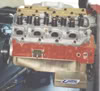

Hand tight on the studs into the block. Sealant on the threads into the block. Lubricant on the threads on the nut end.
There’s myths about studs being more prone to coolant leakage. Installed properly, they’re no more leaky than bolts. Studs will give you the best, most even and consistent torqueing and head retention.
ARP thread sealer is made with teflon and is not sticky, it will wash away so don't use it to seal threads exposed to coolant passages or oil.
This stuff works wonders for everything. Super sticky, impervious to liquids. I've removed studs/bolts that still had plenty still on them.

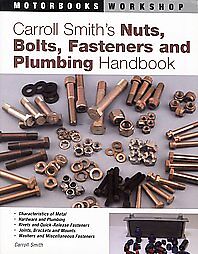
Purchase and memorize this book:
There’s myths about studs being more prone to coolant leakage. Installed properly, they’re no more leaky than bolts. Studs will give you the best, most even and consistent torqueing and head retention.
ARP thread sealer is made with teflon and is not sticky, it will wash away so don't use it to seal threads exposed to coolant passages or oil.
This stuff works wonders for everything. Super sticky, impervious to liquids. I've removed studs/bolts that still had plenty still on them.
Purchase and memorize this book:

Last edited by SS RRR; Sep 26, 2009 at 09:37 AM.

TECH Resident
Joined: Jul 2009
Posts: 772
Likes: 0
From: Bahrain
Sealant is only required in the small bolts that go into the head under the exhaust ports because they go into the water jacket.
Try getting some teflon paste thread sealant if you can find some. Or if helps you feel safer, use the ARP thread sealant
Try getting some teflon paste thread sealant if you can find some. Or if helps you feel safer, use the ARP thread sealant
ARP thread sealer is made with Teflon and is not sticky, it will wash away so don't use it to seal threads exposed to coolant passages or oil.
Guys, did you notice this important bit of information? ANY Teflon based thread sealer will eventually wash away greatly increasing the chance of coolant seepage. To seal threads, you need a sticky compound that’ll stay where you put it regardless of liquids or temperature. OEM head bolts are coated with a sealant that’s not Teflon based.
My bud 66Joe’s blown Impala head studs wouldn’t seal with any stuff including the ARP recommended Teflon sealant. He finally listened to me and used the 98D and he’s lifting the wheels again without a drop lost. That is, until he grenades the transmission housing again
Guys, did you notice this important bit of information? ANY Teflon based thread sealer will eventually wash away greatly increasing the chance of coolant seepage. To seal threads, you need a sticky compound that’ll stay where you put it regardless of liquids or temperature. OEM head bolts are coated with a sealant that’s not Teflon based.
My bud 66Joe’s blown Impala head studs wouldn’t seal with any stuff including the ARP recommended Teflon sealant. He finally listened to me and used the 98D and he’s lifting the wheels again without a drop lost. That is, until he grenades the transmission housing again
TECH Veteran
Joined: Dec 2008
Posts: 4,147
Likes: 62
From: Little Rock, AR
I don't know that I have ever read a thread where a person had head bolt leakage, but I have read plenty about stud leakage over the years. Studs often end up being a headache for people that don't know what they are doing (and some that think they do
 ).
).I agree that they provide the best clamping. That's their purpose.
you can get the torque specs on arp's website. i used motor oil as a lubricant, they list a different spec for their moly lube. i think a key thing is to torque the nuts down while the sealant being used is not cured. obviously this doesnt apply to non hardening sealants.

Guess I am one of those that only think I know what I am doing. I had problems getting them to seal on numerous LT1 engines. Was kinda hit and miss....some leaked, some did not. I tried many different sealants and used advice even from some of the best engine builders on this site. Even then still had some that leaked. I did find something that works....actually two things and have not had a problem since. Good luck to those that use studs.
