


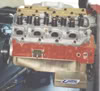



LT1 with 24x LS1 No Start!

Thread Starter
Teching In
Joined: May 2009
Posts: 20
Likes: 0
From: Anchorage AK
 LT1 with 24x LS1 No Start!
 Any ideas will help! I installed a FAST XFI using the EFI connection 24x cam and crank kit. I have known good LS1 coil packs and was getting 150rpm's upon crank but no spark. I got fed up with it and bought a PSI Conversion harness and a 411 PCM. Damn it, it still won't start! No spark. Trouble shot everything I could with help from PSI and EFI. I sent the car to a local tuner shop and they re went over the same thing. They're getting a crank pulse and cam signal to the PCM, no spark. He changed PCM's, no spark, changed coils, no spark, put grounds everywhere, no spark! All sensors are providing data to the PCM, yet using EFILive and HPTuners we get no cam or crank out of the PCM.
At this point, he's as frustrated as I am and wants a solution or kick it out as its holding up other customers he's holding off. We even plugged into another similar car to compare what we should see at crank and start. He did notice the motor isn't cranking as fast as an LS does and wonder if there is a minimum cranking RPM the PCM needs? I researched HP and didn't find anything saying there was other than 400rpm for fueling. The pump works correctly, the injectors are pulsing correctly.
Help!
At this point, he's as frustrated as I am and wants a solution or kick it out as its holding up other customers he's holding off. We even plugged into another similar car to compare what we should see at crank and start. He did notice the motor isn't cranking as fast as an LS does and wonder if there is a minimum cranking RPM the PCM needs? I researched HP and didn't find anything saying there was other than 400rpm for fueling. The pump works correctly, the injectors are pulsing correctly.
Help!

TECH Regular
Joined: Jan 2005
Posts: 456
Likes: 0
The PCM will fire injectors and coils as long as it sees the following 1x cam signal and 24x crank signal. You can verify this with an oscilloscope.
The PCM will actually fire injectors and coils without the 1x cam signal...which is not to suggest the cam signal not required for proper operation.
Your cam sensor housing is correct in that there is no through-hole from the sensor to the reluctor. An oscilloscope will verify that you are getting a signal from the cam sensor.

That assumes the harness is correct and the PCM is not defective.
(24x crank signal) + (good PCM) + (proper wire harness) = spark and fuel
It's really that basic.
The PCM will actually fire injectors and coils without the 1x cam signal...which is not to suggest the cam signal not required for proper operation.
Your cam sensor housing is correct in that there is no through-hole from the sensor to the reluctor. An oscilloscope will verify that you are getting a signal from the cam sensor.
That assumes the harness is correct and the PCM is not defective.
(24x crank signal) + (good PCM) + (proper wire harness) = spark and fuel
It's really that basic.
Thread Starter
Teching In
Joined: May 2009
Posts: 20
Likes: 0
From: Anchorage AK
Not many guys have ocylloscopes laying around anymore, but, by following GM tech testing procedures with a dvom, I'm getting a 2v AC to the PCM from the crank and almost 5v from the cam. I manually fired the coils from the PCM plugs and all is good there. The fuel pump runs constantly, no prime then off and all of the inj were open and filling the cyls without cranking, only with the key on. I pulled the pump relay and cleared the cyls. I thought maybe it was back feeding the PCM. Nope. Installed a new CKP sensor to no avail. I've traced every wire, ohmed each one and tested each ground. Pulled a PCM from a runner and installed into my car with no change. I put my PCM into his car and it fired right up.
We see no cranking rpms, signals out of the PCM into a HP tuners live, EFI live or a snap on scanner. Makes NO sense!
I removed my FAST XFI set up, new harnesses and ign control box as it did the same thing using EFI connections 24x kit. The VATS is off, we've cranked it with the key and with a push button. All voltages are correct except for the alternator signal with that's a 4.7v
Something is back feeding the PCM or GND are insufficient or...
We see no cranking rpms, signals out of the PCM into a HP tuners live, EFI live or a snap on scanner. Makes NO sense!
I removed my FAST XFI set up, new harnesses and ign control box as it did the same thing using EFI connections 24x kit. The VATS is off, we've cranked it with the key and with a push button. All voltages are correct except for the alternator signal with that's a 4.7v
Something is back feeding the PCM or GND are insufficient or...
TECH Regular
Joined: Jan 2005
Posts: 456
Likes: 0
Fuel pump runs during crank. This means the PCM sees a crank signal. This does not necessarily mean the PCM sees the correct crank signal. If the crank reluctor is out of alignment - not likely on a stock engine unless assembly was somehow incorrect or aftermarket parts have moved the reluctor out of sensor range - then the PCM may only be receiving a partial 24x waveform.
While I'm not familiar with the GM test procedure for the crank sensor, observing a functioning sensor does not mean that the reluctor is in alignment to receive the proper 24x crank signal.
No cranking rpms in the scan tool suggests to me that the PCM is not getting the correct 24x signal. Even if the PCM only had power, ground, ignition, and crank signal - and nothing else - a scan tool will display cranking rpm.
IMPORTANT TO UNDERSTAND
Our initial 24x crank reluctor (pictured left) was designed on a stock engine - an engine using all proper crank and timing set geometries. This 24x reluctor has two rows of teeth and the crank sensor must "read" both rows of teeth to output the proper 24x signal. On a stock engine, the reluctor installs within the crank sensor range.
We began to see problems when customers were using aftermarket parts with geometries that did not match the original GM parts. The biggest problem was related to double row timing sets that sometimes move the crank reluctor forward - due to a thicker than stock crank timing sprocket - and out of the crank sensor range. We recently released a new 24x crank reluctor (pictured right) with only one row of teeth. This reluctor requires a different crank sensor and harness connector. This reluctor/sensor combination outputs the same 24x signal to the PCM. This reluctor is much more forgiving when aftermarket parts move the reluctor forward.

The engine in this thread is using a stock single row timing set. Assembled properly - nothing between the crank timing sprocket and 24x reluctor - I see no reason the PCM is not receiving the correct crank signal.
While I'm not familiar with the GM test procedure for the crank sensor, observing a functioning sensor does not mean that the reluctor is in alignment to receive the proper 24x crank signal.
No cranking rpms in the scan tool suggests to me that the PCM is not getting the correct 24x signal. Even if the PCM only had power, ground, ignition, and crank signal - and nothing else - a scan tool will display cranking rpm.
IMPORTANT TO UNDERSTAND
Our initial 24x crank reluctor (pictured left) was designed on a stock engine - an engine using all proper crank and timing set geometries. This 24x reluctor has two rows of teeth and the crank sensor must "read" both rows of teeth to output the proper 24x signal. On a stock engine, the reluctor installs within the crank sensor range.
We began to see problems when customers were using aftermarket parts with geometries that did not match the original GM parts. The biggest problem was related to double row timing sets that sometimes move the crank reluctor forward - due to a thicker than stock crank timing sprocket - and out of the crank sensor range. We recently released a new 24x crank reluctor (pictured right) with only one row of teeth. This reluctor requires a different crank sensor and harness connector. This reluctor/sensor combination outputs the same 24x signal to the PCM. This reluctor is much more forgiving when aftermarket parts move the reluctor forward.
The engine in this thread is using a stock single row timing set. Assembled properly - nothing between the crank timing sprocket and 24x reluctor - I see no reason the PCM is not receiving the correct crank signal.
Trending Topics
Thread Starter
Teching In
Joined: May 2009
Posts: 20
Likes: 0
From: Anchorage AK
The photos and visual inspection confirms the reluctor is in it's proper location. EFI also confirmed the reluctor cannot be installed backwards. They also may of hit upon a feedback factor to the PCM from the fuel pump circuit that I'll recheck today. The shop that has taken over the project may have located an ocylloscope to look at the wave form.
LS1 Tech Stories
The Best V8 Stories One Small Block at Time

Topdon ONE vs. Artidiag 800 BT2: Which is the Diagnostic Tablet For You?
Pouria Savadkouei
Gas Monkey Built a 6-Wheel Ferrari Testarossa With a Corvette LT4 Engine
Verdad Gallardo
7 Most Reliable High-Performance Engines GM Has Ever Built
Verdad Gallardo
Amazing '71 Camaro Restomod Is Modern Muscle Car Under the Skin
Verdad Gallardo
6 Common C5 Corvette Failures and What's Involved In Repairing Them
Pouria Savadkouei
Retro Modern Bandit Pontiac Trans AM Comes With Burt Reynolds' Autograph
Verdad Gallardo
Top 10 Greatest Cadillac V Series Performance Models Ever, Ranked
Pouria Savadkouei
Top 10 Most Powerful Chevy Trucks Ever Made!

Hennessey's New Supercharged Silverado ZR2 Has 700 HP
Verdad Gallardo TECH Regular
Joined: Jan 2005
Posts: 456
Likes: 0
Your email reply indicates the crank reluctor is installed 0.026" forward of the proper location. This may be enough to move the reluctor out of the sensor range. The oscilloscope will reveal if this is the case.


Thread Starter
Teching In
Joined: May 2009
Posts: 20
Likes: 0
From: Anchorage AK
We ran an oscilloscope test using a Snap on Vantage scope. Though, we're both unfamiliar with this tool, we got high and low range waves. They are consistent waves, they're nowhere near square waves as the above sample shows. Nick took a vid of the screen with his phone to send to you at EFI. I found a second FP relay added at the rear of the car, running a second pump that was using the same gray wire the factory relay used to operate it, but, it had the #30 and 87 terminals reversed, back feeding the PCM with 12v into #9 red plug. Comparing the 1994 shop manual wiring schematics against a 2002 F-body, I found GM had reversed these two terminals along with constant power feeding the relay from ignition on power the 94 has. Both use the exact same wiring colors and terminal assignments, the the above #30 and 87 exceptions, I'm thinking the OBD1 used 12v from the PCM and the later model OBD11 used a GND to activate the relay (I'm not certain if this), this may have caused PCM damage to not send coil signals.
As for the 1.026 reluctor distance. As you've mentioned, 1" is a critical dimension, you don't state a +/- variance. Do I mill .026 from the timing gear, more to get it under the 1" dimension? Wouldn't the PCM seeing any type of wave try to fire or is it looking for only a certain wave pattern? We're going to play with the scope a little more today, to make sure we're using it correctly to eliminate that as a factor. I'm also looking for another #411 PCM to rule that out. It's possible we not only damaged this one, we might of damaged the test PCM from another vehicle used to try. We will know that shortly when that motor install is complete.
As for the 1.026 reluctor distance. As you've mentioned, 1" is a critical dimension, you don't state a +/- variance. Do I mill .026 from the timing gear, more to get it under the 1" dimension? Wouldn't the PCM seeing any type of wave try to fire or is it looking for only a certain wave pattern? We're going to play with the scope a little more today, to make sure we're using it correctly to eliminate that as a factor. I'm also looking for another #411 PCM to rule that out. It's possible we not only damaged this one, we might of damaged the test PCM from another vehicle used to try. We will know that shortly when that motor install is complete.
TECH Regular
Joined: Jan 2005
Posts: 456
Likes: 0
That data is not available.
Originally Posted by S10Wildside
If the crank reluctor is out of alignment - not likely on a stock engine unless assembly was somehow incorrect or aftermarket parts have moved the reluctor out of sensor range - then the PCM may only be receiving a partial 24x waveform.
Originally Posted by S10Wildside
Our initial 24x crank reluctor (pictured left) was designed on a stock engine - an engine using all proper crank and timing set geometries. This 24x reluctor has two rows of teeth and the crank sensor must "read" both rows of teeth to output the proper 24x signal. On a stock engine, the reluctor installs within the crank sensor range.
Given your 1.026" measurement, my recommendation is to put no additional time and money into anything other than verifying the oscilloscope trace.
Thread Starter
Teching In
Joined: May 2009
Posts: 20
Likes: 0
From: Anchorage AK
Update: We did an ocylloscope scan with a Snap On Vantage. We got both high and low res waves digital and A/C. Though they're not square, they do rise and drop out at the same frequency as your example consistently on both the CKP and cam. Nick also finished another project build that uses the same PCM. He plugged my PCM into that and it started and ran (though quite poorly with my base tune). He then plugged his PCM into the truck that we used to test against my PCM in my car and it too fired and ran.
What we're doing now is using the ocylloscope on the truck to compare waves. I'll publish the results of that test soon, but, I'm betting the sensors will compare similar. This whole project has been quite educational. It comes down to one of 2 problems being the culprit: 1 is the harness is somehow not correct, but, after plenty of hours by three different guys going over it, I put it as the problem as very low. 2 is the 24x reluctor and/or it's placement. .026" doesn't seem logically too far from EFI's spec, I'm leaning to that being the reason of the "no spark" problem.
For me, I'm too far into this project not to finish it now, but, Nick has run out of space at his shop with other projects that he's put off to get mine done and I don't have garage space now with my other projects and winter setting in, that I have to put the car into storage until spring. Neither Nick or I want to stop when we're so close, but, it'll take a couple of weeks to pull the front back off of the motor and send the 24x back to EFI to swap for their updated kit, he graciously said he'd do. I'll update tomorrow what we found with the wave comparison test and what we decide to do with this for the year.
What we're doing now is using the ocylloscope on the truck to compare waves. I'll publish the results of that test soon, but, I'm betting the sensors will compare similar. This whole project has been quite educational. It comes down to one of 2 problems being the culprit: 1 is the harness is somehow not correct, but, after plenty of hours by three different guys going over it, I put it as the problem as very low. 2 is the 24x reluctor and/or it's placement. .026" doesn't seem logically too far from EFI's spec, I'm leaning to that being the reason of the "no spark" problem.
For me, I'm too far into this project not to finish it now, but, Nick has run out of space at his shop with other projects that he's put off to get mine done and I don't have garage space now with my other projects and winter setting in, that I have to put the car into storage until spring. Neither Nick or I want to stop when we're so close, but, it'll take a couple of weeks to pull the front back off of the motor and send the 24x back to EFI to swap for their updated kit, he graciously said he'd do. I'll update tomorrow what we found with the wave comparison test and what we decide to do with this for the year.
Thread Starter
Teching In
Joined: May 2009
Posts: 20
Likes: 0
From: Anchorage AK
Another update: Nick truly ran out of space for this project for a month or so. He wasn't able to run a comparison wave test today either. I buttoned it up and loaded it into my car trailer until one of us gets some space freed up. We've decided to pull the 24x pieces that EFI Connection wants back in exchange for their updated wheel and 12v sensor. I'll report further updates when we get back onto this car.
TECH Regular
Joined: Jan 2005
Posts: 456
Likes: 0
Let's say this engine did not receive a 24x conversion. Something is moving the crank timing sprocket forward by about 0.026". Either Eagle's crank is not machined to GM spec or the NAPA timing set is not manufactured to GM spec. In either case, the result is a crank pulley that is out of alignment by 0.026" and possibly a cam timing sprocket that is out of alignment by 0.026". I don't understand why the aftermarket does not manufacture to GM specs and not make the consumer aware of this.
Thread Starter
Teching In
Joined: May 2009
Posts: 20
Likes: 0
From: Anchorage AK
It might come down to the one piece balancer. I see another thread now talking about the same problem. Your single row reluctor and less sensitive 12v sensor may be the answer for using after market parts.
mite be mine he is talking about, I don't have a one pc. balancer thou I do have a aftermarket hub that is to deep in the crank snout area. I'm also having a no coil or injector firing problem but my relator is 1" for face of motor to face of relator.
Staging Lane
Joined: Jul 2012
Posts: 81
Likes: 1
From: Detroit Metro Area
Was this issue resolved? I am having a similar problem - however - I went from the double row 24x reluctor wheel to the single 24x reluctor. I am wondering if it's sending a different signal to the PCM so it can't fire the coils.