


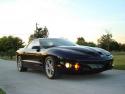



FIREHAWKS in general
 FIREHAWKS in general
 I paid a lot less for my Firehawk that any asking price I have seen on one in the last two years. They only made 11 Formula hard top six speed cars in 2000 so it is more rare than any of the ones I have seen. Most of the ones on here or any other site I have viewed them on have had more miles than mine. (About 72k) The car I bought is not for sale and I don't plan to list it any time soon, but have these people lost there mind? Maybe these cars will go back up in value sooner than we thought or maybe not?
They definitely aren't going up in value at this point; I've been seeing a lot of these cars with absolutely unrealistic asking prices lately. There is actually a 2002 WS6 for sale near me with 16,000 miles on it and the guy is asking $27,500! In reality, it is more helpful to look at what these cars are actually selling for versus what people are asking for them.

TECH Enthusiast


Joined: Nov 2011
Posts: 587
Likes: 12
From: Connecticut SE shore
The asking prices have certainly gone up in the past 3 years. Hard to say if the actual selling prices are any higher. Fwiw a local dealer to me had a silver or pewter 2000 FH formula hardtop M6 with 28K miles back in fall of 2011 (1 of 4 or 1 of 6 as I recall). That car had trouble selling for $13K or higher. It failed 3X on ebay to sell. I think they finally sold it for around $12K....and that was 3-1/2 years ago in the dead of winter. But, I think today that same car with the same mileage could fetch $1K to $3K more to the right buyer in the right area of the country in peak summer season.
Firehawks generally bring around 10% more than an equivalent condition WS6. Many buyers just don't like the less aggressive styling (especially on the formula without a high rise spoiler) and will pass on FH's unless priced the same or less than a WS6. While the formulas' and formula HT's are rarer versions, most buyers prefer TTops for that open air experience. There is a small niche of enthusiasts that prefer the bare bones FH formula and will pay for them. You just have to find the right buyer. I couldn't understand why that 2000 FH in my area was such a tough sell 3-4 years ago. I suspect some of that were the reasons I just mentioned as well as that the used car market was pretty weak in 2011 to 2012 as the economy bottomed out. So the increase in demand for a lot of the LS-1's makes sense as the economy rebounded in 2012-2014.
Note to Codyvette: if you post in the wrong place you can delete your entire post by using the "go advanced" or delete features.
Firehawks generally bring around 10% more than an equivalent condition WS6. Many buyers just don't like the less aggressive styling (especially on the formula without a high rise spoiler) and will pass on FH's unless priced the same or less than a WS6. While the formulas' and formula HT's are rarer versions, most buyers prefer TTops for that open air experience. There is a small niche of enthusiasts that prefer the bare bones FH formula and will pay for them. You just have to find the right buyer. I couldn't understand why that 2000 FH in my area was such a tough sell 3-4 years ago. I suspect some of that were the reasons I just mentioned as well as that the used car market was pretty weak in 2011 to 2012 as the economy bottomed out. So the increase in demand for a lot of the LS-1's makes sense as the economy rebounded in 2012-2014.
Note to Codyvette: if you post in the wrong place you can delete your entire post by using the "go advanced" or delete features.
Last edited by Firebrian; Jun 15, 2015 at 12:35 PM.
TECH Junkie


Joined: Aug 2006
Posts: 3,914
Likes: 676
From: Western North Carolina
Lots of 'wishful' thinking out there. It isn't just our cars but right across the sports car/muscle car spectrum. Unfortunately many of these cars are actually 'not for sale' unless someone actually wants to pay the crazy asking price. I know a car guy in this area that always throws on ads (with sky high prices) with no intention of selling, but would sell if a sucker is found to pay that inflated price. I don't hold him in the highest regard. I think of young guys (that can't afford it) getting burned by not knowing better. If an older guy that does know better wants the car, then fine, he and the seller can be all smiles and complete the deal. To sell to a newbie or younger guy at prices above dealer retail just isn't right, but some sellers have that 'used car salesman' mentality and don't give a 
TECH Enthusiast
Joined: Nov 2011
Posts: 587
Likes: 12
From: Connecticut SE shore
2000 Formula Firehawk Borla, 12 bolt, 4.10's, CF dual friction, LS6 cam & Int., P&P 243's, TA LCA Adj.PR, koni Ground Control hope to get some good times at the strip this spring
Imo with these mods, your car is much less of a collectible Firehawk than those that retain their stock make up. The more modified, the less and less the car retains the features (and pricing) of the stock version. Demand plummets too. There's a reason that special collector cars like Firehawks, CETA's, 1999 WS6 30th anniversary cars, and 2002 Camaro 35th anniversary LE's are typically left pretty much stock. With enough mods, the original car loses much of the premium the special car is normally afforded. While it may have originally been 1 of 11. It's now lumped with other modified Firehawks. This doesn't mean the car can't be perfect for your needs and be a hoot to drive and race. The price of virgin stock examples with ultra low miles can be quite high...and worth it. Higher mileage cars with significant internal mods are not the same thing.
I find that if you want to price a car to sell look at the listings on Ebay on autotrader.com and pick out the 10-15% lowest priced most similar to your car. Those tend to be realistic prices. The other 80-90% of sellers generally are looking to make a killing or like NCO1TA said, "have no interest in selling."
Imo with these mods, your car is much less of a collectible Firehawk than those that retain their stock make up. The more modified, the less and less the car retains the features (and pricing) of the stock version. Demand plummets too. There's a reason that special collector cars like Firehawks, CETA's, 1999 WS6 30th anniversary cars, and 2002 Camaro 35th anniversary LE's are typically left pretty much stock. With enough mods, the original car loses much of the premium the special car is normally afforded. While it may have originally been 1 of 11. It's now lumped with other modified Firehawks. This doesn't mean the car can't be perfect for your needs and be a hoot to drive and race. The price of virgin stock examples with ultra low miles can be quite high...and worth it. Higher mileage cars with significant internal mods are not the same thing.
I find that if you want to price a car to sell look at the listings on Ebay on autotrader.com and pick out the 10-15% lowest priced most similar to your car. Those tend to be realistic prices. The other 80-90% of sellers generally are looking to make a killing or like NCO1TA said, "have no interest in selling."
Last edited by Firebrian; Jun 17, 2015 at 11:04 PM.
There is absolutely nothing done to my car that can't be undone with a wrench. That is not what I am referring to. Have you ever seen a stripper version of a 67-69 Camaro restored sell next to an all original Z28 loaded? The stripper usually wins. I am just referring to the number of cars I have found asking way more than they were three or so years ago.
TECH Enthusiast
Joined: Nov 2011
Posts: 587
Likes: 12
From: Connecticut SE shore
There is absolutely nothing done to my car that can't be undone with a wrench. That is not what I am referring to. Have you ever seen a stripper version of a 67-69 Camaro restored sell next to an all original Z28 loaded? The stripper usually wins. I am just referring to the number of cars I have found asking way more than they were three or so years ago.
Maybe stripper 67-69 Camaro's bring big bucks vs. loaded Z28's, but that's certainly not the case with 1967-1971 muscle Mopars, Buicks, Olds, and Pontiacs. Maybe Chevy is different. The more options the better, even if it slows the car down a bit. PDB, PS, heavier mag wheels, "useless" air grabber and ram air setups that add no real HP, power windows, consoles, sun roofs (1971) and other dead weight items "add" value to these muscle car....making them much rarer and more desirable than strippo versions. There are exceptions but not many (the strippo '67 AFX Hemi Mopars and race Hemi '68 Barracuda's with no options are 2 of them). You can keep the strippo '69 Hemi GTX 4 speed and I'll take mine loaded to the hilt with all the extra items they offered....the extra 100-200 lbs wouldn't bother me a bit. The 1970 and 1971 Cuda enthusiasts are nuts about extra options. Strippo cars end up in last place unless they are low mileage, original cars with a nice pedigree. The only 1967 Chevy I considered owning was the 427 SS Impala. And on that I wanted it loaded. Fwiw I think an original low mileage 1969 Z28 would blow away a restored strippo car today. One is irrelaceable and the other can be redone over and over again. The classic car market has been showing a preference to stock original paint cars with original drive trains and documented owner history. Mint, unrestored '67-'71 Hemi cars are essentially the highest priced Mopars out there....generally outdistancing all but near-perfect 98-100 point restorations. The top collectors building mega-collections seem to favor the ultra-low mileage original paint cars. Restored cars are getting to be quite "common." And there are always more to be made.
As I said earlier, asking prices are higher than they were 3 years ago for quality LS1 F bodies with medium to lower miles (0K to 75K mi). And as far as I can tell, most have held their values, a number of them have gone up. I wouldn't expect it to last indefinitely though.
Last edited by Firebrian; Jun 18, 2015 at 12:13 AM.
Trending Topics
You have stated some obvious points that most car folks should already understand. I however was speaking of Firehawks in "general", not the very few that an **** collector bought and shoved in a climate controlled room to never be enjoyed. If a " restored" car is done properly it will be just as nice as it originally was. That is not what this was about though. I don't care anything about going to Barret Jackson type auctions for 4k lbs. conversation pieces. I am glad they exist because it pumps millions into the hobby. It just ain't for me.
LS1 Tech Stories
The Best V8 Stories One Small Block at Time

6 Common C5 Corvette Failures and What's Involved In Repairing Them
Pouria Savadkouei
Retro Modern Bandit Pontiac Trans AM Comes With Burt Reynolds' Autograph
Verdad Gallardo
Top 10 Greatest Cadillac V Series Performance Models Ever, Ranked
Pouria Savadkouei
Top 10 Most Powerful Chevy Trucks Ever Made!

Hennessey's New Supercharged Silverado ZR2 Has 700 HP
Verdad Gallardo
Coachbuilt N2A Anteros Is an LS2-Powered C6 Corvette In Italian Clothes
Verdad Gallardo
Awesome K5 Blazer Restomod Comes With C7 Corvette Power
Verdad Gallardo
10 Camaros You Should Never Buy

10 LS Engine Myths That Refuse to Die
Verdad Gallardo TECH Enthusiast
Joined: Nov 2011
Posts: 587
Likes: 12
From: Connecticut SE shore
You have stated some obvious points that most car folks should already understand. I however was speaking of Firehawks in "general", not the very few that an **** collector bought and shoved in a climate controlled room to never be enjoyed. If a " restored" car is done properly it will be just as nice as it originally was. That is not what this was about though. I don't care anything about going to Barret Jackson type auctions for 4k lbs. conversation pieces. I am glad they exist because it pumps millions into the hobby. It just ain't for me.
A restored car if done properly will never be what an original car was. Never. It may be shinier, prettier, get better gas mileage, have more hp if you tweak the engine, etc....but it still is not the original car done to 1960's factory standards and techniques. It's no different for art and antiques. You can build a near perfect replica of an 18th century antique desk, hutch, or table but it will still not be that original item. 40 years (or 250 years) of age and patina is almost impossible to duplicate. In fact, the upper echelon of collectors wants their original cars showing whatever defects original craftsman put into them and all the wear/patina that has occurred since.
You can go out and rebuild/restore a 2002 Firehawk today by spending $30K-$50K, and more than likely it will be worth less than a totally original 10-500 mile car costing $20K-$25K. It's just the way it is. Near perfect originals of most anything seem to bring more money than near perfect restorations. I don't care if you took every nut and bolt off that car and put them all back on while refinishing everything in the process. It's still not the same as what rolled off the assembly line in 1969 or even 2002. 95% of what most everyone calls "restorations" these days pale in comparison to low mileage factory originals. There are exceptions of course...but very few.
Last edited by Firebrian; Jun 18, 2015 at 11:20 AM.
Launching!
Joined: Dec 2014
Posts: 214
Likes: 0
From: Florida
They definitely aren't going up in value at this point; I've been seeing a lot of these cars with absolutely unrealistic asking prices lately. There is actually a 2002 WS6 for sale near me with 16,000 miles on it and the guy is asking $27,500! In reality, it is more helpful to look at what these cars are actually selling for versus what people are asking for them.