


Tesla Model LS4


TECH Enthusiast


Joined: Jul 2019
Posts: 635
Likes: 187


TECH Apprentice

Joined: Dec 2004
Posts: 358
Likes: 1
it will be a sled but keep the electric motors and make the ls4 pull it. the batteries are low and you might have to sacrific the front motor to slap and LS4 up front
uber hybrid!!!

TECH Regular

Joined: Dec 2011
Posts: 420
Likes: 115
LS4 differences are all over the web, any basic google search will show them. Example:
https://forums.hybridz.org/topic/848...changeability/
They are mostly common size, with weird accessory drives, short cranks, and a 60 degree bellhousing.
I think the larger issues you have will be when you remove the front motor, how is the overall SW of the other modules in the car going to react? (I work for one of the largest suppliers, and design/supply ECUs to Tesla). IS the system even going to run with a motor just missing? How is the braking system going to react to the front motor missing, and not able to regen? etc, etc, etc. Are you trying to retain full function and look of an OEM vehicle, or just a gutted/hacked together thing. Tesla has higher integration than most with their computing power onboard.
https://forums.hybridz.org/topic/848...changeability/
They are mostly common size, with weird accessory drives, short cranks, and a 60 degree bellhousing.
I think the larger issues you have will be when you remove the front motor, how is the overall SW of the other modules in the car going to react? (I work for one of the largest suppliers, and design/supply ECUs to Tesla). IS the system even going to run with a motor just missing? How is the braking system going to react to the front motor missing, and not able to regen? etc, etc, etc. Are you trying to retain full function and look of an OEM vehicle, or just a gutted/hacked together thing. Tesla has higher integration than most with their computing power onboard.
Last edited by Haggar; Apr 15, 2021 at 10:05 AM.

Thread Starter
Teching In
Joined: Apr 2021
Posts: 48
Likes: 1
LS4 differences are all over the web, any basic google search will show them. Example:
https://forums.hybridz.org/topic/848...changeability/
They are mostly common size, with weird accessory drives, short cranks, and a 60 degree bellhousing.
I think the larger issues you have will be when you remove the front motor, how is the overall SW of the other modules in the car going to react? (I work for one of the largest suppliers, and design/supply ECUs to Tesla). IS the system even going to run with a motor just missing? How is the braking system going to react to the front motor missing, and not able to regen? etc, etc, etc. Are you trying to retain full function and look of an OEM vehicle, or just a gutted/hacked together thing. Tesla has higher integration than most with their computing power onboard.
https://forums.hybridz.org/topic/848...changeability/
They are mostly common size, with weird accessory drives, short cranks, and a 60 degree bellhousing.
I think the larger issues you have will be when you remove the front motor, how is the overall SW of the other modules in the car going to react? (I work for one of the largest suppliers, and design/supply ECUs to Tesla). IS the system even going to run with a motor just missing? How is the braking system going to react to the front motor missing, and not able to regen? etc, etc, etc. Are you trying to retain full function and look of an OEM vehicle, or just a gutted/hacked together thing. Tesla has higher integration than most with their computing power onboard.
I believe I can trick the car into thinking it's a RWD version. I still have to figure this part out, but think its very doable.
That being said, the car should brake, and regen accordingly for a RWD.
Yes, I am trying to retain the original function of the Tesla with the addition of a gas motor.
I can always modify a RWD Tesla, and then it won't even know its missing a motor.
Thread Starter
Teching In
Joined: Apr 2021
Posts: 48
Likes: 1
Thread Starter
Teching In
Joined: Apr 2021
Posts: 48
Likes: 1
Back to thermodynamics. So per everyone's advice I plan on venting the hood well before the windshield to help underhood temperatures. Any suggestions?
In addition I've seen where ceramic coating the exhaust can reduce underhood temps. Any opinions on this? All assistance is appreciated.
In addition I've seen where ceramic coating the exhaust can reduce underhood temps. Any opinions on this? All assistance is appreciated.

TECH Senior Member
Joined: Jun 2016
Posts: 22,288
Likes: 3,615
From: Central Cal.
You don't listen. Anywhere atop the hood, especially towards the rear, is a high pressure area. DO NOT TRY TO EXHAUST AIR ANYWHERE ON THE HOOD. It is all high pressure. Underneath, OK. Sides (fenderwells), OK. Look at all cars in the world. NONE exhaust via the hood, or anywhere on top of the car. It's not about thermodynamics, it's about airflow. HUGE difference
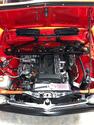
Actually, you can vent the hood, but it needs to be well forward of the windshield; probably the front third. If you look at pictures of mid-engined race cars with the radiators in the front, there's frequently a big outlet right behind the radiator. Where you have FLOWING air over the hood, you'll have lower pressure. Of course, that flow gets disrupted/re-directed as it approaches the base of the windshield --- it "piles up" and creates a higher pressure area. Note the big opening in the "hood" below.....also done this way to help maintain an area of low pressure under the car as they had problems because of achieving lift-off on the Mulsanne straight at LeMans. The shape/style of that opening can assist as well - frequently people will use NACA ducts to vent in this area. Check out Chenran's (I think I spelled it right) LS swapped 944 Porsche on this site, IIRC.

BTW, I'm not sure anyone "advised" you to vent the hood, but you seem hell-bent on it. I'd allow air that's passed over the radiator to pass out of the compartment under the car the way God intended. If that poses battery heat issues, and I don't think they'll be significant, then I'd beef up the battery cooling system that I believe the car has.
BTW, I'm not sure anyone "advised" you to vent the hood, but you seem hell-bent on it. I'd allow air that's passed over the radiator to pass out of the compartment under the car the way God intended. If that poses battery heat issues, and I don't think they'll be significant, then I'd beef up the battery cooling system that I believe the car has.
Last edited by Michael Yount; Apr 17, 2021 at 07:30 AM.

Lots of guys in the Pro-Touring world vent their hood to help aid under hood temps. I’ve considered it myself, but my underhood structure is too complex and there’s no good place to locate the vents. What I see is guys placing the vents outward toward the wheel wells, and about centered between front of hood and base of windshield. High pressure on hood is at base of windshield in center, so going outward with vents helps pull air out. This is very common practice in the sports car racing world where there are stacks and stacks of coolers located at the front of the vehicle.

TECH Regular
Joined: Nov 2018
Posts: 467
Likes: 116
I guess I never considered it before, but on a race car like a pro touring car, do those hood vents let heat and air out or are they letting high pressure cold air through the top of the hood and venting out the bottom of the car? Or are hood vents basically just for letting heat out when the car is moving to slow for actual airflow or idling at a stop so nothing catches on fire? Because the latter was always how I though of them.
And if the car isn't wrecked or broken or anything like that yet, would it not be easier and maybe even cheaper to just sell or trade it for one that is already just RWD from the factory? I'm pretty much thinking that an aftermarket control unit is going to be necessary because from how I understand it you can't mess with a Tesla controller pretty much at all. The things are just locked up tight from Tesla.
And if the car isn't wrecked or broken or anything like that yet, would it not be easier and maybe even cheaper to just sell or trade it for one that is already just RWD from the factory? I'm pretty much thinking that an aftermarket control unit is going to be necessary because from how I understand it you can't mess with a Tesla controller pretty much at all. The things are just locked up tight from Tesla.
When the car’s not moving, convection will allow hot air to vent through hood openings wherever they are. Once at speed there’s a pressure gradient at work. The closer to the windshield and the closer to the center of the car, the higher the pressure. The leading edge of the hood is also higher pressure, higher at center, not as high at sides. Pressure drops as air flows over the hood until you begin to approach windshield/cowl area. Each car has a unique gradient.


Thread Starter
Teching In
Joined: Apr 2021
Posts: 48
Likes: 1
Actually, you can vent the hood, but it needs to be well forward of the windshield; probably the front third. If you look at pictures of mid-engined race cars with the radiators in the front, there's frequently a big outlet right behind the radiator. Where you have FLOWING air over the hood, you'll have lower pressure. Of course, that flow gets disrupted/re-directed as it approaches the base of the windshield --- it "piles up" and creates a higher pressure area. Note the big opening in the "hood" below.....also done this way to help maintain an area of low pressure under the car as they had problems because of achieving lift-off on the Mulsanne straight at LeMans. The shape/style of that opening can assist as well - frequently people will use NACA ducts to vent in this area. Check out Chenran's (I think I spelled it right) LS swapped 944 Porsche on this site, IIRC.

BTW, I'm not sure anyone "advised" you to vent the hood, but you seem hell-bent on it. I'd allow air that's passed over the radiator to pass out of the compartment under the car the way God intended. If that poses battery heat issues, and I don't think they'll be significant, then I'd beef up the battery cooling system that I believe the car has.
BTW, I'm not sure anyone "advised" you to vent the hood, but you seem hell-bent on it. I'd allow air that's passed over the radiator to pass out of the compartment under the car the way God intended. If that poses battery heat issues, and I don't think they'll be significant, then I'd beef up the battery cooling system that I believe the car has.
I'd focus on getting air to flow properly across the radiator and any other necessary heat exchangers. Being sure the front is sealed up so all air flows across the exchangers; being sure the opening for these is in a high pressure area and has a sufficiently sized opening; being sure that condenser and other exchangers are sealed up to the radiator so the cooling fans are pulling all air across the exchangers; being sure the fans are shrouded properly; be sure there's some sort of splash guard or air dam below/behind the bottom of the radiator so that a low pressure area is created which helps air to flow across the exchangers. Otherwise, the bottom of the engine compartment is open -- and pressure under the car should be lower than pressure at the front of the car = air flows across the exchangers and out the bottom of the engine compartment. Take a good look at the front/underside of any IC engine in a contemporary car -- it'll tell you all you need to know about how to get air to flow across the exchangers and out the bottom of the compartment. If you decide you need to vent the hood for better low speed/idling performance -- you know where to put the vents. And give some thought to how water is going to behave with those vents if you use them -- generally speaking you don't want water repeatedly/consistently dumping onto the engine and electrical components (alt, wiring/plugs, etc.).
Thread Starter
Teching In
Joined: Apr 2021
Posts: 48
Likes: 1
I'd focus on getting air to flow properly across the radiator and any other necessary heat exchangers. Being sure the front is sealed up so all air flows across the exchangers; being sure the opening for these is in a high pressure area and has a sufficiently sized opening; being sure that condenser and other exchangers are sealed up to the radiator so the cooling fans are pulling all air across the exchangers; being sure the fans are shrouded properly; be sure there's some sort of splash guard or air dam below/behind the bottom of the radiator so that a low pressure area is created which helps air to flow across the exchangers. Otherwise, the bottom of the engine compartment is open -- and pressure under the car should be lower than pressure at the front of the car = air flows across the exchangers and out the bottom of the engine compartment. Take a good look at the front/underside of any IC engine in a contemporary car -- it'll tell you all you need to know about how to get air to flow across the exchangers and out the bottom of the compartment. If you decide you need to vent the hood for better low speed/idling performance -- you know where to put the vents. And give some thought to how water is going to behave with those vents if you use them -- generally speaking you don't want water repeatedly/consistently dumping onto the engine and electrical components (alt, wiring/plugs, etc.).
Thread Starter
Teching In
Joined: Apr 2021
Posts: 48
Likes: 1
I guess I never considered it before, but on a race car like a pro touring car, do those hood vents let heat and air out or are they letting high pressure cold air through the top of the hood and venting out the bottom of the car? Or are hood vents basically just for letting heat out when the car is moving to slow for actual airflow or idling at a stop so nothing catches on fire? Because the latter was always how I though of them.
And if the car isn't wrecked or broken or anything like that yet, would it not be easier and maybe even cheaper to just sell or trade it for one that is already just RWD from the factory? I'm pretty much thinking that an aftermarket control unit is going to be necessary because from how I understand it you can't mess with a Tesla controller pretty much at all. The things are just locked up tight from Tesla.
And if the car isn't wrecked or broken or anything like that yet, would it not be easier and maybe even cheaper to just sell or trade it for one that is already just RWD from the factory? I'm pretty much thinking that an aftermarket control unit is going to be necessary because from how I understand it you can't mess with a Tesla controller pretty much at all. The things are just locked up tight from Tesla.
Thread Starter
Teching In
Joined: Apr 2021
Posts: 48
Likes: 1
I guess I never considered it before, but on a race car like a pro touring car, do those hood vents let heat and air out or are they letting high pressure cold air through the top of the hood and venting out the bottom of the car? Or are hood vents basically just for letting heat out when the car is moving to slow for actual airflow or idling at a stop so nothing catches on fire? Because the latter was always how I though of them.
And if the car isn't wrecked or broken or anything like that yet, would it not be easier and maybe even cheaper to just sell or trade it for one that is already just RWD from the factory? I'm pretty much thinking that an aftermarket control unit is going to be necessary because from how I understand it you can't mess with a Tesla controller pretty much at all. The things are just locked up tight from Tesla.
And if the car isn't wrecked or broken or anything like that yet, would it not be easier and maybe even cheaper to just sell or trade it for one that is already just RWD from the factory? I'm pretty much thinking that an aftermarket control unit is going to be necessary because from how I understand it you can't mess with a Tesla controller pretty much at all. The things are just locked up tight from Tesla.

