When you click on links to various merchants on this site and make a purchase, this can result in this site earning a commission. Affiliate programs and affiliations include, but are not limited to, the eBay Partner Network.
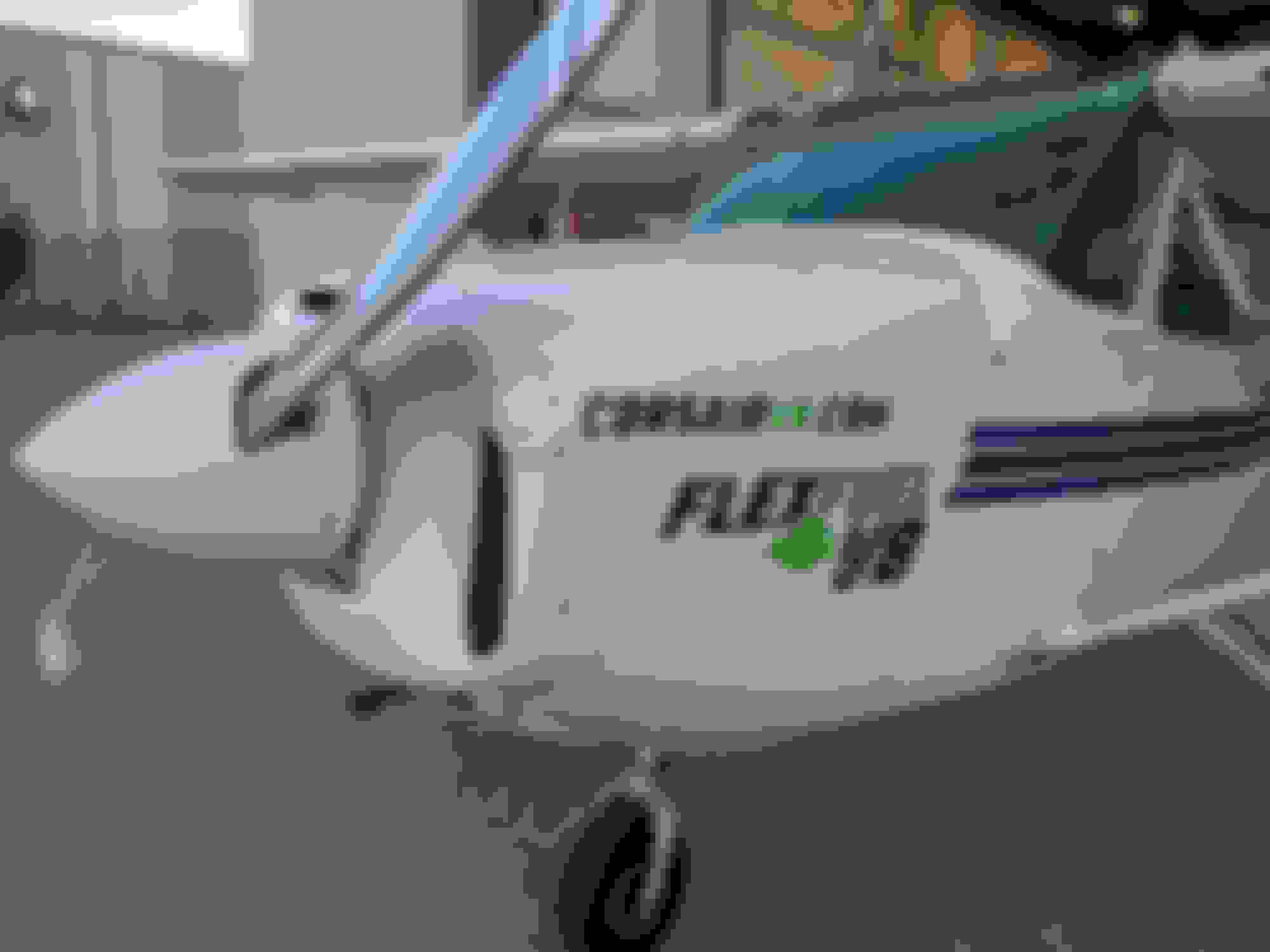
Had request for update on the Cessna LS swap, so thought I’d give an update. Airplane just finished its 200 hour initial flight test plan and did better than expected. We spent a lot of time on the ground developing the redundant EFI system to meet some requirements and it was time well spent as no issues. We posted some YouTube videos of some of the flying if anyone cares to see.
Currently perfecting prop design to reduce noise while not losing too much performance. This old 1969 beat up airframe far out performs the newest models and cost more than 60% less to fly. We have the system flat rated below 220 HP per certified airframe limits but is able to keep that power up-to about 6K ft. Had some issues with oil pump cavitation at unusual attitudes but got that squared away. Most issues were developing the redundancy in EFI system and had to develop our own basic calibrations. Other than that, it’s a huge upgrade from existing aircraft piston engines that still use manual mixture controls and carburetor heat *****.
Thanks for the update! I've always been a huge proponent of WELL-DESIGNED AND ENGINEERED auto engine conversions, and besides that, electronic injection/ignition conversions for air cooled aircraft engines like Lycoming/Continental. EFII has the best setup SO FAR for that, that I've seen.
I love it! Really want to get into aviation. Just a few little things in life to happens and going to start lessons. This seems to make a great upgrade to the aircraft.
Glad I watched the entire clip, as I was going to ask you about fuel type used here. I’d like to ask about cooling the engine on this application...how is radiator(s) set up? Do you have pictures of how you did the cooling aspect? So glad you got the bugs worked out of this.
First time seeing this video and your page. Nicely done! Are you using new engines or rebuilds? Aluminum engines? What is the weight and balance difference between an LS and a O-300 or O-320? How much p-factor do you experience with the prop turning the opposite way?
Thanks for kind remarks. RE cooling question: we tried a number of set ups and currently have 2 aluminum radiators mounted each side of engine. We had to make another fiberglass nose cone that riveted on the stock aluminum cowling to better direct airflow to them. Also had to make a new prop spinner that was wider that did better at separating on-coming air and directing it wider to the new intakes. One more thing, also had to design the prop so it could create more wash closer to hub to increase flow into intakes while taxi on ground. currently using antifreeze, but next test is with waterless coolant. This will likely increase temps about 10F but will only require about 5 psi in system and eliminate expansion tank.
The weight is more than stock engine, and REFI required a 2nd battery which we moved closer to tail to balance out. RE: pfactor- not a big deal and most of the pilots flying it says it’s intuitive. However, if you rapidly push the mechanical throttle to max, the V8s torque comes up quick to the 220hp limit...far faster than stock engine! This is an issue if rapidly applying full power at lower air speeds especially on go-arounds (when pilot aborts landing at last moment and needs to climb). If plane is below approach speed, there may not be enough airflow over the tail rudder and ailerons to maintain control (at max power there is a lot of prop wash, torque and uneven load on prop blades, causing a plane to turn and bank...uncontrollably if too slow). So we curtailed just how quick the engine would accelerate in the calibration file.....this was challenging with a mechanical throttle body, but it added a bit of a safety factor for newer pilots that typically fly such size planes.
we had a number of other issues, but worked though them eventually. Again, thanks for kind encouragement.
We made our own calibration files for a number of reasons and have ability to set a soft and hard limit based on FF and RPM. Also,, prop is pitched for a BSHP limit as well. No problems now....took a bit of time to dial in a consistent limit that wouldn't change with quick loading or ambient conditions, and have the soft limit not pulse when reaching it.
Are you able to compensate for DA and increase parameters to have the engine continue to output near the 220 HP limit? Or is that what you were meaning when you said you can "keep that power up-to about 6k ft."
Oil system modified but not dry system, although early designs was and engine even mounted inverted on plane. Calibration allows for the cam sensor to replace the crank sensor, or vice-versa. Redundant MAP, IAT, fuel pumps/ filter/ pres regulators. Coils and injectors also redesigned for redundancy. It is way more redundancy than needed for a car or even statistically a plane with these modern components but its what's required by FAA regs.
HP is limited in calibrations file and prop pitch. We wanted an engine that was far more capable in load than what was needed….by operating well below max HP, engine last Longer and more reliable. Also, wanted 1 engine that could be used in different size airframes.
Exactly just saying they aren't running these out to even stock redlines. Making use of the 6.2's 415tq at 5000 vs 350tq on the 5.3.
Right. Aircraft need to be a low-stress situation.
The LS3 is the ideal engine for this. I think this might become more common in the experimental, and hopefully later, certified sectors of general aviation.
6 Common C5 Corvette Failures and What's Involved In Repairing Them
Slideshow: From wobbling harmonic balancers to failed EBCMs, these are the issues that define long-term C5 ownership and what repairs typically involve.
Retro Modern Bandit Pontiac Trans AM Comes With Burt Reynolds' Autograph
Slideshow: A modern Camaro transformed into a retro icon, this limited-run "Bandit" build blends nostalgia with brute force in a way few revivals manage.
Top 10 Greatest Cadillac V Series Performance Models Ever, Ranked
Slideshow: Cadillac didn't just crash the high-performance luxury vehicle party, it showed up loud, supercharged, and occasionally a little unhinged...
Coachbuilt N2A Anteros Is an LS2-Powered C6 Corvette In Italian Clothes
Slideshow: A one-off sports car that looks like a vintage Italian exotic-but hides a C6 Corvette underneath-just sold for the price of a new mid-engine Corvette.
















 LS into a CESSNA airplane