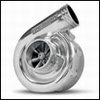

Camshaft theory question with D1SC

Thread Starter
Joined: Jun 2005
Posts: 2,742
Likes: 4
From: In the garage
 Camshaft theory question with D1SC
 If a car was setup for 'power under the curve' using a camshaft with relatively low overlap such as the Cammotion Titan 4 (227/232 .612/.595 113+4) or the EPS 226/234 .604/.604 113+2, and then a D1SC Procharger making 8psi was put on the motor, the power curve would stay the same, correct?
Would there be a substantial amount of power left on the table compared to going with a cam such as the Tick Stage 2 V2 blower cam (227/243 .625"/.615" LSA115+4) or the BTR Blower cam (227/244 .615/.595 115+5) when the blower is installed?
If more power could be had going with a blower cam, how would it change the power curve? Would it sacrifice the low end torque that the Titan 4 and EPS 226/234 cams provide in favor of some higher RPM HP gain? Please clarify for me, thanks.
Would there be a substantial amount of power left on the table compared to going with a cam such as the Tick Stage 2 V2 blower cam (227/243 .625"/.615" LSA115+4) or the BTR Blower cam (227/244 .615/.595 115+5) when the blower is installed?
If more power could be had going with a blower cam, how would it change the power curve? Would it sacrifice the low end torque that the Titan 4 and EPS 226/234 cams provide in favor of some higher RPM HP gain? Please clarify for me, thanks.

On The Tree
Joined: Oct 2012
Posts: 171
Likes: 9
Those cams are all fairly close on ivc so there would be no real difference in power under the curve from what I understand about valve events but the gains up top from the blower cams would make it worth the change in my opinion.
On The Tree
Joined: Oct 2012
Posts: 171
Likes: 9
For example the btr blower cam has a 43.5 ivc and the eps cam has a 44 ivc. The cam motion cam will build the most low end with an ivc of 42.5 and the tick cam will have the least amount of bottom end with a 44.5 ivc. If it was my car I would go with the btr cam because the very minimal change on the bottom side but a significant gain up top.
In theory yes, but when you add the ProCharger ( by default) and as a whole, you will see the peak power come in on the higher rpm range. A centri is built that way.
IE: if we take 6k as the peak rpm range, the ProCharger’s are known to make about 2/3 of the boost @ about 4K & quickly ramp to peak by the last third. Taking your 8 lb peak. You will see a progressive ramp of boost all the way to 4K ( about 5-6lbs) and then in a blink your at 6k @ peak 8 lbs.
All this to to make the point: that you will feel the bulk of the power 4-6k rpm. If your concern is that you will be lacking in under the curve power ..... don’t worry. You will have plenty especially compared the n/a in your current setup. I have the BTR Jam cam (230-242 115+4). 6* of overlap. I live in the under the curve power world & love it. I previously had a PD blower & don't miss a thing about it. Plenty of smooth power down low & then scary on top.
IE: if we take 6k as the peak rpm range, the ProCharger’s are known to make about 2/3 of the boost @ about 4K & quickly ramp to peak by the last third. Taking your 8 lb peak. You will see a progressive ramp of boost all the way to 4K ( about 5-6lbs) and then in a blink your at 6k @ peak 8 lbs.
All this to to make the point: that you will feel the bulk of the power 4-6k rpm. If your concern is that you will be lacking in under the curve power ..... don’t worry. You will have plenty especially compared the n/a in your current setup. I have the BTR Jam cam (230-242 115+4). 6* of overlap. I live in the under the curve power world & love it. I previously had a PD blower & don't miss a thing about it. Plenty of smooth power down low & then scary on top.

LS1Tech Sponsor
Joined: Dec 2014
Posts: 507
Likes: 106
Three things that tend to be changed when camming for a supercharger are: the exhaust valve open timing, the intake valve close timing and overlap(the time that both the intake valve and the exhaust valves are open at the same time).
When pondering the exhaust valve open timing, there are two key factors to consider: How much spent combustion gases you have to evacuate and how long you have to do it. Obviously, a supercharged engine will make more power and thus have more spent exhaust gases to evacuate. How much time time you have to do it is dictated by the RPM range that you are operating at. So, this is why you noticed that supercharger cams tend to have more exhaust duration than the same RPM range cam for naturally aspirated engine. It's because we are opening the exhaust valve sooner.
We tend to want want to reduce overlap in supercharged engines because when the intake and exhaust valves are open at the same time, the Boost that we've created with a supercharger can go straight out the exhaust. This is especially undesirable when running a smaller supercharger relation to the engine size.
The timing of the intake valve close will often be later in a supercharged engine. This is because a supercharged engine will typically make better average power with a later IVC compared to the valve timing that a naturally-aspirated engine might respond to. However, maximum average power isn't always everything in applications outside of drag racing. Drivers of street vehicles and road course vehicles that are operated in the lower RPM ranges might want to trade some upper RPM power for lower power range response. Furthermore a positive displacement supercharger will produce more boost and be more efficient at lower RPM than a centrifugal type supercharger. So, you may choose to cam a centrifugal supercharger engine with earlier intake valve events than you might cam a positive displacement supercharger in a street driven vehicle or a vehicle where low RPM response is the focus.
If you have a look at the Cam Motion Supercharger Cams, you will notice that our positive displacement supercharger cams typically have lobe separation angles between 118 and 120. And, our centrifugal supercharger cams tend to have lobe separation angle between 116 and 117. Those wider lobe separation angles are the results of camshafts with earlier exhaust valve opening, later intake valve closes, and reduced overlap. The fact that our centrifugal camshafts have different specifications from our positive displacement camshafts is not about absolute power production. Those differences are mainly geared towards drivability and power curve shaping because of the differences in the boost curves between those two styles of blowers.
Have a look at our extensive line of supercharger camshafts and give us a call with any questions:
http://www.cammotion.com/camshafts/supercharged-ls-camshafts/
~Steven
When pondering the exhaust valve open timing, there are two key factors to consider: How much spent combustion gases you have to evacuate and how long you have to do it. Obviously, a supercharged engine will make more power and thus have more spent exhaust gases to evacuate. How much time time you have to do it is dictated by the RPM range that you are operating at. So, this is why you noticed that supercharger cams tend to have more exhaust duration than the same RPM range cam for naturally aspirated engine. It's because we are opening the exhaust valve sooner.
We tend to want want to reduce overlap in supercharged engines because when the intake and exhaust valves are open at the same time, the Boost that we've created with a supercharger can go straight out the exhaust. This is especially undesirable when running a smaller supercharger relation to the engine size.
The timing of the intake valve close will often be later in a supercharged engine. This is because a supercharged engine will typically make better average power with a later IVC compared to the valve timing that a naturally-aspirated engine might respond to. However, maximum average power isn't always everything in applications outside of drag racing. Drivers of street vehicles and road course vehicles that are operated in the lower RPM ranges might want to trade some upper RPM power for lower power range response. Furthermore a positive displacement supercharger will produce more boost and be more efficient at lower RPM than a centrifugal type supercharger. So, you may choose to cam a centrifugal supercharger engine with earlier intake valve events than you might cam a positive displacement supercharger in a street driven vehicle or a vehicle where low RPM response is the focus.
If you have a look at the Cam Motion Supercharger Cams, you will notice that our positive displacement supercharger cams typically have lobe separation angles between 118 and 120. And, our centrifugal supercharger cams tend to have lobe separation angle between 116 and 117. Those wider lobe separation angles are the results of camshafts with earlier exhaust valve opening, later intake valve closes, and reduced overlap. The fact that our centrifugal camshafts have different specifications from our positive displacement camshafts is not about absolute power production. Those differences are mainly geared towards drivability and power curve shaping because of the differences in the boost curves between those two styles of blowers.
Have a look at our extensive line of supercharger camshafts and give us a call with any questions:
http://www.cammotion.com/camshafts/supercharged-ls-camshafts/
~Steven
Last edited by CAMMOTION PERF; Oct 28, 2019 at 09:12 AM.
Thread Starter
Joined: Jun 2005
Posts: 2,742
Likes: 4
From: In the garage
Thanks everyone for the responses.
After reading through these replies, I found a couple of good threads with great comparisons
https://ls1tech.com/forums/dynamomet...arged-cam.html
and
https://ls1tech.com/forums/dynamomet...lbs-boost.html
While it's interesting to see the NA numbers vs Procharged numbers, I think plenty of peak hp will come with the blower, but I want to make sure I concentrate with as much manageable torque as possible at 3000 rpm. I want to set this car up for street/autox/road course/drag strip (in that order of power delivery priority), and honestly 8psi and 550/550 to the wheels was my goal with ported 243 heads on a L33 or LS1 with a Fast intake of some sort and 1-7/8 headers.
As you mentioned here Steven,
This is what I'm going for. As much torque as feasible by 3000rpm, and have it 'all in' by 6000rpm and shift it by 6500. What cam would you suggest for this? I wouldnt have any qualms with a lopey idle either 
Another trick I've seen done is putting a wastegate in the charge pipe. While this isn't ideal when you approach max blower speeds, it could work well for what I'm wanting to achieve. This allows boost to be restricted to a given level, causing the boost to come in harder and faster at lower RPMs and regulating peak boost level. So, in effect I could pulley the car for around 12psi with the wastegate shut, and use a boost controller to allow boost to bleed off to achieve around 8psi, causing the car to come into boost harder and faster but limit peak hp.
After reading through these replies, I found a couple of good threads with great comparisons
https://ls1tech.com/forums/dynamomet...arged-cam.html
and
https://ls1tech.com/forums/dynamomet...lbs-boost.html
While it's interesting to see the NA numbers vs Procharged numbers, I think plenty of peak hp will come with the blower, but I want to make sure I concentrate with as much manageable torque as possible at 3000 rpm. I want to set this car up for street/autox/road course/drag strip (in that order of power delivery priority), and honestly 8psi and 550/550 to the wheels was my goal with ported 243 heads on a L33 or LS1 with a Fast intake of some sort and 1-7/8 headers.
As you mentioned here Steven,
Drivers of street vehicles and road course vehicles that are operated in the lower RPM ranges might want to trade some upper RPM power for lower power range response. So, you may choose to cam a centrifugal supercharger engine with earlier intake valve events than you might cam a positive displacement supercharger in a street driven vehicle or a vehicle where low RPM response is the focus.
Another trick I've seen done is putting a wastegate in the charge pipe. While this isn't ideal when you approach max blower speeds, it could work well for what I'm wanting to achieve. This allows boost to be restricted to a given level, causing the boost to come in harder and faster at lower RPMs and regulating peak boost level. So, in effect I could pulley the car for around 12psi with the wastegate shut, and use a boost controller to allow boost to bleed off to achieve around 8psi, causing the car to come into boost harder and faster but limit peak hp.
Sounds like you know what you want and how to get there at this point. But for arguments sake… why?
What engine? SBE? Those don’t look like cams geared towards early RPM power or a 6500 rpm redline to me…unless the engine is huge? Centrifugal blowers are RPM based… so why limit the rpm and why are you wanting the power in at such an early RPM? Rev the motor out and let it do what it was meant to… Super early power/TQ in the rev range is what kills them in my experience. You’d likely be better off running a stockish cam and more boost if that’s your RPM range and power goal. Going through the trouble of forced induction and limiting your boost seems odd. Why run a cam (or spend the $ to swap cams) with the accompanying required valve train parts and then not use the new RPM potential? Also when you could run say 10-12lbs and hit your goal with an OEM cam... why worry about additional wear and tear of aftermarket cams and valvetrain? Maybe instead of spending twice the money and not fully utilizing either part… Spend half the money and fully utilize one of them? Depending on the fuel and engine 550 could be fairly easy on motor.
I’ve thought of doing similar and always go back to boost alone for that kind of power… allows you to keep the street manors and have “big” power when needed.
Just food for thought
What engine? SBE? Those don’t look like cams geared towards early RPM power or a 6500 rpm redline to me…unless the engine is huge? Centrifugal blowers are RPM based… so why limit the rpm and why are you wanting the power in at such an early RPM? Rev the motor out and let it do what it was meant to… Super early power/TQ in the rev range is what kills them in my experience. You’d likely be better off running a stockish cam and more boost if that’s your RPM range and power goal. Going through the trouble of forced induction and limiting your boost seems odd. Why run a cam (or spend the $ to swap cams) with the accompanying required valve train parts and then not use the new RPM potential? Also when you could run say 10-12lbs and hit your goal with an OEM cam... why worry about additional wear and tear of aftermarket cams and valvetrain? Maybe instead of spending twice the money and not fully utilizing either part… Spend half the money and fully utilize one of them? Depending on the fuel and engine 550 could be fairly easy on motor.
I’ve thought of doing similar and always go back to boost alone for that kind of power… allows you to keep the street manors and have “big” power when needed.
Just food for thought
Trending Topics
Thread Starter
Joined: Jun 2005
Posts: 2,742
Likes: 4
From: In the garage
I'm just trying to make big cubic inch power with a little aluminum motor on the cheap(ish)
I figured a procharger would work better for my goals and what I want to do with the car since power delivery is linear. I want this powerband, but more...
https://ls1tech.com/forums/dynamomet...o-results.html
Maybe I'm over-thinking it and should just get as close to the results in the threads I posted with the guy that ran the D1X. He just has a lot more money tied up in his heads and intake than I'm willing to spend. As you said, boost alone would get me there. Run stock 243s, a torque biased blower cam (if such an animal exists), and more boost. RPM doesnt have to be exactly what I mentioned, but I didnt really feel the need to run 7K+ to hit the goals mentioned.
I figured a procharger would work better for my goals and what I want to do with the car since power delivery is linear. I want this powerband, but more...
https://ls1tech.com/forums/dynamomet...o-results.html
Maybe I'm over-thinking it and should just get as close to the results in the threads I posted with the guy that ran the D1X. He just has a lot more money tied up in his heads and intake than I'm willing to spend. As you said, boost alone would get me there. Run stock 243s, a torque biased blower cam (if such an animal exists), and more boost. RPM doesnt have to be exactly what I mentioned, but I didnt really feel the need to run 7K+ to hit the goals mentioned.
LS1 Tech Stories
The Best V8 Stories One Small Block at Time

6 Common C5 Corvette Failures and What's Involved In Repairing Them
Pouria Savadkouei
Retro Modern Bandit Pontiac Trans AM Comes With Burt Reynolds' Autograph
Verdad Gallardo
Top 10 Greatest Cadillac V Series Performance Models Ever, Ranked
Pouria Savadkouei
Top 10 Most Powerful Chevy Trucks Ever Made!

Hennessey's New Supercharged Silverado ZR2 Has 700 HP
Verdad Gallardo
Coachbuilt N2A Anteros Is an LS2-Powered C6 Corvette In Italian Clothes
Verdad Gallardo
Awesome K5 Blazer Restomod Comes With C7 Corvette Power
Verdad Gallardo
10 Camaros You Should Never Buy

10 LS Engine Myths That Refuse to Die
Verdad Gallardo


Sounds like you're wanting an aggressively cammed procharged setup to behave like a baby cam roots blower setup. I don't like the idea of a waste gate on a procharger at all.
Thought of a roots style blower instead possibly? Would give your more of a table top instant torque curve you seem to be looking for. Though I think instant power like that is harder to control on a race track… I like the simplicity and ease of install on the centrif. Blowers myself, but they don’t deliver the instant response the roots style does. On the smaller motors I don’t feel 7k is pushing it. It’s likely healthier for the motor to make power later in the rev range and more of it to make up for the lack down low? The ls9 cam would be cheap ($140) and good choice with performance from 5500 to 7k+ on a 5.3. Sure there cams that will make more power but none as cheap in my experience. Hell any of the used ls1 cams on a 5.3 will pull to 6500 easy if that’s what you want… and it will make good power down low where your wanting. Just add boost until your power goal is met? Matt happle just did a 4.8 with “sloppy stg2” cam on a 4.8 with LSA style blower and exceeded your power goals I believe.
Thread Starter
Joined: Jun 2005
Posts: 2,742
Likes: 4
From: In the garage
Don't want to cut the cowl or hood, don't want to mess with roots style.
Was running some of the cammotion cams through a calculator. This seems like it may help the engine make power closer to where I'm shooting for...
http://www.cammotion.com/ls-camshaft...r-centrifugal/
May not be perfect, but I think it just may be the ticket.
Was running some of the cammotion cams through a calculator. This seems like it may help the engine make power closer to where I'm shooting for...
http://www.cammotion.com/ls-camshaft...r-centrifugal/
May not be perfect, but I think it just may be the ticket.
Roots all day. drop the k member and fit an mp112/122 depending on power goals. All the torque you could want at 3k. Either that or undersize a turbo so its a light switch at 2k. Seems silly to go with a centrifugal blower given that they're made for RPM.
LS1Tech Sponsor
Joined: Dec 2014
Posts: 507
Likes: 106
Don't want to cut the cowl or hood, don't want to mess with roots style.
Was running some of the cammotion cams through a calculator. This seems like it may help the engine make power closer to where I'm shooting for...
http://www.cammotion.com/ls-camshaft...r-centrifugal/
May not be perfect, but I think it just may be the ticket.
Was running some of the cammotion cams through a calculator. This seems like it may help the engine make power closer to where I'm shooting for...
http://www.cammotion.com/ls-camshaft...r-centrifugal/
May not be perfect, but I think it just may be the ticket.
IMO: Avoid the wastegate. Sounds good on paper but more tricky than its worth. Some do it to make their track car work on the street (when not at the track) & it works fine for that scenario. PM me if you want the history of my Watergate experiment.
With the right cam ( as you have chosen) you will hit your goals. The centri's power comes in smoothly. Well suited for road coarse mid range. You just don't need (or want) all that it has to gives you up top....... so don't use it. Enjoy the mid range.
With the right cam ( as you have chosen) you will hit your goals. The centri's power comes in smoothly. Well suited for road coarse mid range. You just don't need (or want) all that it has to gives you up top....... so don't use it. Enjoy the mid range.
IMO: Avoid the wastegate. Sounds good on paper but more tricky than its worth. Some do it to make their track car work on the street (when not at the track) & it works fine for that scenario. PM me if you want the history of my Watergate experiment.
With the right cam ( as you have chosen) you will hit your goals. The centri's power comes in smoothly. Well suited for road coarse mid range. You just don't need (or want) all that it has to gives you up top....... so don't use it. Enjoy the mid range.
With the right cam ( as you have chosen) you will hit your goals. The centri's power comes in smoothly. Well suited for road coarse mid range. You just don't need (or want) all that it has to gives you up top....... so don't use it. Enjoy the mid range.
This is taking this thread on a tangent ... but you asked & I'm happy to share if it will help.
I copied this directly from my old & long thread of my build 2015 – 2017. When the build started I made every excuse under the sun as to why this was a great idea & no one could talk me out of it. I will say this: the wastegated project is not impossible it just depends on the goals. If your trying to preserve a SBE & limit peak HP/TQ then this is a option. For me, I was trying to create good strong street performance. I was also anticipating a sluggish low end (as many described the ProCharger characteristics to be). That was furthest from the truth. To cut to the chase: at my power & boost levels (or above it) this wasn’t the most efficient use of the Centri blower. Pulley for 20 lbs. & blowing off to maintain 14lbs. What concerned me the most was the violence inside the Procharger when the gate opened. Pressure against the impeller at one moment then free flowing the next & on / off from there. Next was belt slip & inconsistency of the boost (yes I had the Aster Bracket). Finally, ... it was just too much low end power (here again at my boost level) came on too quickly.
The following is what I wrote a few years ago & after you will find two links. One from a Vette forum with a similar conversation re: wastegate debate. The other is from Super Chevy. They completed a successful project BUT it was at far less boost level (more controllable in my opinion) but still has the pitfalls of abuse.
Note: many people successfully do this to reduce street power when they are not at the track. That is different from the purpose driven performance that we speak of here.
______________________________________
2017 UPDATE:
I'm REMOVING THE WASTEGATE:
It was a good experiment. The results along with some new knowledge of what is actually happening when the gate opens, lead me to the decision.
I recently hit 500 miles ( clutch is broken in). With that said, the fun began !
All that I can say is that "on paper " the concept of an "earlier TQ curve" , sounded good. The reality is, I'm completely over powered for the street. I'm sure there are plenty of " I told you so" comments ...... but I had to try for myself. To cut to the chase, now that I am free to push the limits , the power band is too explosive & the car becomes a Huvver Craft at any speed with only a 1/2 throttle pop.
In addition, this decision to experiment with the gated system was made a few years ago. Since then I did quite a bit of research and was lucky enough to have one of the ProCharger engineers help get into my thick head the understanding of compressor maps & the pressure being put upon the ProCharger & crank once the gate springs open & creates an artificial leak. Bottom line, for my needs this was not a smart option. If anybody is interested, there is a link at the bottom. It is a thread from another site re: the waste gated systems & comments from a ProCharger rep.. This is what lead me to more research, a conversation with the ProCharger engineer & ultimately the decision to remove the system.
We are in the process of removing the Wastegate & boost controller. Replacing the 3.6" head unit pulley with a 4".
I'll continue down the rabbit hole w/More fun to come !
https://www.corvetteforum.com/forums...rocharger.html
Here is a link to an article from Super Chevy. It speaks of a successful wastegate project. This was done to limit peak boost on a stock bottom end while enhancing the low end boost/ TQ
http://www.superchevy.com/how-to/eng...stegate-debate
I copied this directly from my old & long thread of my build 2015 – 2017. When the build started I made every excuse under the sun as to why this was a great idea & no one could talk me out of it. I will say this: the wastegated project is not impossible it just depends on the goals. If your trying to preserve a SBE & limit peak HP/TQ then this is a option. For me, I was trying to create good strong street performance. I was also anticipating a sluggish low end (as many described the ProCharger characteristics to be). That was furthest from the truth. To cut to the chase: at my power & boost levels (or above it) this wasn’t the most efficient use of the Centri blower. Pulley for 20 lbs. & blowing off to maintain 14lbs. What concerned me the most was the violence inside the Procharger when the gate opened. Pressure against the impeller at one moment then free flowing the next & on / off from there. Next was belt slip & inconsistency of the boost (yes I had the Aster Bracket). Finally, ... it was just too much low end power (here again at my boost level) came on too quickly.
The following is what I wrote a few years ago & after you will find two links. One from a Vette forum with a similar conversation re: wastegate debate. The other is from Super Chevy. They completed a successful project BUT it was at far less boost level (more controllable in my opinion) but still has the pitfalls of abuse.
Note: many people successfully do this to reduce street power when they are not at the track. That is different from the purpose driven performance that we speak of here.
______________________________________
2017 UPDATE:
I'm REMOVING THE WASTEGATE:
It was a good experiment. The results along with some new knowledge of what is actually happening when the gate opens, lead me to the decision.
I recently hit 500 miles ( clutch is broken in). With that said, the fun began !
All that I can say is that "on paper " the concept of an "earlier TQ curve" , sounded good. The reality is, I'm completely over powered for the street. I'm sure there are plenty of " I told you so" comments ...... but I had to try for myself. To cut to the chase, now that I am free to push the limits , the power band is too explosive & the car becomes a Huvver Craft at any speed with only a 1/2 throttle pop.
In addition, this decision to experiment with the gated system was made a few years ago. Since then I did quite a bit of research and was lucky enough to have one of the ProCharger engineers help get into my thick head the understanding of compressor maps & the pressure being put upon the ProCharger & crank once the gate springs open & creates an artificial leak. Bottom line, for my needs this was not a smart option. If anybody is interested, there is a link at the bottom. It is a thread from another site re: the waste gated systems & comments from a ProCharger rep.. This is what lead me to more research, a conversation with the ProCharger engineer & ultimately the decision to remove the system.
We are in the process of removing the Wastegate & boost controller. Replacing the 3.6" head unit pulley with a 4".
I'll continue down the rabbit hole w/More fun to come !
https://www.corvetteforum.com/forums...rocharger.html
Here is a link to an article from Super Chevy. It speaks of a successful wastegate project. This was done to limit peak boost on a stock bottom end while enhancing the low end boost/ TQ
http://www.superchevy.com/how-to/eng...stegate-debate