







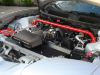


The fix for my endless alternator failure's

I got your point and it sounds like you got mine. We have obviously had different experiences with alternators. As I said we will have different view points on the subject. You are the one who sounds as you put it all "butt hurt". You keep posting this endless rambling saying the same thing over and over. Very lame and has become boring to say the least. I will leave you with two words...the first is the last word of my previous post PEACE ... second word is DECAFE .... you obviously need to cut back.
I wanted to buy a GM alternator as you did, but with all the bad luck I would hate to spend $400 or so and have another failure. I figured spending $40 was a great idea considering how well the stock alternators hold up. The person that posted in this thread that had GM (the dealership rather) put multiple alternators on his car and still had multiple failures definately must have gotten a different build quality from the dealership than you did. Wish I knew what the difference is between yours and his, but regardless it makes me happy I didn't buy one from GM because I may have had the same problem he did.
Mine is still holding and no problems. I haven't heard of anyone else having issues either. I would assume GM put it there for good reason because they usually don't slap on parts that don't serve a purpose, but we have all seen something that could be done without on a car so who knows.
Best I can think of is to cut down vibration and here's why I say that, years ago I had an older GM car (I believe it was actually a 3rd gen V6 camaro, don't remember the car as much as I remember the problem). We brought the car in and looked and looked at it. The noise was coming from the a/c compressor but it wasn't coming from the compressor itself. After a little more looking we noticed a rear brace was missing and if we applied pressure to the compressor the noise would stop. We sourced a rear support bracket and installed it and it was fixed. Cars from those years also used much more flexible steel braces/mounting brackets. The design of the brackets now is much different also, the old brackets used to have one mount point for each bolt. It would be a piece of metal that went to a bolt hole that was threaded. Now the bracket has a very long bolt that goes throught the front and all the way out the back and into the engine block and or cyl head. It is a much much more stable design.
So saying that I assume that GM put the brace there to steady the alternator and keep down any harmonic vibrations.
That's my thought behind it anyway, we will never know though until one of us can speak to the engineer that put it there, or until we break a mount, which I dont see happening looking at the design. If you look closely the stress is on the bolt where it bolts to the engine/head, not the bracket itself.
Think of it this way, if it wasn't for the idler pulley being on the main bracket you could take the main bracket off and bolt the alternator directly to the engine since the bolts go through the bracket, through the alternator, back out the bracket and in to the engine/head.
sjsingle1's post thread has a lot of detailed pics to help visualize this
https://ls1tech.com/forums/generatio...ernator-2.html
Last edited by 00pooterSS; Oct 27, 2011 at 03:16 PM.
Long post but bear with me.
Mine is still holding and no problems. I haven't heard of anyone else having issues either. I would assume GM put it there for good reason because they usually don't slap on parts that don't serve a purpose, but we have all seen something that could be done without on a car so who knows.
Best I can think of is to cut down vibration and here's why I say that, years ago I had an older GM car (I believe it was actually a 3rd gen V6 camaro, don't remember the car as much as I remember the problem). We brought the car in and looked and looked at it. The noise was coming from the a/c compressor but it wasn't coming from the compressor itself. After a little more looking we noticed a rear brace was missing and if we applied pressure to the compressor the noise would stop. We sourced a rear support bracket and installed it and it was fixed. Cars from those years also used much more flexible steel braces/mounting brackets. The design of the brackets now is much different also, the old brackets used to have one mount point for each bolt. It would be a piece of metal that went to a bolt hole that was threaded. Now the bracket has a very long bolt that goes throught the front and all the way out the back and into the engine block and or cyl head. It is a much much more stable design.
So saying that I assume that GM put the brace there to steady the alternator and keep down any harmonic vibrations.
That's my thought behind it anyway, we will never know though until one of us can speak to the engineer that put it there, or until we break a mount, which I dont see happening looking at the design. If you look closely the stress is on the bolt where it bolts to the engine/head, not the bracket itself.
Think of it this way, if it wasn't for the idler pulley being on the main bracket you could take the main bracket off and bolt the alternator directly to the engine since the bolts go through the bracket, through the alternator, back out the bracket and in to the engine/head.
sjsingle1's post thread has a lot of detailed pics to help visualize this
https://ls1tech.com/forums/generatio...ernator-2.html
Mine is still holding and no problems. I haven't heard of anyone else having issues either. I would assume GM put it there for good reason because they usually don't slap on parts that don't serve a purpose, but we have all seen something that could be done without on a car so who knows.
Best I can think of is to cut down vibration and here's why I say that, years ago I had an older GM car (I believe it was actually a 3rd gen V6 camaro, don't remember the car as much as I remember the problem). We brought the car in and looked and looked at it. The noise was coming from the a/c compressor but it wasn't coming from the compressor itself. After a little more looking we noticed a rear brace was missing and if we applied pressure to the compressor the noise would stop. We sourced a rear support bracket and installed it and it was fixed. Cars from those years also used much more flexible steel braces/mounting brackets. The design of the brackets now is much different also, the old brackets used to have one mount point for each bolt. It would be a piece of metal that went to a bolt hole that was threaded. Now the bracket has a very long bolt that goes throught the front and all the way out the back and into the engine block and or cyl head. It is a much much more stable design.
So saying that I assume that GM put the brace there to steady the alternator and keep down any harmonic vibrations.
That's my thought behind it anyway, we will never know though until one of us can speak to the engineer that put it there, or until we break a mount, which I dont see happening looking at the design. If you look closely the stress is on the bolt where it bolts to the engine/head, not the bracket itself.
Think of it this way, if it wasn't for the idler pulley being on the main bracket you could take the main bracket off and bolt the alternator directly to the engine since the bolts go through the bracket, through the alternator, back out the bracket and in to the engine/head.
sjsingle1's post thread has a lot of detailed pics to help visualize this
https://ls1tech.com/forums/generatio...ernator-2.html
thanks for the response
^^^ as said before............the MAIN problem with the stock alt is the SIZE of the rectifier......which CANT be made BIGGER.....the truck alt is BIGGER.........so has more room for a BIGGER RECTIFIER
I think you are right and thanks for the response, I will prob be getting the stock alt and having my local alt shop upgrade it, I talked to them today and they said they will do it for me, so imma use the rear brace, now i just got to find a good deal on a alt...
thanks for the response
thanks for the response
And again, I have said it a thousand times and can't say it enough, I paid $40 dollars for my alternator from LKQ, $40 that's it. You can't go wrong with that... Hell buy two and have a back up and still save money. Buy 5 and spend what you would at autozone. I like cheap and effective so that's my $.02
LS1 Tech Stories
The Best V8 Stories One Small Block at Time

Gas Monkey Built a 6-Wheel Ferrari Testarossa With a Corvette LT4 Engine
Verdad Gallardo
7 Most Reliable High-Performance Engines GM Has Ever Built
Verdad Gallardo
Amazing '71 Camaro Restomod Is Modern Muscle Car Under the Skin
Verdad Gallardo
6 Common C5 Corvette Failures and What's Involved In Repairing Them
Pouria Savadkouei
Retro Modern Bandit Pontiac Trans AM Comes With Burt Reynolds' Autograph
Verdad Gallardo
Top 10 Greatest Cadillac V Series Performance Models Ever, Ranked
Pouria Savadkouei
Top 10 Most Powerful Chevy Trucks Ever Made!

Hennessey's New Supercharged Silverado ZR2 Has 700 HP
Verdad Gallardo
Coachbuilt N2A Anteros Is an LS2-Powered C6 Corvette In Italian Clothes
Verdad Gallardo oh no, def. get both the points, but am going to go with a factory style alternator, need the back brace and am putting on a truck iron block with fbody accessories, so have to tap drill and tap a hole for the front bracket, will be missing a bolt on the frnt, so want to use the back. def want a factory style alt, so i will find one for a good deal, or just spend the extra money on a new aftermarket one, that puts out closer to what I need
this one come with an overdrive alt pullet, thats cools cause I am using an underdrive for the balancer
http://www.powerbastards.com/product...=20&navsid2=29
this one come with an overdrive alt pullet, thats cools cause I am using an underdrive for the balancer
http://www.powerbastards.com/product...=20&navsid2=29
oh no, def. get both the points, but am going to go with a factory style alternator, need the back brace and am putting on a truck iron block with fbody accessories, so have to tap drill and tap a hole for the front bracket, will be missing a bolt on the frnt, so want to use the back. def want a factory style alt, so i will find one for a good deal, or just spend the extra money on a new aftermarket one, that puts out closer to what I need
this one come with an overdrive alt pullet, thats cools cause I am using an underdrive for the balancer
http://www.powerbastards.com/product...=20&navsid2=29
this one come with an overdrive alt pullet, thats cools cause I am using an underdrive for the balancer
http://www.powerbastards.com/product...=20&navsid2=29

Just read the thread and I'm getting ready to make this swap. I have just a few questions.
Have you guys been just installing these alternators straight from the junkyard or rebuilding them first? Would you guys suggest a rebuild? If so would you have any suggestions on where to find a rebuild kit?
Have any of you had any problems with rigidity by only using the two bolts in the front to mount the alternator?
Is it necessary to cut/grind/modify the larger casing for clearance?
Have any of you had any clearance issues with things in the area, PS lines, swaybar, etc...? I have a larger diameter UMI swaybar so this is a bit of a concern for me.
From what I've read it seems the pulley is the same size as our stock ones, is that correct?
Thanks in advance for the input. I appreciate any advice you guys can give.
Have you guys been just installing these alternators straight from the junkyard or rebuilding them first? Would you guys suggest a rebuild? If so would you have any suggestions on where to find a rebuild kit?
Have any of you had any problems with rigidity by only using the two bolts in the front to mount the alternator?
Is it necessary to cut/grind/modify the larger casing for clearance?
Have any of you had any clearance issues with things in the area, PS lines, swaybar, etc...? I have a larger diameter UMI swaybar so this is a bit of a concern for me.
From what I've read it seems the pulley is the same size as our stock ones, is that correct?
Thanks in advance for the input. I appreciate any advice you guys can give.
Just read the thread and I'm getting ready to make this swap. I have just a few questions.
1Have you guys been just installing these alternators straight from the junkyard or rebuilding them first? Would you guys suggest a rebuild? If so would you have any suggestions on where to find a rebuild kit?
2Have any of you had any problems with rigidity by only using the two bolts in the front to mount the alternator?
3Is it necessary to cut/grind/modify the larger casing for clearance?
4Have any of you had any clearance issues with things in the area, PS lines, swaybar, etc...? I have a larger diameter UMI swaybar so this is a bit of a concern for me.
5From what I've read it seems the pulley is the same size as our stock ones, is that correct?
Thanks in advance for the input. I appreciate any advice you guys can give.
1Have you guys been just installing these alternators straight from the junkyard or rebuilding them first? Would you guys suggest a rebuild? If so would you have any suggestions on where to find a rebuild kit?
2Have any of you had any problems with rigidity by only using the two bolts in the front to mount the alternator?
3Is it necessary to cut/grind/modify the larger casing for clearance?
4Have any of you had any clearance issues with things in the area, PS lines, swaybar, etc...? I have a larger diameter UMI swaybar so this is a bit of a concern for me.
5From what I've read it seems the pulley is the same size as our stock ones, is that correct?
Thanks in advance for the input. I appreciate any advice you guys can give.
1. Straight from the junkyard
2. No problems with rigidity
3. No cutting grinding etc
4. No clearance issues. You may have to very lightly bend your powersteering line, and I mean very lightly if at all. Since you have a larger sway bar you might have to unbolt it on the driver side to slip the alternator between the sway bar and radiator, some peolple do this with the stock bar because it is a tight fit.
5. Pulley is the same.
I recommend you install a new exciter wire/alternator connector, they do go bad. It's an AC Delco PT1136.

Sorry I don't have the diagram to tell you which pin it is at the computer but you could find the same wire color then ohm out the wire at the connector to confirm it is the same wire and run a new one along the harness.
But if you are wanting to run a new one in the harness then you have to open the harness anyway.
I have to ask, why go through all the trouble? Try just the connector end first and see if you have trouble. No reason to buy the cow when the milk is free.
thanks! ya i already replaced the plug. having sporadic voltage drops. have since replaced the alternator which when it came off tested good, no reman's. completed the big 3. triple checked all grounds. about to check/replace fuses. after this i have no clue what else would be causing this. dont mean to hijack the thread.
thanks! ya i already replaced the plug. having sporadic voltage drops. have since replaced the alternator which when it came off tested good, no reman's. completed the big 3. triple checked all grounds. about to check/replace fuses. after this i have no clue what else would be causing this. dont mean to hijack the thread.
Check for worn belt, worn tensioner, where did you get the alternator? Did both alternator's do the same thing? When does this voltage drop occur? Any regularity to the voltage issues.