When you click on links to various merchants on this site and make a purchase, this can result in this site earning a commission. Affiliate programs and affiliations include, but are not limited to, the eBay Partner Network.
Some of the 4L60E Return-Spring Retainers have "Lips" that one end of some of the Springs (I do not remember which colors) will hold-on to (interference-fit).
So in that situation...
installing the Springs as you mentioned will have half of the Springs held on to one Retainer,
...and the other half held on to the other Retainer.
This helps to keep both Retainers and the Springs, all stay together.
I stock-piled the earlier design (THM700-R4) Return-Spring Cages/ Retainers... instead of using the 4L60E Versions.
The early parts are less flimsy/ do not bend or warp as easily/ do not break as easily...
And make for an easier arrangement of the Springs.
Those TransGo instructions used to supply different Springs for Early, Mid, or Late Design Spring-Cages...
and recommend the Early versions over the Late versions (if a person has the Early parts already).
DEFINATELY the top of 4L60E overrun clutch spring retainer isn't that thick. Retainer from the drum I took apart was bent where the springs applied pressure and that was a stock retainer & springs. I had bought a new spring and housing to use but didn't know the 700R4 retainer was stronger so it's another 4L60E one. Otherwise the 3-4 spring is captured by the 3-4 clutch apply and forward clutch housing so I don't have much worry about it.
Is this the overrun clutch spring you are referring to? HERE My transmission's design is a bit different than that. It has the molded and bonded pistons (overrun piston HERE) w/o the nipples to retain the bottom of the springs. HERE is the retainer can I just use the bottom of a newer style retainer to fix that / capture bottom of springs?
Brainstorming tip to alternate twist of springs below... I'm starting do doubt messing with the direction of the springs will affect much of anything other than a little more perfectly balanced? Has anybody ever had issue with these springs before / alternated their twist?
The 3-4 clutch spring could have the twist on the springs swapped every other spring because they are held in place by a slot that fits into either side of the spring. However, they are very well captured w/ interference fit / slots to retain them.
The overrun clutch spring only has that slot on the bottom side. The top side springs snap onto a flare in the retainer (not a great hold) and top of springs are smaller in diameter than bottom. Not sure I want to flip them as I'd be afraid they wouldn't hold as well?
When using a Bonded Overrun-Piston (pretty much always should)...
you always have to use the Lower-Retainer for the Return-Spring Cage.
You can swap the Top Retainer, should you like...
I wouldn't bother, unless having trouble with the Springs.
When using a Bonded Overrun-Piston (pretty much always should)...
you always have to use the Lower-Retainer for the Return-Spring Cage.
You can swap the Top Retainer, should you like...
I wouldn't bother, unless having trouble with the Springs.
I built up my forward and overrun clutch assembly. I did a dry build to check tolerances first. Then will tear it down and soak the clutches...
I'm a bit confused on how to measure slack in the forward clutches though. Spec is 30 to 63 thousands inch. I have an ATSG manual and technical video. Both use feeler gauges.
I first used feeler gauges and quickly noticed I was influencing the measurement by loading (compressing) the forward wave plate. I got out a dial indicator and set it up instead.
Without loading the wave plate I get around 14 thousands.
If I load up the wave plate I get about 30 thousands.
What is the correct measurement? Compressed wave plate, or relaxed?
I personally take both measurements as you did...
I want both to be within spec.
0.010" + a Waved Steel-Plate is perfectly fine for the Forward-Clutch (so your 0.014" + a Waved Steel-Plate is good).
Drag (from lack of clutch clearance) is not an issue, because the Clutch is always ON (except in Reverse of course).
I personally take both measurements as you did...
I want both to be within spec.
0.010" + a Waved Steel-Plate is perfectly fine for the Forward-Clutch (so your 0.014" + a Waved Steel-Plate is good).
Drag (from lack of clutch clearance) is not an issue, because the Clutch is always ON (except in Reverse of course).
GM produced four versions of the Reaction-Shaft for the 4L60E... and a slightly different version for the THM700-R4 as well.
The type you uses does not matter, except for being matched with the corresponding components.
The four versions are:
-Early Front Planet design with a Thrust-Washer.
-Late Front Planet design with a Thrust-Washer.
-Early Front Planet design with a Torrington-Bearing.
-Late Front Planet design with a Torrington-Bearing.
Is there a 3rd version too? I just bought one and what I think you are calling "Late" fits 2001 to March 2007; there's another one for LATER than March 2007 now. This uses a Torrington bearing too...
Is there a 3rd version too? I just bought one and what I think you are calling "Late" fits 2001 to March 2007; there's another one for LATER than March 2007 now. This uses a Torrington bearing too...
Wait a minute...
You just asked me if there was a Third version; when I told you that there were Four versions.
Are you asking if there is a Fifth version?
If so, I do not believe so.
Call it a fifth, call it a 3rd Late, whichever. There was a change March 12th, 2007...
Here are the 2 different bearings:
Hope this helps.
He listed 4 variants. Two with a torrington bearing. One is before 3/11/2007 (he called it early w/torrington bearing) and one is after (late with torrington bearing). The top bearing in your screenshot fits the only reaction shaft in your picture.
@mastermark my donor transmission was from a 2005 C/K 4wd Truck.
Question 1: Input Drum / Forward clutch assembly
As per my previous concern the input drum / forward clutch tolerance. I wrote Dana who built my kit. I told him I have 14 thousands w/o loading wave plate and approximately 34 thousands with loading the wave plate. He told me to (1) determine the pitch on each steel (2) arrange them all in the same direction and (3) let him know the new measurement. I wrote him the new measurement, basically the same, but have not heard back again. That was a couple weeks ago... I watched several more tutorials using pressure and dial gauge to check but that won't factor in the wave plate either. Bit nervous about putting it together. How do I know this will be fine? Hate to have a little bit of drag / issues with reverse when I put it back together.
Question 2: Pump Rotor Pocket:
I tore down my pump. The rotor faces on the housing are a bit rough. I almost wonder if this pump wasn't briefly starved of fluid? Not sure how I know if is safe part for reuse or not. I can perceive the scoring with my finger. It's very minimal but still visual...
@mastermark my donor transmission was from a 2005 C/K 4wd Truck.
Question 1: Input Drum / Forward clutch assembly
As per my previous concern the input drum / forward clutch tolerance. I wrote Dana who built my kit. I told him I have 14 thousands w/o loading wave plate and approximately 34 thousands with loading the wave plate. He told me to (1) determine the pitch on each steel (2) arrange them all in the same direction and (3) let him know the new measurement. I wrote him the new measurement, basically the same, but have not heard back again. That was a couple weeks ago... I watched several more tutorials using pressure and dial gauge to check but that won't factor in the wave plate either. Bit nervous about putting it together. How do I know this will be fine? Hate to have a little bit of drag / issues with reverse when I put it back together.
Question 2: Pump Rotor Pocket:
I tore down my pump. The rotor faces on the housing are a bit rough. I almost wonder if this pump wasn't briefly starved of fluid? Not sure how I know if is safe part for reuse or not. I can perceive the scoring with my finger. It's very minimal but still visual...
I got a new stator. How do I remove the old one from the pump housing? Must require press?
I'll refer to me previous post:
Originally Posted by vorteciroc
You are good, the way that it is.
I personally take both measurements as you did...
I want both to be within spec.
0.010" + a Waved Steel-Plate is perfectly fine for the Forward-Clutch (so your 0.014" + a Waved Steel-Plate is good).
Drag (from lack of clutch clearance) is not an issue, because the Clutch is always ON (except in Reverse of course).
There will also be a small amount of wear from just using the Transmission, and will open up clearance slightly further.
If you can feel the surface is not perfectly smooth, than replace the Pump Halves (it is too difficult to tell by eye alone).
The Stator-Support is both Pressed-In and Bolted-In.
Thanks vorteciroc. I'll just finish up the input drum.
Sigh I would have been better buying a working donor for this rebuild, I think I'm up to the cost of one now...
Having some trouble spec'ing the pump. It seems they list pumps up to 2003 then they have a version with a speed sensor on the pump and without... Not sure why do these change? Is it the diameter of the pump that changes? Trying to figure out differences so I know which one to order.
Thanks vorteciroc. I'll just finish up the input drum.
Sigh I would have been better buying a working donor for this rebuild, I think I'm up to the cost of one now...
Having some trouble spec'ing the pump. It seems they list pumps up to 2003 then they have a version with a speed sensor on the pump and without... Not sure why do these change? Is it the diameter of the pump that changes? Trying to figure out differences so I know which one to order.
The pump to case seal changes from an oring in earlier models to a wedge seal that is pushed in by the bellhousing in later models, that should be in the description. Order whatever type you took out.
I should have completely dismantled this transmission on day one and inspected all the parts. The failure was due to burnt up 3/4 clutch pack... although maybe that was issue with valve body because was a stuck / pounded check ball in separator plate. Long story short, I think this had been rebuilt before from a scrap heap.
I'm getting ready to order a pump. Going to try this Teal Automotive. However, I want to make a complete order so I can finish my build. If I need multiple parts, I'll likely just buy a working 4L60E and take the parts from it as I'm nearly to cost of one with a few parts...
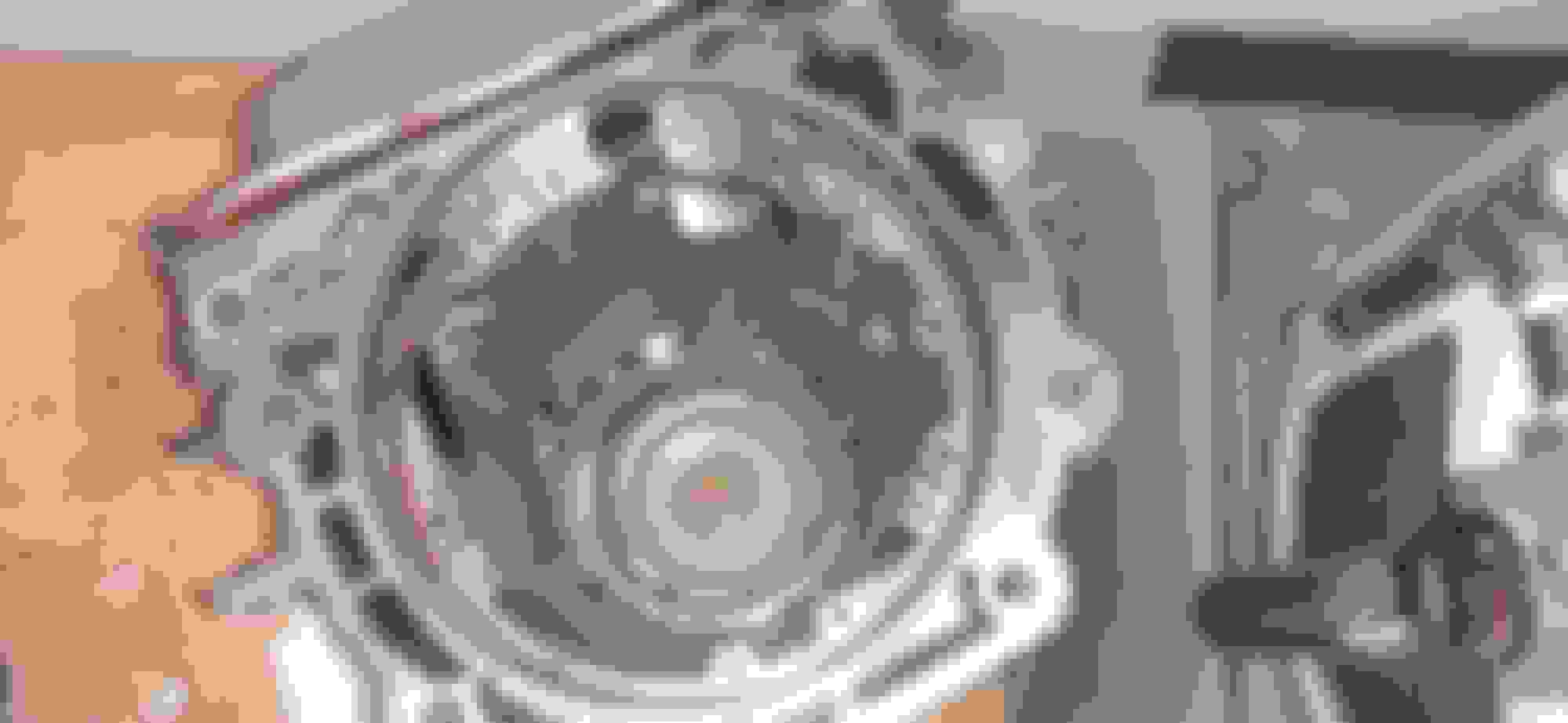
Looking closer at case I noticed this... Not sure if it's normal to have that wear / pounding in the low reverse steel splines? It's only on one side of the case. The other splines are fine.
- the faces (toward center of case) look fine.
- Looking down into case don't notice anything.
- Sides are a little pounded on a few of the teeth to one side of the case. Can see with eyes when looking from side, and can feel with finger.
Gas Monkey Built a 6-Wheel Ferrari Testarossa With a Corvette LT4 Engine
Slideshow: The controversial Ferrari F6 swaps its original flat-12 for a Corvette Z06-derived LT4 V8 and sends power to four rear wheels through a custom-built drivetrain.
7 Most Reliable High-Performance Engines GM Has Ever Built
Slideshow:These GM engines didn't just make huge power, they survived abuse, boost, track days, and six-digit mileage with a reputation for refusing to quit.
6 Common C5 Corvette Failures and What's Involved In Repairing Them
Slideshow: From wobbling harmonic balancers to failed EBCMs, these are the issues that define long-term C5 ownership and what repairs typically involve.
Retro Modern Bandit Pontiac Trans AM Comes With Burt Reynolds' Autograph
Slideshow: A modern Camaro transformed into a retro icon, this limited-run "Bandit" build blends nostalgia with brute force in a way few revivals manage.
Top 10 Greatest Cadillac V Series Performance Models Ever, Ranked
Slideshow: Cadillac didn't just crash the high-performance luxury vehicle party, it showed up loud, supercharged, and occasionally a little unhinged...











 I will leave be for now.