



FI catch can, which is best?

Thread Starter
TECH Enthusiast
Joined: Dec 2004
Posts: 588
Likes: 0
From: Zanesfield, OH
 FI catch can, which is best?
 I searched and can not find a thread that showed a nice catch can set up geared towards FI. I dont entirely remember the details but was a single can design that had routing that helped with the problem when no boost is present and also a routing to help the problem when under boost.
Can anyone help and let me know what you guys are using for a boosted set up. Pictures would be great.
Can anyone help and let me know what you guys are using for a boosted set up. Pictures would be great.
TECH Enthusiast
Joined: Mar 2010
Posts: 700
Likes: 0
From: Utah
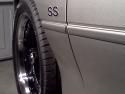
I'm using an Moroso Oil separator. Pulling from bank #1 to on side of the can. From the other side of the can to the intake, with a "t" fitting for a line back to the turbo inlet. There are a total of two check valves in place. Using a breather filter on Bank #2.
This is the only pic I have. If you want more let me know, and I can take a few more photos for you after work. This is just another idea for ya.

This is the only pic I have. If you want more let me know, and I can take a few more photos for you after work. This is just another idea for ya.
TECH Enthusiast
Joined: Mar 2010
Posts: 700
Likes: 0
From: Utah
Be careful. I was told this type of setup, would ruin a street motor...boost would be pulled past the rings causing oil to be evacuated out. I was going with the same setup as you until I heard this. Again, that's what was told to me anyways.
TECH Enthusiast
Joined: Mar 2010
Posts: 700
Likes: 0
From: Utah
I was told that the exhaust would constantly be pulling vacuum from the motor. Causing boost to be pulled through the piston rings at WOT. Supposedly the motor needs to be at atmospheric pressure to work efficiently...pulling and adding fresh air (i.e turbo inlet etc). Using the exhaust as a method for pulling crankcase pressure is a bad idea on a street motor. Again, that's what was said to me. My last car, I only used a breather can with -12AN fittings and called it a day...didn't pop out the dipstick, but the head lifted a few times. But it was a 4 cylinder motor.
PS - I'm still trying to wrap my head around this stuff.
PS - I'm still trying to wrap my head around this stuff.
Trending Topics
TECH Enthusiast
Joined: Mar 2010
Posts: 700
Likes: 0
From: Utah
Boost creates crankcase pressure....pressure around the piston and rings. The stock pcv system isn't efficient enough to release this pressure. On a NA motor, that isn't FI the pressure is solely on top of the piston, whereas with FI, it's on top, around and below the piston. This is why you see guys popping out dipsticks and blowing out timing seals. Without some type of ventilation, there's only one place for the pressure to go...outward through the seals. I am speaking from experience here. I was blowing out my dipstick on my last car with the stock PCV setup until I did the catch can method.
Last edited by Sweet_SS; Apr 19, 2011 at 08:21 AM.
LS1 Tech Stories
The Best V8 Stories One Small Block at Time

Topdon ONE vs. Artidiag 800 BT2: Which is the Diagnostic Tablet For You?
Pouria Savadkouei
Gas Monkey Built a 6-Wheel Ferrari Testarossa With a Corvette LT4 Engine
Verdad Gallardo
7 Most Reliable High-Performance Engines GM Has Ever Built
Verdad Gallardo
Amazing '71 Camaro Restomod Is Modern Muscle Car Under the Skin
Verdad Gallardo
6 Common C5 Corvette Failures and What's Involved In Repairing Them
Pouria Savadkouei
Retro Modern Bandit Pontiac Trans AM Comes With Burt Reynolds' Autograph
Verdad Gallardo
Top 10 Greatest Cadillac V Series Performance Models Ever, Ranked
Pouria Savadkouei
Top 10 Most Powerful Chevy Trucks Ever Made!

Hennessey's New Supercharged Silverado ZR2 Has 700 HP
Verdad Gallardo Thread Starter
TECH Enthusiast
Joined: Dec 2004
Posts: 588
Likes: 0
From: Zanesfield, OH
Keep the designs coming with pictures if possible. Does anyone have a catch can design that is specifically for boost set ups? I wish I could find that thread but struck out. That can example must be in a thread of different topic.
TECH Enthusiast
Joined: Mar 2010
Posts: 700
Likes: 0
From: Utah
Examples with Diagrams/Pics
https://ls1tech.com/forums/forced-in...-engine-6.html
https://ls1tech.com/forums/forced-in...rs-inside.html
https://ls1tech.com/forums/forced-in...-engine-6.html
https://ls1tech.com/forums/forced-in...rs-inside.html

TECH Resident
Joined: Dec 2008
Posts: 995
Likes: 0
Boost creates crankcase pressure....pressure around the piston and rings. The stock pcv system isn't efficient enough to release this pressure. On a NA motor, that isn't FI the pressure is solely on top of the piston, whereas with FI, it's on top, around and below the piston. This is why you see guys popping out dipsticks and blowing out timing seals. Without some type of ventilation, there's only one place for the pressure to go...outward through the seals. I am speaking from experience here. I was blowing out my dipstick on my last car with the stock PCV setup until I did the catch can method.
I was told that the exhaust would constantly be pulling vacuum from the motor. Causing boost to be pulled through the piston rings at WOT. Supposedly the motor needs to be at atmospheric pressure to work efficiently...pulling and adding fresh air (i.e turbo inlet etc). Using the exhaust as a method for pulling crankcase pressure is a bad idea on a street motor. Again, that's what was said to me. My last car, I only used a breather can with -12AN fittings and called it a day...didn't pop out the dipstick, but the head lifted a few times. But it was a 4 cylinder motor.
PS - I'm still trying to wrap my head around this stuff.
PS - I'm still trying to wrap my head around this stuff.
Saying boost was pulling was the confusing part to me....
Boost creates crankcase pressure....pressure around the piston and rings. The stock pcv system isn't efficient enough to release this pressure. On a NA motor, that isn't FI the pressure is solely on top of the piston, whereas with FI, it's on top, around and below the piston. This is why you see guys popping out dipsticks and blowing out timing seals. Without some type of ventilation, there's only one place for the pressure to go...outward through the seals. I am speaking from experience here. I was blowing out my dipstick on my last car with the stock PCV setup until I did the catch can method.


this has me wondering , i just procharged my 99 formula , would just a breather on the valve cover help .?
Also if i did a catch can does anyone have one totally nice and instructions and very nice looking for about 100 bucks ?
Also if i did a catch can does anyone have one totally nice and instructions and very nice looking for about 100 bucks ?
TECH Enthusiast
Joined: Mar 2010
Posts: 700
Likes: 0
From: Utah
The exhaust doesnt constantly pull vacuum from the motor, at idle it pulls hardly any. As you raise the RPM the exhaust pulls more vacuum but the crankcase creates more pressure as well. Even at high RPMs this vacuum is only a few inches. Plenty of people run vacuum pumps that pull far more vacuum without an issue.
Saying boost was pulling was the confusing part to me....
The reason people blow oil out of their dipsticks and blow rings is because they keep a stock PCV style system on their motor and they literally shove boost into their motor from the intake manifold. It has nothing to do with FI creating pressure "on top, around and below."
Saying boost was pulling was the confusing part to me....
The reason people blow oil out of their dipsticks and blow rings is because they keep a stock PCV style system on their motor and they literally shove boost into their motor from the intake manifold. It has nothing to do with FI creating pressure "on top, around and below."
If you put a checkvalve their, then yes. But ideally, with a setup like that, you have no way of pulling vacuum when WOT with boost.
so....
You need to add a secondary vacuum source, IE, turbo/blower inlet, vacuum pump, or exhaust evac to take over after that valve closes from boost.
Sorry for split posts...
i used a T in that manifold to valley line after the check valve, so that i ALWAYS have vacuum pulled on the valley

You need to add a secondary vacuum source, IE, turbo/blower inlet, vacuum pump, or exhaust evac to take over after that valve closes from boost.
Sorry for split posts...
i used a T in that manifold to valley line after the check valve, so that i ALWAYS have vacuum pulled on the valley
TECH Enthusiast
Joined: Mar 2010
Posts: 700
Likes: 0
From: Utah
Yes, but a STOCK system has no way of stopping the Boost from going into the valley cover via the vacuum line between teh manifold and valley,
If you put a checkvalve their, then yes. But ideally, with a setup like that, you have no way of pulling vacuum when WOT with boost.
If you put a checkvalve their, then yes. But ideally, with a setup like that, you have no way of pulling vacuum when WOT with boost.
Exactly. I'm using two check valves...one of which is connected to a line from the turbo linlet pipe. Great discussion, this is how people learn

I was more concerned with your original statement, you made it sound like the evac had so much vacuum it was somehow sucking air from the cylinder down into the crankcase.
TECH Enthusiast
Joined: Mar 2010
Posts: 700
Likes: 0
From: Utah

 I was confused too, but I just did it a different way. You'll have to post up pics when you complete your evac system.
 Im doing it similar to JAX just with less hoses :p. Im going to run a line from the front of the passenger valve cover to the intake manifold with a check valve. The 2 other ports; driver valve cover and rear facing passenger valve cover, are going to be T-ed(or maybe each with their own) and evaced in the down pipe near my firewall.
